


More news on this day
Several freight cars ended up partially submerged in a wetland near the Calgary community of Silverado after a train derailed beside Priddis Slough, focusing renewed attention on rail safety and the protection of sensitive natural areas frequented by residents and visitors.
Get the latest news straight to your inbox!
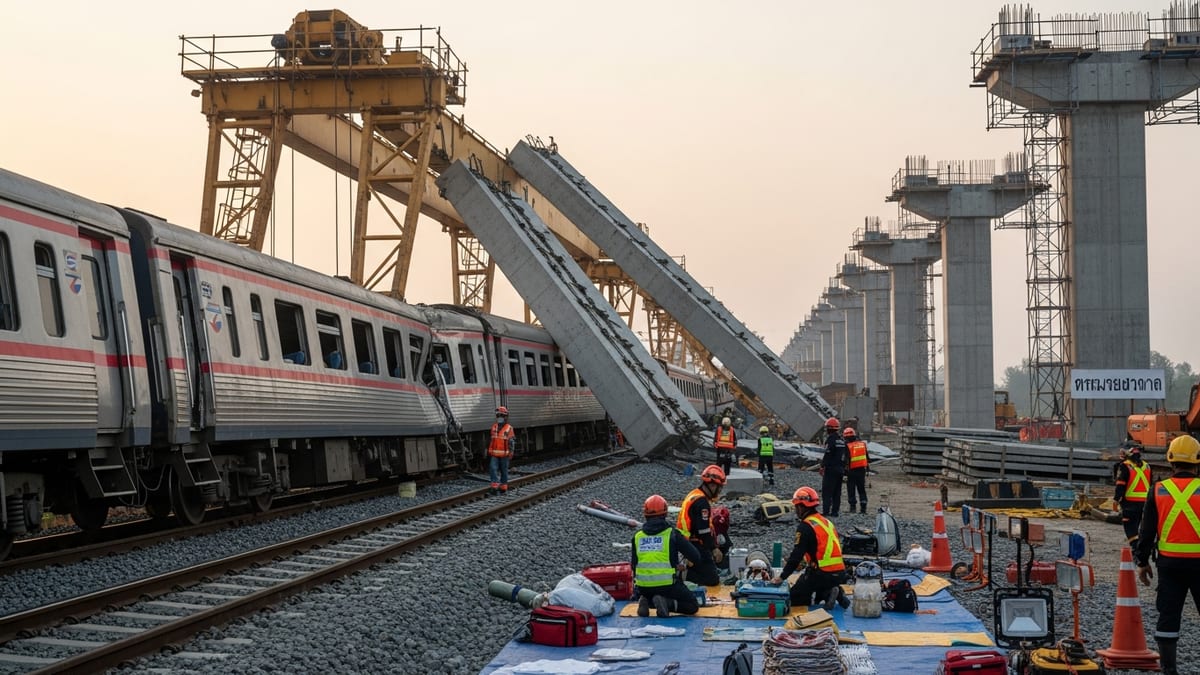
Derailed Train Leaves Freight Cars in the Water
Recent coverage from Calgary-area media describes a freight train derailment beside Priddis Slough in southwest Calgary, near the residential communities of Chaparral and Silverado. Multiple railcars left the tracks and slid into the shallow water and marshy ground, leaving several cars tilted or partially submerged. Images circulating locally show a tangle of freight cars resting in the slough, with additional cars standing idle on the adjacent rail line.
Reports indicate the incident occurred near a rail corridor that parallels a major roadway and borders the slough, a low-lying wetland that can be seen from nearby neighborhoods. While the location is not a traditional tourism landmark, the area lies along routes commonly used by drivers heading toward southern Alberta destinations, including popular recreation areas and agritourism sites outside the city.
According to publicly available information, rail traffic in the immediate area was temporarily disrupted while crews assessed the scene and began work to re-rail cars and stabilize equipment. Travelers moving through this part of southwest Calgary by road or rail were advised to expect delays and detours as work continued.
Early accounts suggest that the derailed cars were part of a freight consist traveling along a main line used for both regional and longer-distance movements. The precise sequence of events leading up to the derailment remains the subject of ongoing review, with investigators examining track conditions, train handling and other potential contributing factors.
Environmental Concerns Around Priddis Slough
Priddis Slough is described in local reporting as a significant wetland habitat that supports a range of waterfowl, along with wildlife such as deer, coyotes and foxes. The presence of freight cars in the water has raised concern among residents, environmental observers and travelers who use nearby paths and roadways to access nature viewing spots in the area.
Information published to date indicates that specialized crews were dispatched to monitor the site, evaluate potential impacts on the water and shoreline, and determine whether any cargo or fuel leaks had occurred. At this stage, publicly available accounts emphasize the focus on prevention and containment, with responders working to keep any contaminants from entering the wider wetland system.
Rail incidents involving waterways often prompt testing of surface water, sediment and vegetation, drawing on established procedures seen in other derailments in North America. In similar cases, responders typically deploy booms, vacuum trucks and absorbent materials if there is evidence of spilled fuel or other substances, while wildlife agencies watch for visible impacts to birds and mammals that rely on the habitat.
For visitors, the sight of freight cars in a normally quiet wetland underscores how close rail infrastructure can sit to recreational and wildlife areas. Birdwatchers, walkers and photographers who frequent Priddis Slough may encounter temporary access restrictions or visual disruption while equipment is removed and the shoreline is restored.
Travel Impacts for Nearby Communities and Visitors
The derailment occurred near transportation corridors that connect Calgary’s southern suburbs with major city routes, which can be important links for both residents and out-of-town visitors using hotels, shopping centers and dining districts in the south of the city. Publicly available information notes that rail operations were adjusted while crews worked on the site, with the potential for freight congestion to ripple through the network.
Passenger rail services in the region are limited, but disruptions to freight operations can influence highway traffic if additional trucks are used as alternatives or if safety restrictions affect nearby roadways. Travelers driving between central Calgary and communities near Silverado and Chaparral may experience localized slowdowns, lane closures or temporary speed reductions while heavy cranes and recovery vehicles access the right of way.
For visitors using this area as a through-route to the foothills or other southern Alberta attractions, the safest approach is to allow extra time and watch for signage noting rail work or incident response. Hotel guests in the vicinity may also notice increased activity around rail crossings, including flashing lights, idling equipment and aerial inspection operations.
Local coverage suggests that rail traffic is expected to resume standard operations once damaged cars are removed, tracks are inspected and any necessary repairs are completed. Until that process is finished, periodic delays may continue, particularly during periods when large sections of rail or heavy lifting gear must be moved into position.
Rail Safety Context for Water-Adjacent Lines
The derailment near Silverado comes amid broader discussions about rail safety along waterways and in environmentally sensitive areas. Recent North American incidents involving freight trains slipping into rivers, canals or wetlands have highlighted recurring themes, including the challenges of maintaining track stability near saturated ground and the importance of fast-acting containment measures when cars end up in the water.
International and federal transportation investigations in other cases have pointed to a combination of factors such as track condition, train speed, mechanical issues and extreme weather as contributors to derailments near watercourses. When tracks run along berms, bridges or causeways beside wetlands, heavy precipitation or gradual erosion can make infrastructure more vulnerable to shifting ground or washouts, especially during seasonal thaws or storms.
In response to earlier derailments into waterways, regulators and rail operators have expanded monitoring of high-risk segments, increased the use of track geometry cars and enhanced inspection intervals in locations where a derailment could send rolling stock directly into water. The Silverado-area incident fits into that ongoing national and international discussion about how to balance efficient freight movement with the need to protect ecosystems and public access to outdoor spaces.
For visitors and residents alike, the sight of freight cars in Priddis Slough is a reminder that rail corridors remain active industrial zones, even when they pass through scenic or seemingly remote spaces. The long-term response at this location is expected to involve not only recovery of rail equipment, but also environmental monitoring that will help determine whether further remediation or habitat restoration is needed.