


More news on this day
A freight train derailment along a Canadian Pacific Kansas City line in southwest Calgary has sent multiple railcars into a wetland pond, raising concerns about potential environmental impacts and renewed questions about rail safety through growing suburban communities.
Get the latest news straight to your inbox!
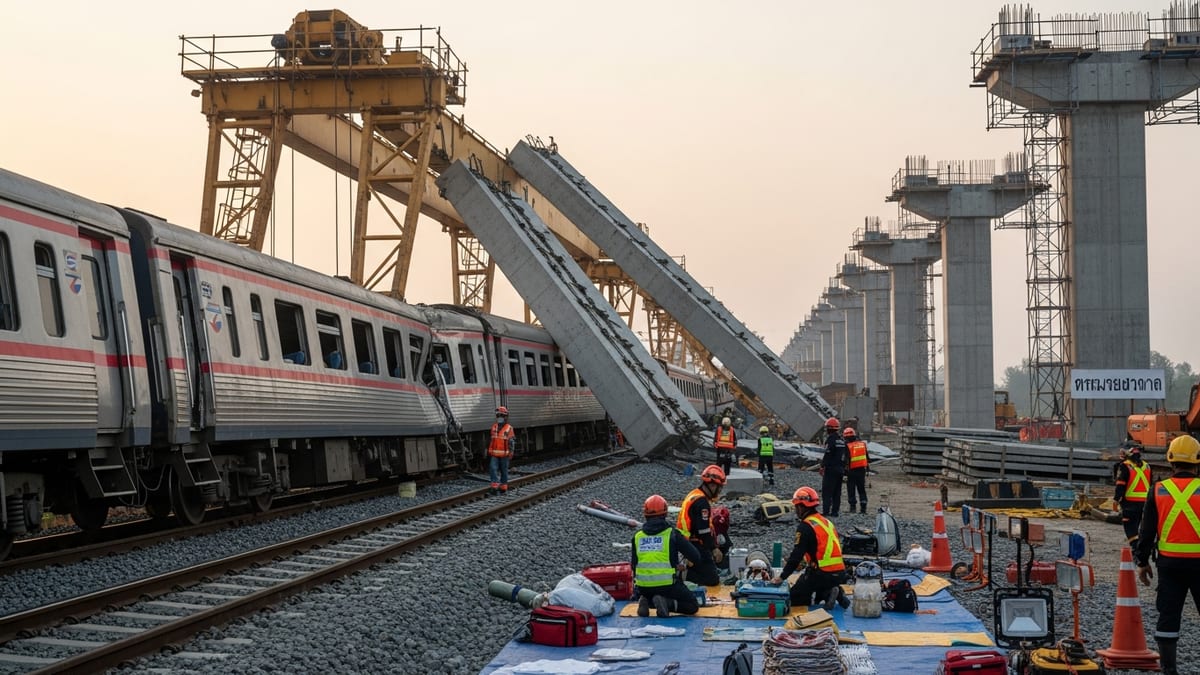
Derailment near Priddis Slough sends cars into water
Reports from local and national outlets indicate that the incident occurred Monday, July 13, along tracks near Sheriff King Street in Calgary’s southwest, in an area bordered by newer residential neighbourhoods and the Priddis Slough wetland. Coverage describes at least a dozen freight cars leaving the tracks, with a significant number coming to rest partially submerged in a man-made pond that is connected to the surrounding marsh.
Images circulated by local media and on social platforms show railcars jackknifed across the right of way, with several lying at steep angles in the water. Early information points to a mixed freight consist that included tank cars and covered hoppers, although publicly available reports suggest the derailed equipment closest to the pond was not carrying flammable cargo.
Rail traffic through the corridor was halted while crews assessed track damage and the position of the derailed cars. The line is a key freight route through Calgary’s southwest, and the disruption was felt in nearby communities as train movements stopped and emergency access routes were partially restricted.
Environmental risk assessments focus on wetland habitat
The derailment site sits beside a wetland complex that provides year-round habitat for migratory birds, amphibians and small mammals. Local coverage notes that the pond into which the railcars slid is part of a stormwater and wetland system feeding into the broader Priddis Slough area, which has long been recognized as environmentally sensitive.
Initial reporting suggests that no large release of hazardous materials had been identified in the hours immediately following the derailment. Some of the railcars involved were reportedly carrying argon, an inert gas commonly used in metalworking, prompting specific checks of tank integrity and air quality. Environmental contractors were observed at the scene deploying booms and monitoring equipment as a precaution while sampling the water and shoreline soils.
Specialists typically look for signs of fuel leaks from locomotives and railcars, as well as any release from tanks that may contain industrial gases or bulk commodities. In wetland environments like this one, even relatively small spills can spread quickly through interconnected ponds and marshes, so rapid containment is often prioritized while laboratory testing is under way.
Neighbouring communities see disruptions and detours
The affected corridor runs between the fast‑growing communities of Silverado and areas closer to Macleod Trail, where residential streets, storm ponds and walking paths skirt the rail line. According to published coverage and local reporting, emergency responders established a wide perimeter around the site, closing portions of Sheriff King Street and nearby access roads while heavy equipment and cranes were brought in.
Residents in surrounding neighbourhoods reported significant activity through Monday morning and afternoon, including the sound of helicopters, emergency sirens and the arrival of specialized rail-recovery crews. Some recreation paths and informal viewing spots around the wetland were cordoned off, with city advisories asking people to stay clear of the area until railcars could be stabilized and safely removed.
While there were no early reports of injuries among train crew or nearby residents, the derailment added to growing anxiety among some homeowners about the proximity of the freight line to new housing, playgrounds and water features. Publicly available comments from local observers highlight concerns about future train movements and the potential for similar incidents as traffic volumes increase.
Investigation and cleanup expected to take days
Rail companies operating in Canada are required to notify regulators and the Transportation Safety Board of Canada when significant derailments occur. Based on the scale of this incident and the involvement of multiple cars in a sensitive area, transportation analysts anticipate that a formal safety investigation will document the sequence of events, train handling and track conditions at the time of the crash.
Removing derailed equipment from a wetland is a complex process that can extend over several days or longer. Crews typically must build temporary access roads or platforms, stabilize soft ground and position cranes so that railcars can be lifted out of the water without further disturbing the shoreline. Once the cars are removed, attention shifts to track rebuilding, embankment repair and restoration of damaged vegetation around the pond.
In similar Canadian derailments, investigators have examined factors such as track geometry, train speed, train makeup and the behaviour of longer, heavier consists over curves and grades. Findings from those cases have sometimes led to changes in operating practices or infrastructure upgrades, especially on routes that pass close to communities or environmentally sensitive areas.
Broader scrutiny of rail safety near urban wetlands
The Calgary derailment comes at a time of heightened scrutiny of freight rail operations across Canada, following several high profile incidents in recent years. National reporting has highlighted concerns about the interaction between expanding urban development and long‑established freight corridors, as new neighbourhoods and commercial zones are built closer to tracks.
Urban wetlands are often retained as part of stormwater management and conservation planning, which can place sensitive ecosystems directly alongside busy rail lines. Safety advocates argue that this combination calls for more robust risk assessments, including analysis of train speeds, cargo types and emergency access in the event of a derailment or spill.
For residents in Calgary’s southwest, attention in the coming days is likely to focus on water quality test results, the speed of cleanup and any interim restrictions on rail movements through the affected stretch. As more information becomes publicly available about the cause of the derailment, discussions about long‑term safeguards, land‑use planning and rail safety standards around wetlands are expected to intensify.