


More news on this day
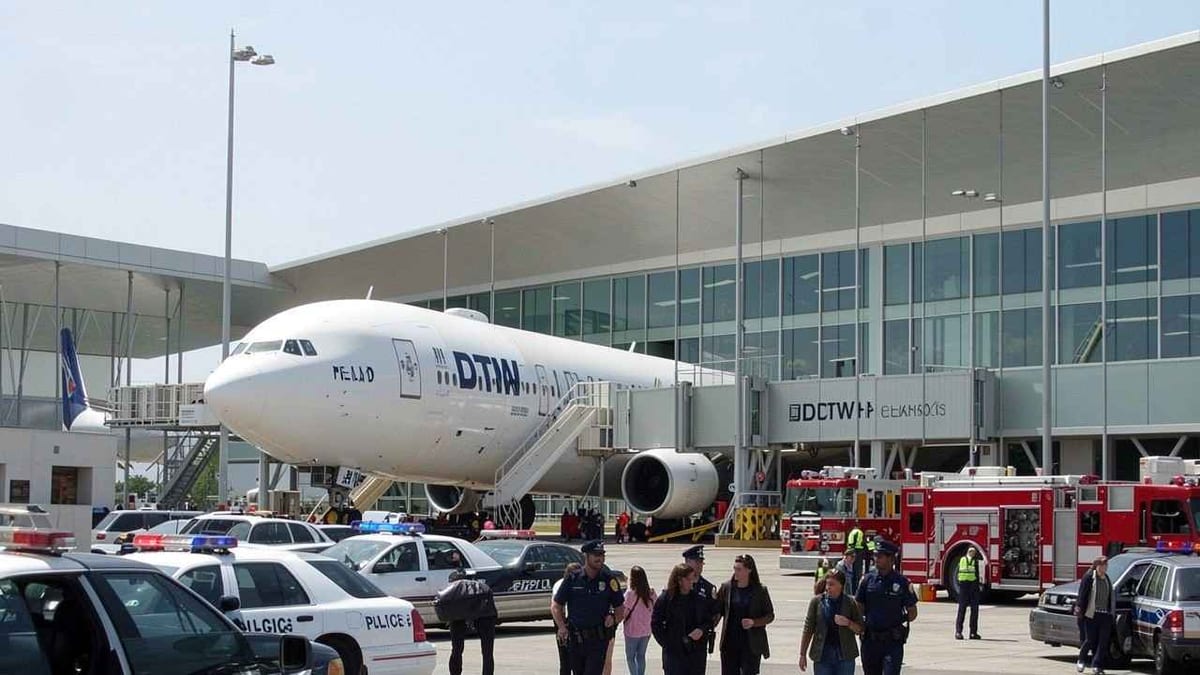
A Frontier Airlines flight from New York to Atlanta diverted to Charlotte Douglas International Airport in North Carolina on August 6, disrupting travel plans for passengers and highlighting the operational pressures on low cost carriers during the peak summer travel period.
Get the latest news straight to your inbox!
Unscheduled Diversion Interrupts New York–Atlanta Route
Publicly available flight tracking data indicates that Frontier Airlines flight FFT3453, operated by an Airbus A320 251N, departed New York on a scheduled service to Atlanta but did not complete its planned route on August 6. Instead, the aircraft diverted en route and landed at Charlotte Douglas International Airport, a major hub in the southeastern United States.
The diversion occurred partway through the southbound sector, with tracking records showing the aircraft altering course toward Charlotte rather than continuing to Hartsfield Jackson Atlanta International Airport. After landing, the flight did not proceed onward to Atlanta the same evening, leaving affected passengers to seek onward travel or accommodations through the airline’s disruption handling processes.
No official detailed technical narrative has been made public about the specific trigger for the diversion. However, in similar recent events across the U.S. domestic network, diversions have frequently been linked to a combination of convective weather in busy corridors, operational constraints at destination airports, and occasional onboard medical or mechanical issues.
Charlotte Douglas Serves As Key Diversion and Recovery Airport
Charlotte Douglas International Airport regularly functions as a diversion point for flights operating along the busy Northeast to Southeast corridor. Its location, extensive runway infrastructure, and existing operations by multiple U.S. carriers make it a practical option when aircraft cannot continue to their intended destinations on schedule.
Airport activity summaries and historical traffic data show that Charlotte hosts a significant mix of mainline and low cost operators on domestic routes, including links to New York area airports and multiple cities in the Southeast. In the context of a diversion such as FFT3453, the airport’s capacity for handling unplanned arrivals, refueling, and passenger reaccommodation is a core element of the recovery process.
When unscheduled arrivals occur, passengers typically disembark at the diversion airport while airline operations teams evaluate aircraft status, crew duty times, and available slots to determine whether the flight can continue or whether travelers must be rebooked. For an evening diversion in the height of summer traffic, same day onward options can be limited across carriers, particularly on popular New York–Atlanta sectors that already operate near capacity.
Impact On Passengers And Typical Disruption Handling
Reports from similar Frontier disruptions this summer describe passengers facing extended delays, tight or missed connections, and overnight stays when flights divert or are significantly delayed. In such situations, travelers often rely on mobile notifications, airport display boards, and ground staff announcements to understand whether they will continue on the same aircraft, move to another Frontier service, or be shifted to a later date.
For a point to point leisure focused carrier, a diversion on a dense city pair like New York to Atlanta can be particularly challenging. Many itineraries are booked as nonrefundable basic fares, and the airline’s policies usually define what compensation, if any, is provided when disruptions are attributed to factors categorized as outside the carrier’s control, such as severe weather or broader air traffic constraints.
Consumer experiences shared in recent months emphasize the importance of travelers retaining boarding passes, e mail notifications, and receipts for any additional out of pocket costs, such as last minute hotel stays or alternative transport, in order to seek reimbursement where the airline’s published policies allow. Diversions like FFT3453 often become case studies for how clearly airlines communicate options in real time to passengers who may be unfamiliar with the distinction between weather related and airline controllable delays.
Operational Context For Frontier During A Busy Summer
The diversion of FFT3453 occurred against a backdrop of an intensely busy summer season for U.S. carriers, with Frontier continuing to fine tune its network of point to point routes. Industry analysis of low cost carriers operating in the United States has highlighted a pattern of rapid seasonal adjustments, route launches and suspensions, and tight aircraft utilization designed to keep fares low while maintaining profitability.
This model can leave little slack in the system when irregular operations arise. A single diverted flight may cascade into crew timing issues, aircraft repositioning needs, and schedule changes for subsequent rotations planned for the same aircraft. In this environment, a diversion to Charlotte on a core route such as New York to Atlanta illustrates how quickly a localized incident can ripple into broader schedule adjustments.
More broadly, recent research and industry commentary on airport and airline operations underlines how adverse weather, capacity constraints, and high utilization combine to push carriers toward increasingly complex recovery strategies when unexpected events occur. The experience of FFT3453 on August 6 adds one more data point to a summer in which passengers across multiple airlines have confronted diversions, rolling delays, and same day itinerary changes.
Ongoing Focus On Reliability In Domestic U.S. Markets
The FFT3453 diversion underscores the growing attention paid by travelers to reliability metrics, not just base fares, when choosing among carriers on busy domestic routes. The New York to Atlanta corridor is served by several airlines with multiple daily frequencies, giving passengers options but also intensifying competition on on time performance and disruption handling.
Travel analysts note that diversions themselves are often a sign of conservative decision making intended to prioritize safety and regulatory compliance, even when they inconvenience passengers in the short term. What tends to shape long term customer perceptions is how quickly airlines provide clear information, alternative arrangements, and, where applicable, financial redress for disrupted journeys.
As Frontier and other low cost carriers continue to expand and refine their domestic networks, each irregular operation event, including the August 6 diversion of flight FFT3453 to Charlotte Douglas International Airport, contributes to the evolving public record of how airlines manage complex operations in increasingly congested airspace. For travelers, it serves as a reminder to monitor flight status tools, allow buffer time for connections, and understand the limits and possibilities of the protections embedded in the tickets they purchase.