


More news on this day
Passengers travelling through Manchester Airport today are facing mostly routine operations, with public flight-tracking data showing only scattered delays and no large-scale cancellations affecting the UK’s third-busiest hub.
Get the latest news straight to your inbox!
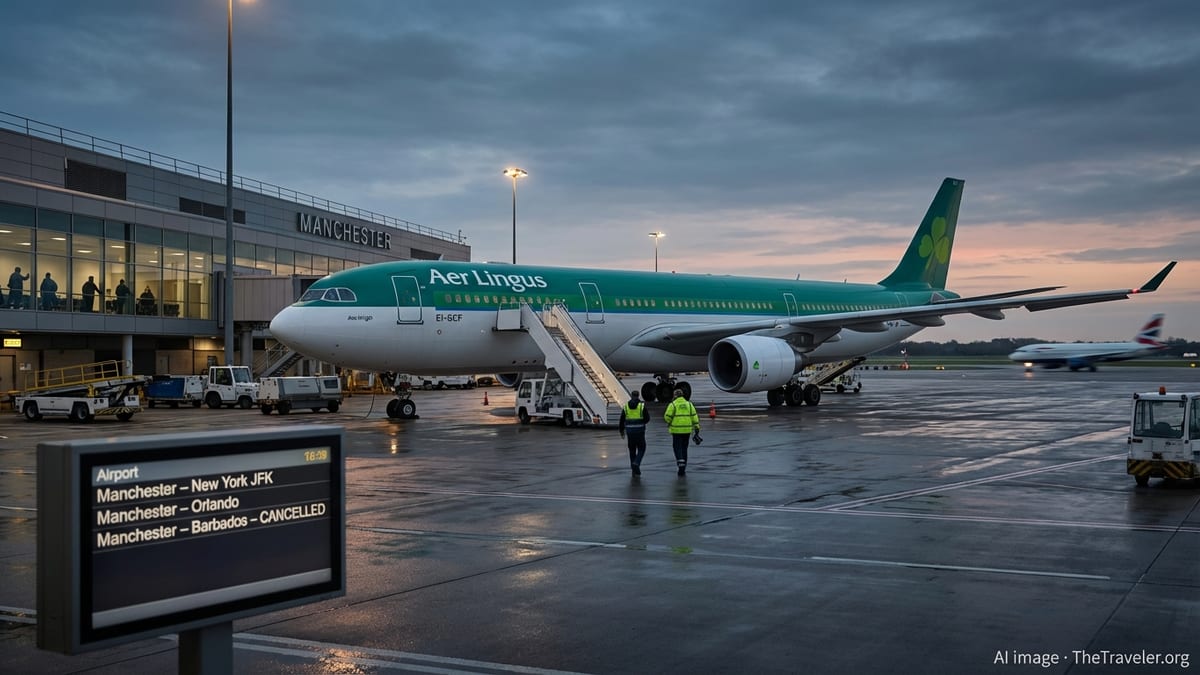
Live data shows routine schedules with isolated delays
Live monitoring of Manchester Airport departures and arrivals today indicates that the airport is functioning close to normal, with the majority of flights operating near their scheduled times. Independent disruption dashboards list Manchester as under normal operations, with no airport-wide restrictions in force and no significant capacity cuts highlighted for the Northern hub.
Data compiled from flight-tracking platforms over the past 24 hours points to a pattern of minor hold-ups rather than systemic disruption. Several early-morning and mid-morning departures showed delays of around 30 to 45 minutes, but these were limited to individual services and did not cascade into longer queues or widespread knock-on effects across the schedule.
Reports covering yesterday’s traffic noted that multiple Tuesday departures from Manchester ran late by more than half an hour, yet cancellations remained minimal. That pattern appears to be continuing into today, with airlines generally keeping their programmes intact while adjusting individual timings where needed.
Overall, publicly accessible operational data portrays a busy summer day at a major UK airport rather than an exceptional disruption event.
Weather, airspace management and seasonal pressure still pose risks
Although Manchester Airport is listed as operating normally today, a range of familiar risk factors continues to hover in the background for travellers. The airport’s own material on airspace and runway management notes that even small constraints in local airspace can rapidly translate into departure metering, longer taxi times or temporary arrival spacing, particularly during peak morning and evening banks.
Seasonal summer demand is adding further pressure. With passenger numbers typically surging in late June, aircraft are operating at high load factors, which leaves less flexibility for airlines to absorb unexpected technical checks, late inbound aircraft or crew reassignments. When combined with passing showers or reduced visibility, such pressures can still push a handful of flights into delay, even on an otherwise steady day.
Recent history also illustrates how quickly conditions can change. In late 2025, a taxiway surface defect forced one of Manchester’s runways out of use, prompting significant delays as traffic was funnelled onto a single strip during heavy rain. Earlier disruptions elsewhere in the UK linked to air traffic control technical issues and power problems have likewise shown that a single point of failure can lead to rapidly escalating knock-on effects across the network.
None of those large-scale problems are in evidence today, but they remain a reminder that “normal operations” can shift with little warning, particularly for afternoon and evening departures when weather fronts and crew duty limits sometimes converge.
How today’s situation compares with recent disruption days
Against the backdrop of several highly publicised disruption episodes in recent months, conditions at Manchester Airport today appear markedly calmer. Past events have included runway and taxiway closures, visibility-related holding patterns and weather warnings that have driven long queues through security and passport control.
By contrast, today’s schedules show airlines largely maintaining their planned operations. Where flights are running late, most delays fall into the 30 to 60 minute bracket that aviation analysts typically associate with day-to-day operational challenges such as late incoming aircraft, minor technical checks or congestion at departure stands, rather than structural failures in airport infrastructure or national systems.
Publicly available airport and national airspace information does not flag any emergency runway work, major security incidents or national air traffic control restrictions specifically targeting Manchester today. This sets the airport apart from more acute issues seen recently at other UK hubs, where targeted traffic management programmes and security-related constraints have triggered waves of cancellations and hours-long queues.
While passengers may still experience inconvenience on certain services, today’s pattern at Manchester is closer to routine variability than the large-scale breakdowns that have previously made headlines.
What today’s conditions mean for passengers heading to the airport
For travellers flying from Manchester Airport today, the latest picture suggests a day where standard preparation and close attention to individual flight information remain the most important steps. With no evidence of a systemic disruption event, the main risk lies in localised schedule changes affecting particular routes or airlines rather than a wholesale shutdown of operations.
Public guidance from aviation regulators and consumer bodies generally advises passengers to monitor their airline’s app or notifications regularly on the day of travel, arrive in good time for security and boarding, and check both departure and arrival airport status for any broader airspace issues. Those recommendations remain relevant today, even if Manchester is listed as operating normally on national and independent dashboards.
Passengers connecting onward from Manchester or catching rail services from the airport station may want to build in additional buffer time, given the possibility of individual flights departing later than planned. Even modest departure delays can have a knock-on effect on tight connections, particularly during a busy summer period when alternative seats on later services may be limited.
For now, though, publicly available information portrays Manchester Airport as a busy but functioning hub, with today’s delays and schedule changes falling within the range of disruption that experienced travellers have come to expect during peak holiday season rather than signalling a new crisis for UK aviation.