


More news on this day
British holidaymakers heading abroad this summer are being urged to review safety advice, extreme weather alerts and insurance small print as updated warnings highlight heightened risks in popular destinations and the potential for significant disruption.
Get the latest news straight to your inbox!
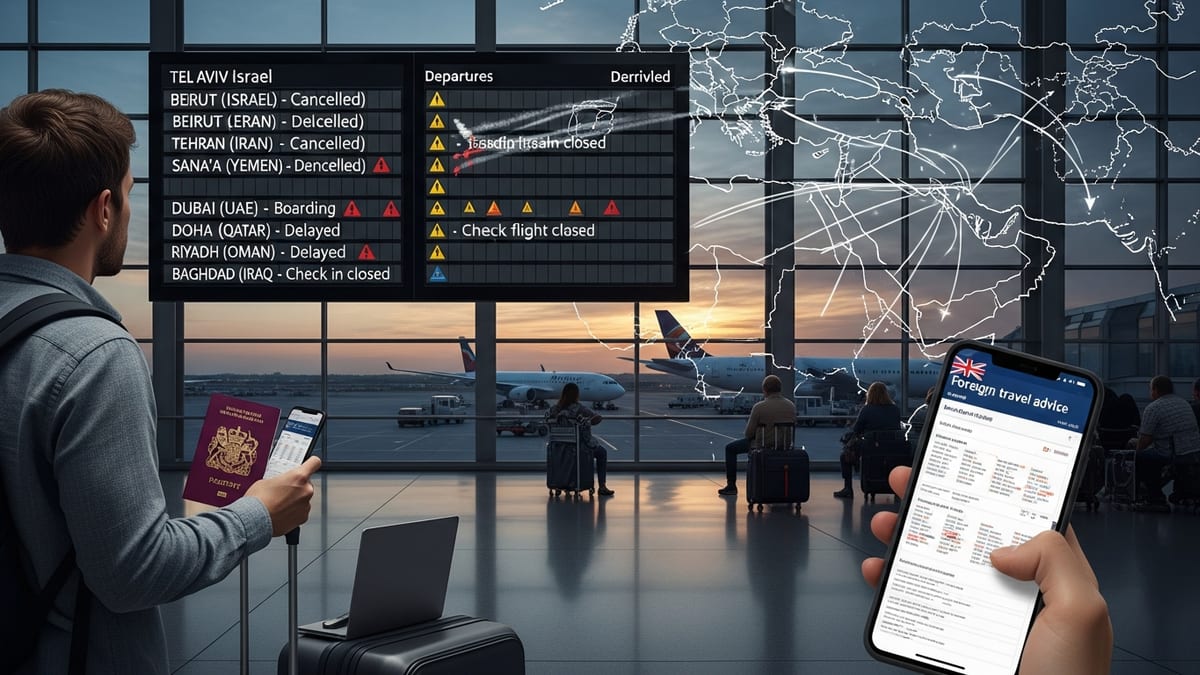
Foreign Office tightens guidance on global hotspots
Updated advice from the UK’s Foreign, Commonwealth and Development Office (FCDO) in recent weeks shows a broadening list of countries where travel is considered high risk, with some destinations now subject to “do not travel” or “only essential travel” recommendations. Publicly available information indicates that more than 70 countries and territories worldwide currently carry heightened warnings because of conflict, civil unrest, terrorism or widespread crime.
Recent changes include stricter guidance for parts of the Middle East and Eastern Europe, while some destinations have seen advice eased as security situations improve. The overall picture, however, remains volatile, with warnings frequently updated as local conditions shift.
Travel industry bodies stress that ignoring FCDO advisories can have serious consequences. In many cases, policies will not pay out if travellers head to areas against official guidance, even if a claim is unrelated to the underlying risk. Holidaymakers are being advised to check the latest country‑specific pages before booking, again before travelling and throughout their stay.
Consumer groups also point out that package holiday protections are limited if a traveller chooses a destination that already carried a strong warning at the time of booking. While tour operators may offer flexibility when advice changes after a trip is purchased, there is far less recourse when travellers knowingly book against clear guidance.
Extreme heat, wildfires and weather disruption reshape summer plans
Forecasters are warning that extreme heat will be a defining feature of this summer across much of Europe and beyond, after a succession of record‑breaking Junes. Heat alerts have already been issued in parts of the UK, Spain, Italy, Greece and France, with meteorological agencies signalling a strong likelihood of further intense heatwaves through July and August.
Recent heat‑health alerts in England, combined with separate red and amber warnings in mainland Europe, underline how rising temperatures can quickly escalate from an inconvenience to a serious health risk. Public health bodies have highlighted increased dangers for older people, young children and those with underlying conditions, particularly where overnight temperatures stay unusually high and recovery from daytime heat becomes difficult.
Authorities around the Mediterranean are once again preparing for an elevated risk of wildfires, building on hard lessons from recent seasons in Greece, Portugal and parts of Spain. Evacuations from resorts in previous years have shown that fires can spread rapidly close to tourist areas, causing sudden disruption to flights, ferries and local transport and prompting mass relocations.
Travel experts are advising British visitors to factor extreme weather into their planning by monitoring local forecasts, considering earlier or later travel dates, and ensuring they have flexible booking options. Travellers are also being reminded that high temperatures can lead to reduced public transport services, power cuts, water shortages and restrictions on outdoor activities, all of which can affect the overall holiday experience.
Insurance gaps and card problems put budgets at risk
Fresh warnings from insurers and consumer advocates highlight how many British travellers are still flying without adequate financial protection. Recent surveys suggest millions of people are preparing to travel abroad this year without any travel insurance, or with policies bought so late that they provide no cover if something goes wrong before departure.
Industry analysis indicates that medical treatment abroad, particularly in North America, the Caribbean and parts of Asia, can run into tens of thousands of pounds for relatively routine emergencies. Without comprehensive insurance, travellers may have to meet these costs themselves, and repatriation back to the UK can be even more expensive.
Another emerging concern is the growing number of destinations where international card transactions have become more complicated. Recent official notices for some countries point to restrictions on the use of foreign bank cards, currency shortages or sudden changes to local payment systems. Holidaymakers who rely solely on one card, or who arrive with limited cash, risk being unable to pay for essentials such as accommodation, fuel or medical care.
Financial specialists recommend that travellers check, before departure, whether their chosen destination has any known banking or payments issues, and to carry a mix of payment options. Travellers are also urged to confirm that their insurance covers financial failure of airlines or tour operators, as well as disruption caused by strikes or weather‑related cancellations.
Airport queues, new border systems and transport disruption
Alongside safety and weather concerns, British travellers are being warned to brace for lengthy queues and potential delays at airports and land borders across Europe this summer. Recent reports from several major hubs highlight waits of up to six hours at peak times, linked in part to the roll‑out of new EU entry and exit checks for non‑EU nationals.
Early evidence from the first phase of these controls suggests that some airports have struggled with staffing and infrastructure, resulting in bottlenecks at passport control, particularly during busy weekend changeovers. Travel commentators note that while the system is being refined, queues are likely to be a recurring feature at popular Mediterranean gateways.
The warnings extend beyond airports. High temperatures have previously affected rail networks in both the UK and continental Europe, with speed restrictions imposed on key routes as tracks and overhead lines come under strain. Road networks in tourist regions are also prone to congestion during heatwaves and holiday weekends, especially near coastal resorts and major border crossings.
Passengers are being advised to arrive earlier than usual for outbound flights, to allow plenty of time for security and border checks, and to build in longer connections when changing planes. Flexible tickets, real‑time travel alerts and comprehensive disruption cover are increasingly seen as essential rather than optional extras for trips during the peak summer period.
Practical steps for Brits booking and travelling this summer
Travel organisations are urging holidaymakers not to be deterred from going abroad, but to approach summer trips with more preparation than in previous years. Analysts point out that demand from UK travellers remains strong, with many people prioritising overseas breaks despite pressure on household budgets.
Before booking, travellers are encouraged to compare FCDO country advice, recent news reports and local weather outlooks for their preferred destinations. Checking whether a country is affected by political unrest, heightened terrorism risk, wildfire activity or severe heat can help avoid costly itinerary changes later.
Once a trip is chosen, consumer advocates advise buying travel insurance immediately rather than waiting until just before departure, and ensuring the policy covers pre‑existing medical conditions, high‑risk activities and potential supplier failure. Keeping digital and printed copies of key documents, including passports, policies and booking confirmations, can speed up assistance if something goes wrong.
Finally, travellers are being reminded to register for airline and tour operator alerts, keep an eye on airport and local transport updates, and have a back‑up plan for unexpected disruption. With fresh warnings in place on multiple fronts, careful planning and flexibility are likely to be the deciding factors in whether this summer’s holidays run smoothly for British travellers.