


More news on this day
Frankfurt Airport is facing a fresh bout of disruption as 14 flights are reported cancelled and 144 delayed across a cluster of airlines including Lufthansa, Japan Airlines, easyJet, SriLankan Airlines, AeroLogic, Bulgaria Air, Gulf Air, and Etihad Airways, leaving passengers stranded on routes to Narita, Brussels, Warsaw, London and other major hubs.
Get the latest news straight to your inbox!
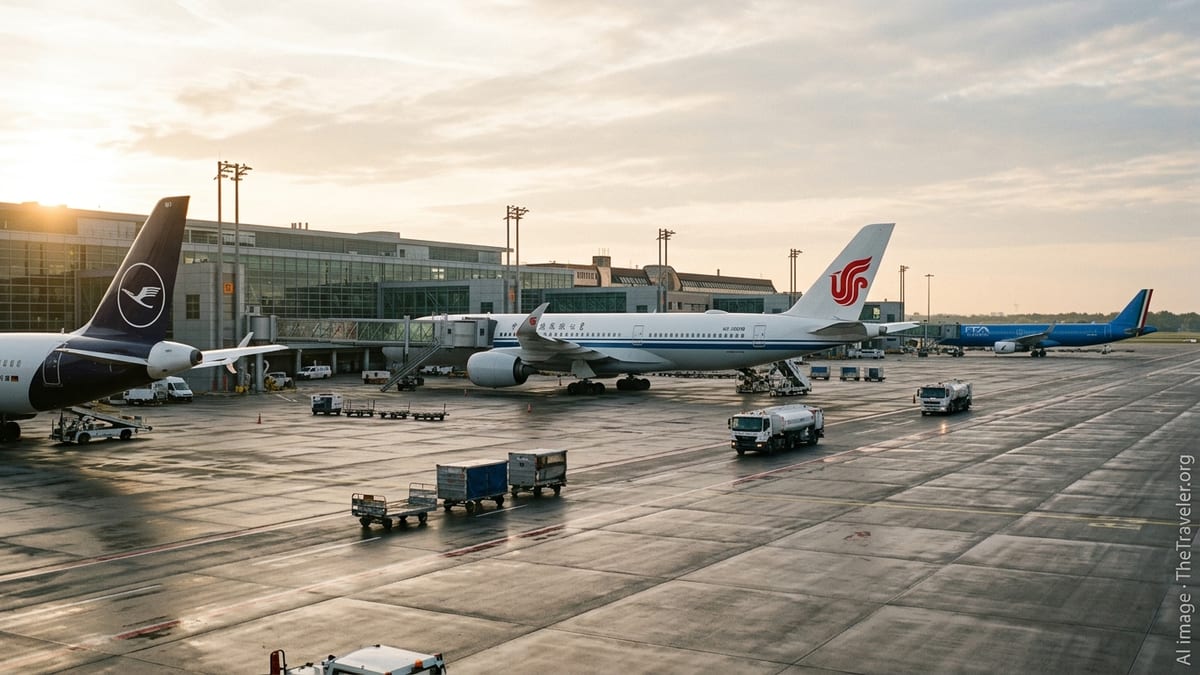
Operational Turbulence at Germany’s Busiest Hub
Frankfurt Airport, Germany’s primary international gateway and a central hub for European and intercontinental traffic, is again grappling with significant schedule disruption as airlines adjust to a volatile operating environment. Publicly available tracking data and industry reporting indicate that a combination of cancellations and extended delays has rippled through departures and arrivals on Monday, affecting carriers from Europe, the Middle East and Asia.
The 14 cancellations and 144 delays recorded at Frankfurt on the day of disruption add to a pattern of irregular operations that has built up through recent months. Earlier in the spring, reports highlighted repeated pressure on Germany’s two main hubs, Frankfurt and Munich, from industrial action, tight capacity and weather-related constraints, contributing to elevated delay levels and periodic spikes in cancellations across multiple airlines.
Lufthansa, which uses Frankfurt as its main hub, has been at the center of many of these recent disruptions, but the latest wave has clearly spread beyond a single carrier. Long-haul operators such as Japan Airlines and Gulf-based networks including Etihad Airways and Gulf Air, alongside regional and low-cost airlines like Bulgaria Air and easyJet, all feature among affected flights, reflecting how a shock at a major hub can cascade through a wide mix of schedules.
For Frankfurt, which handles tens of millions of passengers each year and serves as a key transfer point between Europe and Asia, even a relatively contained disruption can quickly translate into missed connections, extended layovers and complex rebooking challenges for travelers far beyond Germany.
Long-Haul Links to Asia and Europe Under Strain
Among the most closely watched services are long-haul connections from Frankfurt to Tokyo Narita, where Japan Airlines and partner carriers feed both business and leisure traffic between Europe and East Asia. The latest disruption includes delayed or cancelled departures on these routes, with knock-on effects for passengers connecting onward within Japan or across the wider Asia-Pacific network.
European trunk routes have also been hit. Reports indicate that services to Brussels, Warsaw and London have experienced cancellations and lengthy delays, affecting not only point-to-point travelers but also large numbers of transfer passengers relying on Frankfurt for same-day onward connections. When a flight to a hub such as London or Brussels is delayed, passengers can miss intercontinental departures from those cities, spreading the operational impact across multiple carriers and airports.
Airlines including Lufthansa, easyJet and Bulgaria Air operate dense short and medium-haul schedules from Frankfurt into these European capitals. Even a small cluster of cancellations can therefore disrupt carefully timed banks of arrivals and departures designed to maximize connectivity. Once these banks are broken, subsequent rotations may also depart late, turning an isolated delay into a rolling sequence that lasts throughout the day.
For Gulf carriers such as Etihad Airways and Gulf Air, Frankfurt functions as a key European node feeding flights to Abu Dhabi, Bahrain and beyond. Delays and cancellations on these services can leave passengers from across Europe stranded in Germany while they wait for scarce alternative seats on heavily booked long-haul sectors.
Passenger Experience: Long Queues, Missed Connections and Rebooking Scramble
The immediate impact for travelers at Frankfurt has been visible in crowded departure halls and long lines at service counters, as stranded passengers attempt to secure new itineraries. When 14 flights are cancelled in a single day at a major connecting hub and more than a hundred others are delayed, available seats on later services can quickly run short.
Public reporting and first-hand accounts shared on travel forums in recent weeks describe passengers facing missed connections, overnight stays and difficulties reaching airline call centers during previous disruption episodes at Frankfurt. Similar patterns are likely during this latest wave, as customer-service channels struggle to keep pace with demand from rebooking and refund requests.
Under European passenger rights rules, travelers whose flights are cancelled at short notice or whose arrival is heavily delayed may be entitled to assistance such as meals, hotel accommodation and, in some circumstances, financial compensation. However, outcomes depend on the cause of disruption and the specific details of each journey, and many passengers only become aware of their rights after they are already dealing with the stress of cancellations or missed connections.
At Frankfurt, where travelers often hold complex multi-leg itineraries involving airlines from different regions, rebooking can become particularly complicated. A delay on one carrier’s flight may cause a misconnection on another airline’s long-haul sector, leaving passengers caught between separate booking systems and customer-service policies as they try to reach their final destinations.
Airlines Adjust Schedules Amid Broader Operational Pressures
The latest disruption at Frankfurt is unfolding against a backdrop of broader operational challenges for airlines headquartered in Germany and beyond. Reports over recent months point to a mix of factors shaping reliability, including industrial action at major carriers, staffing constraints, elevated jet fuel prices and persistent congestion on key air-traffic corridors over Europe and the Middle East.
Lufthansa’s network has already seen extensive schedule adjustments this year, with public information showing aircraft being taken out of service and certain short-haul routes trimmed in response to cost pressures and capacity planning. At the same time, separate reporting has highlighted strike actions involving pilot and cabin-crew unions, which have triggered earlier rounds of cancellations at Frankfurt and Munich and left hundreds of thousands of passengers across Europe facing altered travel plans.
Other airlines affected in the latest Frankfurt disruption, including Gulf Air, Etihad Airways and SriLankan Airlines, are managing their own sets of operational constraints. Carriers connecting through the Gulf region have been contending with rerouted flight paths and fluctuating demand due to geopolitical tensions and regional airspace restrictions, while Asian and European operators continue to balance strong passenger demand with finite aircraft and crew availability.
These pressures mean that when irregular operations strike a major node like Frankfurt, the system has less spare capacity to absorb disruption. Aircraft and crews are already tightly scheduled, leaving airlines with fewer options to add extra services or substitute equipment at short notice to recover disrupted rotations.
What Travelers Passing Through Frankfurt Should Expect Now
For travelers with upcoming journeys via Frankfurt, the latest wave of cancellations and delays highlights the importance of closely monitoring flight status and allowing generous connection times. Publicly available guidance from passenger-rights organizations and consumer advocates consistently recommends checking flight-tracking tools, airline apps and airport information displays frequently on the day of travel, particularly when routing through hubs that have experienced repeated disruption.
Given the number of airlines affected, passengers may see schedule changes not only on Lufthansa but also on partner and codeshare services operated by Japan Airlines, easyJet, SriLankan Airlines, Gulf Air, Etihad Airways, Bulgaria Air and cargo and joint-venture specialist AeroLogic. Even when a ticket is sold by one airline, the operating carrier’s performance on the day will determine whether a flight departs on time.
Travel experts generally advise that, in periods of heightened disruption, passengers consider booking longer connection windows through Frankfurt and keep essential items, including medication and a change of clothes, in carry-on baggage in case of unexpected overnight stays. Those on time-sensitive itineraries, such as business trips or onward cruise and tour departures, may also wish to explore flexible ticket options that make it easier to reroute if schedules change at short notice.
As airlines and airport operators work to stabilize operations in the days ahead, the disruption underscores Frankfurt’s role as both a vital connector in global aviation and a critical point of vulnerability when operational shocks strike. With 14 cancellations and 144 delays in a single disruption event, the latest episode serves as a reminder that even modest shifts in capacity or scheduling can have wide-reaching consequences for travelers across Europe, Asia and the Middle East.