


More news on this day
New York’s LaGuardia Airport faced another bout of travel disruption this week, with a cluster of cancellations and more than 200 delays reported on Tuesday that quickly reverberated through airline networks across the United States and Canada.
Get the latest news straight to your inbox!
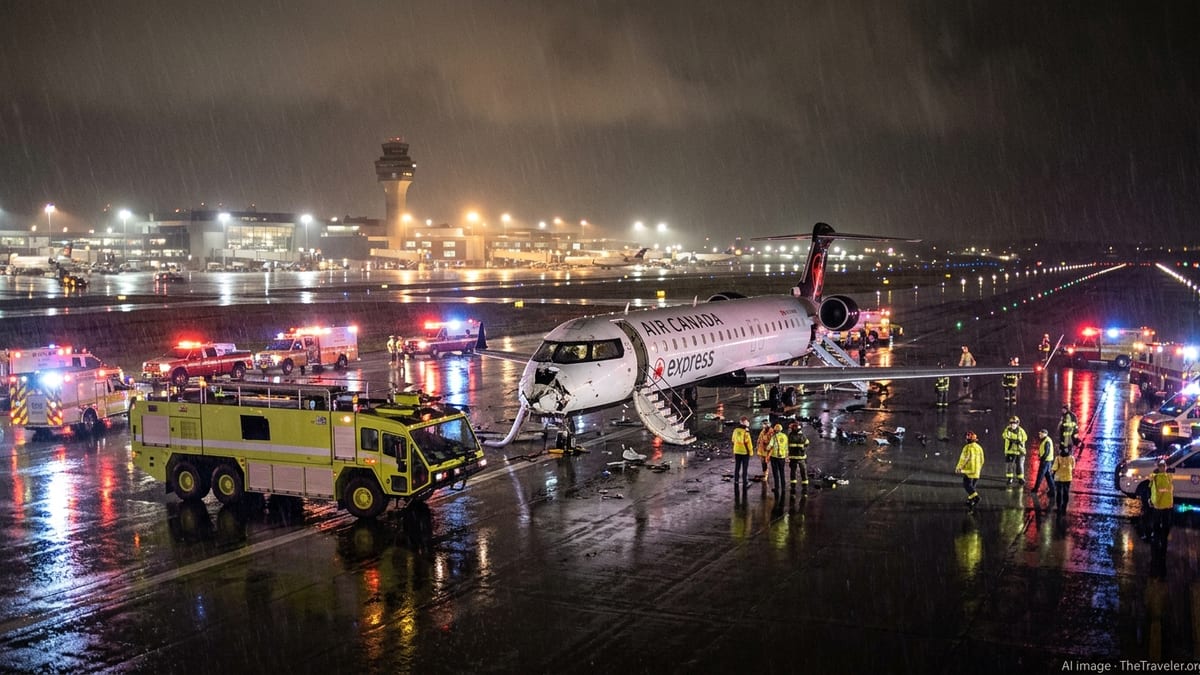
Delays Mount at LaGuardia as Weather and Congestion Collide
Publicly available tracking data for June 2 and June 3 indicates that LaGuardia once again operated under heavy strain, with multiple carriers experiencing rolling delays that extended well into the evening. While the headline numbers for this latest episode center on six cancellations and roughly 210 delays involving Delta, United, JetBlue and regional partners including Republic, Endeavor and Mesa, the impact on passengers was disproportionately large because many flights at LaGuardia are short-haul and high-frequency.
Operational summaries from flight status services show LaGuardia handling a dense schedule of regional jets and narrowbody aircraft during peak hours, leaving little margin when weather or air traffic restrictions are introduced. Even a modest ground delay program can lead to aircraft waiting on stands for new slot times, which in turn compresses turnarounds and pushes departure times later throughout the day.
Reports from aviation analytics providers describe the latest disruption as part of a pattern at New York’s constrained airports, where strong winds, low visibility and congestion regularly interact with crew and maintenance limitations. In this environment, a handful of cancellations can occur when extended delays would push crews past duty limits or create tight connections for aircraft needed on later rotations.
Industry observers note that LaGuardia’s ongoing modernization has improved the passenger experience inside the terminals, but the airport’s physical layout and runway capacity continue to limit its resilience during busy travel periods. As a key hub for domestic and transborder operations, any slowdown at LaGuardia is quickly felt on downstream flights.
Knock-on Effects at Hubs Across the United States
The disruption at LaGuardia did not remain local. Flight tracking dashboards show delays propagating throughout airline networks, affecting departures and arrivals in Miami, Dallas, Boston and Chicago, among other major U.S. cities. When LaGuardia flights depart behind schedule, the aircraft and crews involved often operate subsequent segments to large hubs, increasing the risk of compounding delays.
In recent nationwide operational roundups, Dallas Fort Worth and Chicago have repeatedly appeared among the airports with the highest daily delay counts, particularly when New York experiences weather-related restrictions. Miami and Boston, both important nodes for connections to Latin America and the Northeast, are also vulnerable to ripple effects from LaGuardia disruptions, given the concentration of Delta, United and JetBlue services serving the New York market.
Operational reports indicate that Delta and its regional affiliates Endeavor and Republic bore a significant share of Tuesday’s LaGuardia-related schedule pressure, consistent with their role in feeding the carrier’s hubs and focus cities. United and its partner Mesa have also featured in recent data on weather and congestion disruptions, reflecting the tight scheduling of regional operations that support mainline banks at major hubs.
Airport performance summaries suggest that once departure banks from New York slip by an hour or more, recovery becomes challenging without trimming flights. Airlines may convert longer delays into outright cancellations in order to reposition aircraft and crews more efficiently for the remainder of the day.
Canadian Gateways Feel the Strain
The latest LaGuardia disruptions also reached north of the border, touching Toronto and Montreal, which both maintain busy transborder schedules to New York. Data from delay monitoring services shows that when LaGuardia slows, short-haul flights to Canada face heightened risk of late departures and missed slot times, particularly during afternoon and evening peaks.
Published coverage of cross-border operations notes that flights between LaGuardia and Canadian hubs often carry a mix of business travelers and connecting passengers. Many are routed onward to domestic Canadian destinations or onward international services, meaning a delay on a 90-minute sector can cascade into missed connections across multiple time zones.
Canadian airport performance snapshots for recent weeks have recorded elevated levels of arrival and departure delays on days when U.S. hubs contend with storms or air traffic constraints. Toronto Pearson and Montreal Trudeau, already busy with their own local weather and congestion, can see gate availability and handling resources tested when disrupted aircraft from New York arrive in bunches rather than according to plan.
Travel advocates in Canada have pointed to these transborder disruptions as an example of how closely integrated North American air networks now are, with relatively minor schedule changes at one congested U.S. airport capable of unsettling operations hundreds or thousands of miles away.
Broader Context of 2026 Airline Disruptions
The fresh wave of LaGuardia travel chaos comes against a broader backdrop of irregular operations across the U.S. airline sector in 2026. According to recent summaries from passenger rights organizations, the first half of the year has delivered several days with thousands of delays and more than a hundred cancellations nationwide, driven by a combination of severe weather, tight staffing and high demand.
Delta, United and JetBlue have all featured prominently in these tallies, along with regional affiliates such as Republic, Endeavor and Mesa that operate a large share of short-haul routes under major airline brands. Earlier in the spring, published analyses highlighted periods when Delta and its partners cancelled or delayed hundreds of flights in a single weekend as they struggled with crew scheduling constraints, while United and JetBlue grappled with their own congestion and equipment challenges.
Data from U.S. Department of Transportation reports shows that regional carriers, which connect smaller cities to large hubs, consistently record higher percentages of delays and cancellations than some mainline operations. Aviation analysts suggest this is partly due to complex routing patterns that rely heavily on tight turnarounds at constrained airports such as LaGuardia.
Passenger advocacy groups argue that the current pattern underscores the vulnerability of the hub-and-spoke system when capacity is stretched. As airlines operate closer to their limits to meet demand, a single weather front or ground delay program can cause disproportionate disruption, especially at slot-controlled airports in the New York area.
What Travelers Are Experiencing and How to Prepare
For travelers caught up in the latest LaGuardia disruptions, the experience has been familiar: long lines at customer service desks, gate changes and rolling departure times on terminal display boards. Social media posts and anecdotal accounts describe passengers sprinting between concourses in Miami and Chicago to make tight connections, as well as overnight stays required when evening flights from New York missed their departure windows.
Consumer guidance published by passenger rights organizations emphasizes several practical steps for those flying through LaGuardia and other congestion-prone hubs. Recommendations include booking longer connection times when possible, traveling with carry-on baggage to simplify rebooking and monitoring airline apps closely for gate and schedule changes. Some organizations also encourage travelers to familiarize themselves with refund and rebooking policies, which differ between airlines and depend on whether a disruption is within the carrier’s control.
Recent updates on federal passenger protections highlight evolving rules around compensation and assistance in cases of lengthy delays or cancellations. While exact entitlements vary by circumstance and carrier policy, information from government and nonprofit sources underscores that travelers may have more options than they realize when flights are significantly disrupted.
With summer travel demand already building, analysts expect that LaGuardia and other major hubs will remain under pressure in the coming weeks. The latest episode of cancellations and delays affecting Delta, Republic, Endeavor, United, Mesa and JetBlue serves as another reminder of how quickly operational issues in New York can ripple throughout the wider North American air network.