


More news on this day
A motorist escaped serious injury in a collision with a train this week, in an incident that has renewed attention on the dangers of road–rail crossings and the ripple effects such crashes can have on travel networks.
Get the latest news straight to your inbox!
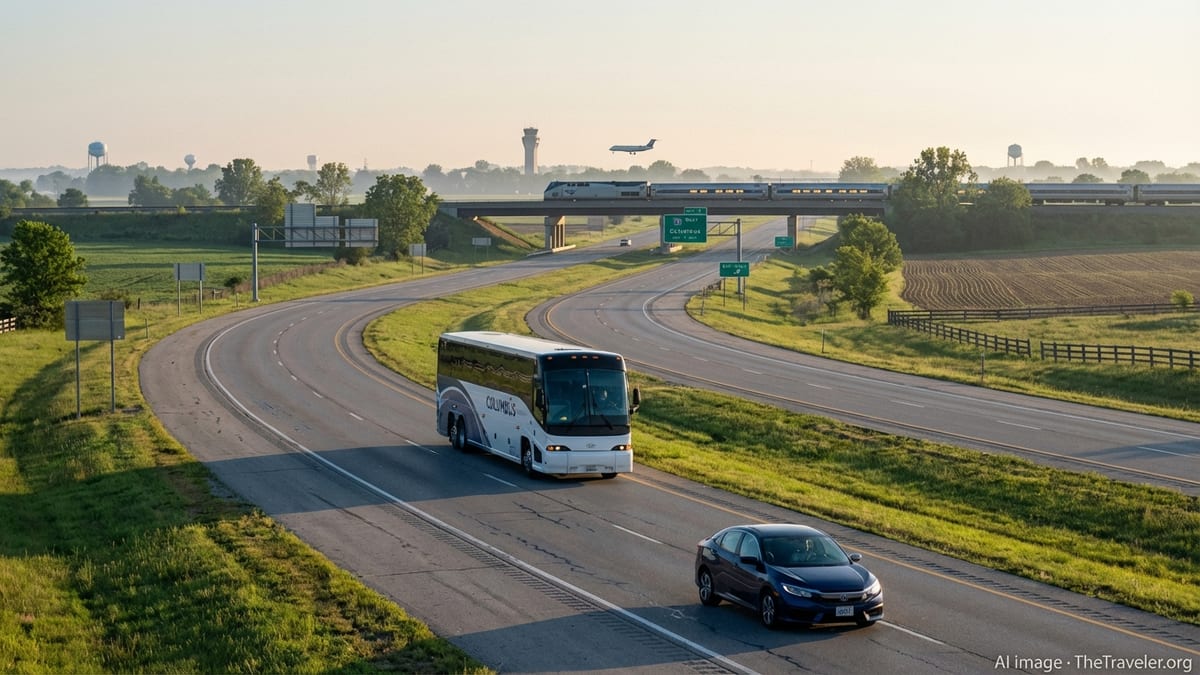
Close Call Highlights Persistent Grade-Crossing Risks
Initial reports indicate the driver was able to walk away from the crash or was treated for non-life-threatening injuries, a fortunate outcome in a type of incident that often proves deadly. The collision occurred at a road–rail intersection where a train struck a vehicle that had ended up on or too close to the tracks. While the exact sequence of events remains under review, early accounts suggest the car bore the brunt of the impact, with rail equipment remaining upright and continuing on reduced speed or coming to a controlled stop.
Across North America, publicly available data show that hundreds of motorists are killed or seriously hurt every year in similar circumstances. In many cases, safety devices such as flashing lights, warning bells and crossing arms are in place, yet crashes still occur when vehicles queue over tracks in congestion, attempt to beat an oncoming train or become immobilized on the rails. Transportation-safety summaries describe grade crossings as a long-standing focus of accident-reduction efforts for both freight and passenger operators.
In contrast to more severe wrecks that have dominated recent headlines, this latest collision is being viewed as a reminder that even non-fatal incidents carry significant risk. Investigators typically look at driver actions, sight lines, road design and the functioning of crossing signals to determine whether any systemic issues contributed. For local travelers, the outcome underscores how quickly a routine drive can intersect with high-speed rail traffic.
Although the motorist in this case avoided life-threatening harm, the crash fits a broader pattern in which individual behavior at crossings often proves decisive. Safety campaigns from railroads and public agencies consistently urge drivers never to stop on the tracks, to obey all warning devices and to abandon a vehicle immediately if it stalls with a train approaching, emphasizing that trains require long distances to come to a halt.
Travel Delays and Disruption for Rail Passengers
Even when serious injuries are avoided, a collision between a vehicle and a train can quickly cascade into a travel disruption affecting hundreds of people. Passenger services may be halted while emergency crews, rail inspectors and cleanup teams secure the scene. Trains behind the incident can be delayed or rerouted, and buses are sometimes deployed to bridge gaps in the network until tracks are cleared.
Recent incidents across the United States and Canada illustrate how a single crash at a crossing can snarl commuting for hours. Light-rail systems have reported service gaps after vehicles struck trains in dense downtown corridors. Intercity routes have faced multi-hour delays when collisions caused fuel leaks, debris on the right of way or minor damage requiring mechanical checks before the train could move again. In some cases, small fires, damaged crossing gates and scattered vehicle parts have prompted extensive inspections.
Rail travelers are frequently advised to monitor agency alerts when such disruptions occur. Publicly accessible service notices commonly reference collisions as the cause of delays, and operators sometimes hold trains outside incident zones until authorities complete documentation. For visitors relying on trains to reach airports, cruise terminals or tourist destinations, an unexpected shutdown at a grade crossing can force last-minute route changes or missed connections.
In the latest case, initial indications are that disruption was measured in hours rather than days, but local traffic backups around the crossing added to the impact. Detours for road traffic, emergency-vehicle staging and temporary signal outages often create bottlenecks that persist long after rail service resumes, particularly in communities where a small number of crossings carry the bulk of through traffic.
Patterns Emerging From Recent Train–Vehicle Collisions
Published coverage of rail incidents this year points to recurring themes among crashes that do not result in fatalities. In several metropolitan areas, motorists or pedestrians on the tracks have escaped with minor or moderate injuries, even after being struck by commuter or rapid-transit trains. In other cases, videos have captured vehicles being pushed along the rails after impact, only for occupants to later be described as stable or with non-life-threatening trauma.
Reports from cities in Florida, Texas and California, for example, have documented vehicles hit at crossings that produced dramatic visuals but limited injuries, sometimes because the train was slowing for a station stop or because the vehicle absorbed most of the force. In Canada, a recent case near Halifax involved a pedestrian surviving a train strike with injuries that were described in media accounts as not life-threatening. These events stand in contrast to more catastrophic collisions, but analysts note that the physics involved remain unforgiving.
Investigative summaries also describe situations in which warning devices were operating as intended, yet a driver proceeded onto the tracks, or where congestion trapped a vehicle between gates. Some crashes stem from misjudged attempts to cross ahead of a fast-moving train, while others involve distracted driving or confusion about multilane traffic patterns near the rails. When such factors result in only minor injuries, rail-safety specialists often characterize the outcome as unusually fortunate rather than typical.
Authorities reviewing these events frequently categorize them as preventable, pointing to long-standing guidance that any presence on the tracks should be treated as an immediate hazard. For rail travelers, the pattern underlines how vulnerable even modern passenger and freight systems remain to outside behavior at level crossings, despite ongoing investments in signaling, public education and corridor fencing.
Safety Initiatives Aimed at Drivers and Rail Users
The near-miss outcome for the motorist has refocused interest in safety initiatives that target both drivers and rail passengers. Across many countries, rail operators, government agencies and nonprofit groups periodically launch awareness campaigns urging motorists to treat crossings with the same caution as busy intersections. Messages typically emphasize that trains cannot swerve, take much longer to stop than road vehicles and may be quieter than expected, especially modern passenger sets.
Engineering measures are also part of the response. In higher-risk locations, transport planners have explored or implemented road realignments, grade separations and upgraded crossing technology. This can include brighter LED signal lights, improved signage in advance of crossings, barriers designed to discourage slaloming around gates and, in some cases, the closure of low-traffic crossings in favor of safer alternatives nearby. Such steps are often prioritized in corridors with dense passenger traffic or a history of collisions.
Travel advisories for visitors occasionally highlight rail-safety basics alongside guidance on road rules and public transport etiquette. Tourists unfamiliar with local rail operations may not appreciate how frequently trains pass through certain areas or how quickly a train can appear on seemingly quiet tracks. Including grade-crossing dos and donts in rental-car packets, tourism brochures and online travel guides has been suggested as a low-cost way to reinforce best practices.
The latest collision, in which the motorist avoided serious harm, is being cited in some commentary as an opportunity to reinforce these messages. While large-scale rail disasters tend to draw the most attention, transportation-safety observers argue that everyday grade-crossing incidents pose a more routine threat to individual travelers and can be mitigated through a combination of infrastructure upgrades, enforcement and consistent public outreach.
What Drivers and Travelers Can Learn
For drivers, the circumstances of this crash underscore several practical lessons. Approaching a crossing at reduced speed, scanning carefully in both directions and obeying all active warnings remain fundamental practices. Motorists are widely advised never to attempt to pass around lowered gates, to avoid stopping on the tracks in heavy traffic and to exit their vehicle immediately if it becomes stuck, moving away from the rails at a diagonal in the direction of the oncoming train.
Rail passengers and riders on urban transit systems are also part of the safety equation. Staying behind marked platform edges, avoiding distractions near track areas and crossing only at designated points can reduce the risk of being caught in an unexpected train movement. Transit agencies frequently highlight these guidelines in station announcements and signage, particularly in busy tourist seasons when unfamiliar riders are more common.
For the broader travel community, this incident illustrates how road behavior and rail operations are closely linked. A single miscalculation at a crossing can trigger not only personal danger but also service interruptions that ripple through commuter patterns, long-distance itineraries and freight deliveries. In an era when many destinations promote rail as a sustainable alternative to driving, maintaining safety at the points where roads and tracks intersect remains central to public confidence.
The motorist’s escape from serious injury offers a rare positive note in a category of incidents that too often ends in tragedy. For planners, rail operators and travelers alike, it serves as a prompt to revisit long-standing guidance, examine local crossings with a critical eye and approach every encounter with the rails as a moment that demands full attention.