

More news on this day
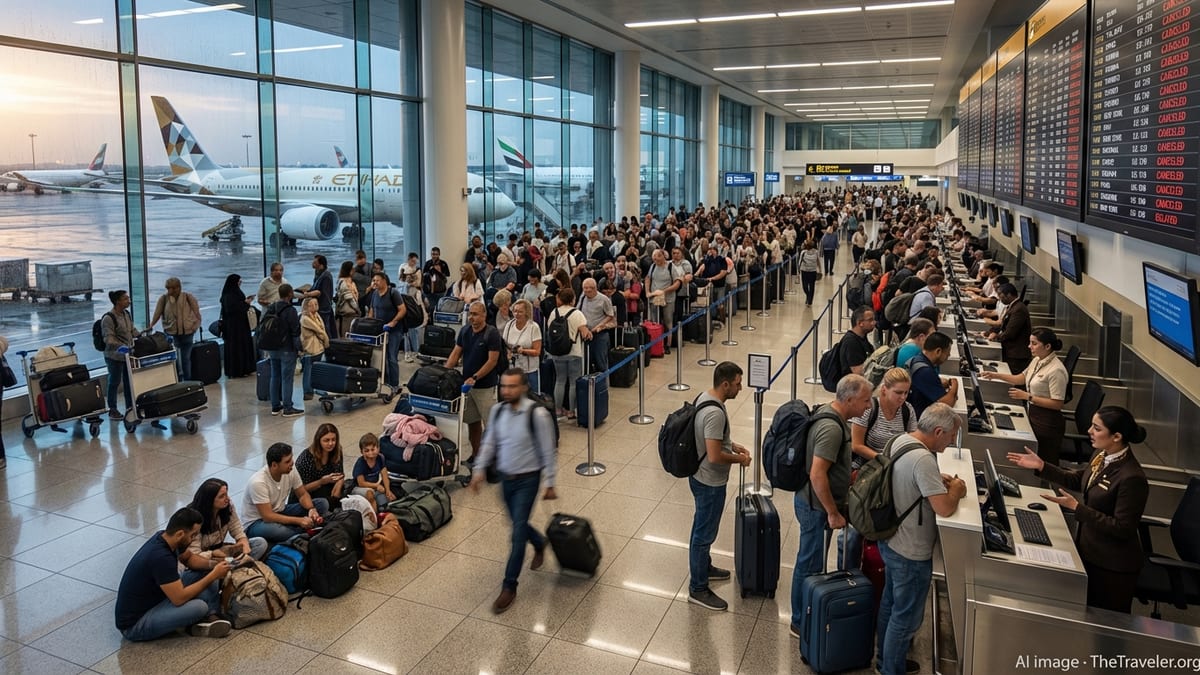
Kuwait International Airport is confronting renewed disruption after a fresh series of cancellations by Kuwait Airways, Qatar Airways, Jazeera Airways and Etihad Airways, with nearly a dozen flights scrubbed on routes linking Kuwait City to Doha, Manila, Delhi, Cairo, Zurich, Abu Dhabi, Dubai and other major hubs.
Get the latest news straight to your inbox!
New Cancellations Underscore Fragile Recovery
The latest round of flight cancellations comes just weeks after Kuwait began gradually restoring traffic at Kuwait International Airport following months of disruption linked to regional security tensions and earlier airspace closures. Publicly available schedules and traveler reports indicate that services which had only recently resumed are again being trimmed or withdrawn on short notice.
Flight-status data for Kuwait Airways on June 23 show several services to and from key regional gateways marked as canceled or heavily delayed, including flights on the busy Kuwait–Dubai corridor and services connecting with South Asian and European routes. Similar patterns are visible across select Qatar Airways and Etihad Airways operations touching Kuwait, where limited frequencies and sudden schedule changes have become common.
Local and regional coverage over recent weeks has highlighted how Kuwait-based Jazeera Airways and other Gulf carriers initially shifted parts of their networks to alternative airports while Kuwait’s main hub recovered from earlier strikes on airport infrastructure. Even as more routes have returned to Kuwait International, the latest cancellations underline that operations remain in a delicate phase.
Aviation analysts note that in such environments, airlines typically operate with minimal slack in aircraft and crew resources, which can magnify the impact of any security alert, technical issue or airspace restriction, increasing the likelihood of last-minute cancellations for passengers.
Key Routes to Doha, Manila, Delhi and Cairo Affected
The current disruption is most visible on high-demand regional and expatriate-heavy routes. According to published flight logs and passenger accounts, services linking Kuwait City with Doha, Abu Dhabi and Dubai have seen a cluster of cancellations and schedule adjustments, affecting travelers relying on Gulf hubs for onward connections to Europe, Africa and Asia.
Flights between Kuwait and Doha are particularly important for passengers connecting onto Qatar Airways’ long-haul network. When these feeder flights are removed or consolidated, travelers can lose access to onward services to destinations such as Zurich, Manila, Delhi and Cairo, even if the long-haul legs remain scheduled. This effect is amplified when multiple Gulf carriers reduce Kuwait frequencies at the same time.
Recent complaints from passengers traveling between Manila and Kuwait, as well as between Kuwait and major Indian cities including Delhi, describe journeys disrupted by extensive delays followed by outright cancellations, with notifications sometimes arriving only hours before departure. These routes serve large expatriate communities and typically operate with high load factors, so each canceled rotation can leave hundreds of travelers seeking alternative arrangements.
On the Kuwait–Cairo and Kuwait–Zurich corridors, travelers have also reported short-notice cancellations or rebookings. While some affected passengers have been transferred to later flights or routed via third-country hubs, others have turned to rival airlines or entirely different departure airports in the Gulf region in order to complete their trips.
Operational Strain After Earlier Airspace Closures
The new wave of disruptions cannot be separated from the broader instability that has affected Kuwait’s aviation sector throughout 2026. Earlier this year, Kuwait temporarily closed its airspace in response to regional hostilities, halting regular traffic at Kuwait International Airport and forcing airlines to divert or suspend services. During that period, Kuwait Airways and Jazeera Airways routed portions of their operations through airports in neighboring Saudi Arabia, while foreign carriers reduced or froze Kuwait schedules.
As authorities moved to reopen the airport on a gradual basis from late spring, domestic and foreign airlines began rebuilding their networks around Kuwait. Reports indicate that flight operations resumed in phases, with local carriers returning first and international airlines following once infrastructure checks and security assessments were completed.
Despite that progress, the legacy of months of disruption is still visible in the patchwork of schedules, reduced weekly frequencies and tight turnaround times at Kuwait International Airport. Airlines are managing a complex mix of aircraft rotations, crew positioning and regulatory requirements, any of which can trigger additional cancellations when combined with adverse weather or renewed security alerts.
Industry observers point out that even limited interruptions at a hub like Kuwait can have outsized knock-on effects for multi-leg itineraries. When a departure from Kuwait to Abu Dhabi or Doha is withdrawn, for example, connecting passengers risk missing intercontinental flights, leading to a cascade of rebookings, hotel arrangements and baggage-handling challenges.
Passenger Impact and Rebooking Challenges
The human impact of the latest cancellations is playing out across social media and travel forums, where passengers describe missed family events, delayed work assignments and long hours spent in queues or on call centers trying to secure alternative flights. Travelers on routes between Kuwait and Manila, in particular, report being held at the airport for hours before being informed of cancellations, with some eventually rebooked days later or rerouted via other Gulf cities.
Publicly available guidance from several affected airlines emphasizes that schedules remain fluid and subject to change for operational and safety reasons. Many carriers are offering waivers for change fees or fare differences on disrupted routes, although the practical benefit of these policies can be limited when alternative flights are already fully booked or frequencies have been significantly reduced.
For passengers who booked multi-carrier itineraries, the situation can be even more complex. When a Kuwait-originating segment operated by one airline is canceled, tickets that include onward flights on a partner or unrelated carrier may need to be reissued or revalidated, a process that often requires coordination across different reservation systems and channels.
Travel advisors note that some passengers have opted to reposition themselves to nearby Gulf gateways such as Dammam, Riyadh or Dubai to access more stable long-haul options, especially when their journeys are time sensitive. This workaround, however, adds extra cost and logistical effort, and is not feasible for all travelers.
What Travelers Should Do Now
With Kuwait International Airport still in a period of operational volatility, passenger advocates and experienced travelers alike are urging anyone with upcoming flights through Kuwait to take a more proactive approach to trip management. This includes monitoring flight status closely in the 24 to 48 hours before departure, using both airline websites and independent flight-tracking tools to spot schedule changes early.
Given the pattern of late-notice adjustments, travel specialists suggest building additional time into itineraries, particularly for long-haul journeys that depend on a single connecting flight from Kuwait into a Gulf or European hub. Allowing extra buffer hours or even an overnight stay can reduce the risk that a short-haul cancellation will cause travelers to miss nonrefundable long-haul segments.
Passengers are also encouraged to familiarize themselves with the disruption policies of the airlines operating their tickets, including rules on rebooking, refunds and accommodation in the event of cancellation. Some carriers serving Kuwait currently offer more flexible change options or wider rebooking windows than others, which can be an important consideration when choosing between similar itineraries.
While the pace of route resumptions suggests that Kuwait’s aviation sector is slowly recovering from the shocks of early 2026, the latest cancellations by Kuwait Airways, Qatar Airways, Jazeera Airways and Etihad show that travelers should continue to plan for uncertainty when flying to or from Kuwait in the near term.