


More news on this day
Frontier Airlines is preparing to launch its first-ever flights to South America from Orlando International Airport, unveiling new nonstop routes to three major cities in Colombia that are set to begin in December 2026.
Get the latest news straight to your inbox!
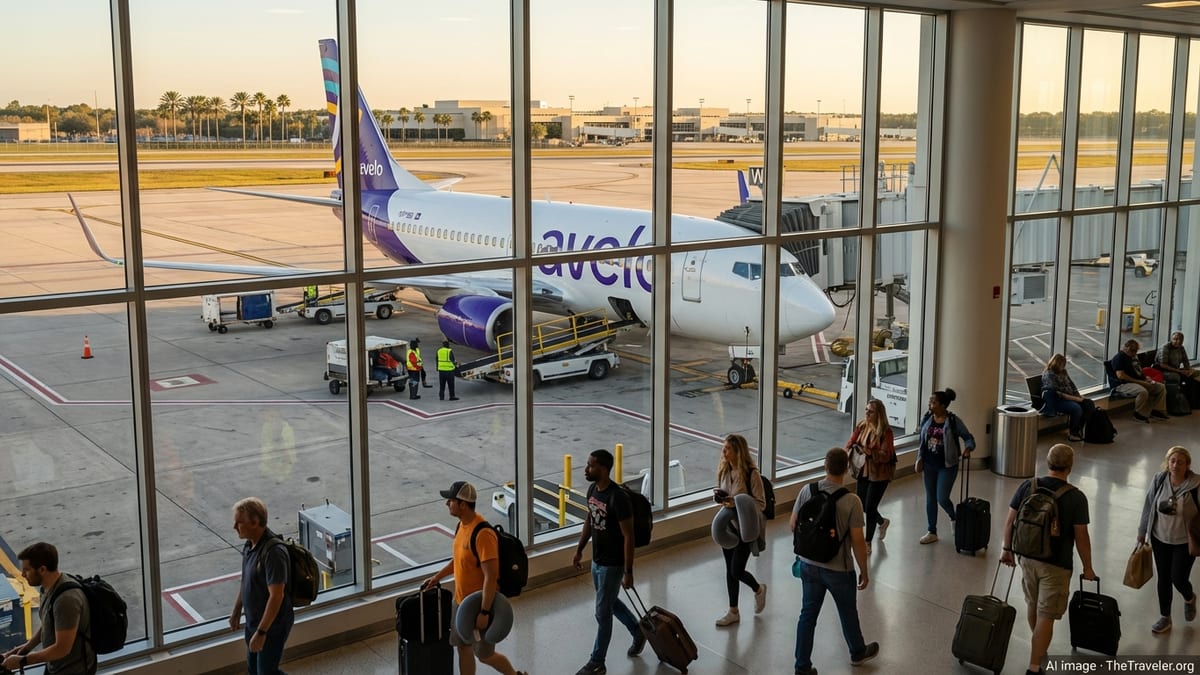
New Nonstops Link Orlando With Bogotá, Cartagena and Medellín
According to airline announcements and route filings, Frontier will introduce nonstop flights from Orlando International Airport to Bogotá, Cartagena and Medellín, marking both the carrier’s debut in South America and its first scheduled service between Orlando and Colombia. The move places Orlando at the center of a new ultra-low-cost connection between the southeastern United States and one of Latin America’s fastest-growing aviation markets.
Industry schedule data indicates that service to Medellín’s José María Córdova International Airport is planned to begin on 10 December 2026 with daily flights operated by Airbus A320neo aircraft. Routes to Bogotá’s El Dorado International Airport and Cartagena’s Rafael Núñez International Airport are scheduled to follow in the same month, creating a three-city Colombian network anchored in central Florida.
Publicly available information from Orlando International Airport and Colombian tourism organizations shows that the new flights will initially offer around 14 weekly frequencies, rising to 15 from March 2027 as the Orlando–Bogotá route ramps up to daily service. The pattern is designed to give both leisure and visiting-friends-and-relatives travelers multiple options each week in both directions.
These additions build on Orlando’s existing links to Latin America but represent a new tier of capacity at ultra-low fares on the Colombia corridor. Aviation analysts note that Frontier has framed the expansion as a way to target price-sensitive travelers while stimulating new demand on routes that have previously been dominated by full-service and hybrid carriers.
Strategic Milestone in Frontier’s International Network
Frontier has been steadily growing its international footprint in recent years across Mexico, Central America and the Caribbean. Entering South America from one of its largest focus cities, Orlando, is being viewed by network observers as a strategic milestone in that evolution.
Company materials describe the expansion as part of a broader strategy to prioritize underserved and higher-fare markets with point-to-point flying. The selection of Bogotá, Cartagena and Medellín aligns with that focus, as all three cities are major Colombian population and tourism centers with strong existing demand for U.S. travel but relatively limited exposure to ultra-low-cost competitors on routes from Florida.
Route specialists point out that choosing Orlando as the U.S. gateway allows Frontier to plug its new South American destinations into an expansive domestic network. The airline already operates dozens of routes from Orlando to U.S. and Caribbean cities, creating a web of potential same-day connections for passengers traveling onward from Colombia.
At the same time, basing South American expansion in Orlando leverages the airport’s role as a high-volume leisure hub. Orlando International Airport has consistently ranked among the busiest U.S. gateways for international visitors, particularly families combining theme-park vacations with trips to other parts of the country.
Tourism and Trade Opportunities for Central Florida and Colombia
Tourism boards in both Central Florida and Colombia have highlighted the potential economic impact of the new service. Public information released by Colombian promotional agencies notes that the Orlando flights are expected to support increased visitor flows not only to Florida but also to other U.S. regions accessible through Frontier’s network.
Orlando’s tourism sector, which already draws tens of millions of visitors annually, stands to benefit from easier access for Colombian travelers, many of whom visit for theme parks, retail and entertainment. Local business groups have also emphasized the importance of more nonstop air service in supporting trade, education and cultural exchanges between Central Florida and Colombia’s largest urban centers.
Aviation data suggests that Colombia has been one of the most dynamic outbound markets in Latin America in recent years, with growing middle-class demand for international travel. By adding capacity at ultra-low fares, the new Orlando routes could open the door for first-time flyers as well as repeat visitors who previously relied on one-stop itineraries through other U.S. hubs.
In the opposite direction, the launch creates new opportunities for U.S.-based travelers to reach Colombian destinations without connecting through traditional hubs. Medellín and Cartagena in particular have emerged as prominent tourism and remote-work locations, while Bogotá remains a key gateway for connections to secondary cities throughout Colombia.
Ultra-Low Fares Aim to Reshape the Orlando–Colombia Market
Frontier’s entry into the Colombia market from Orlando introduces a different fare and product model to the corridor. The airline is known for its unbundled, ultra-low-cost structure in which customers purchase a basic seat and can add options such as bags, seat selection and priority services for an additional fee.
Travel industry commentary indicates that the carrier has promoted the South America launch with introductory pricing and discount offers typical of its previous route rollouts. While exact fare levels vary by date and demand, the presence of a new ultra-low-cost competitor is expected to exert downward pressure on average ticket prices between Central Florida and Colombia over time.
Observers also note that Frontier has emphasized schedule flexibility and network-wide initiatives such as no-change-fee policies on many tickets in recent years. These changes are designed to make the low-cost model more appealing to international travelers who may be planning longer and more complex itineraries involving connections and extended stays.
As with other market entries by ultra-low-cost carriers, there is an expectation among analysts that some of the growth will come from stimulation: travelers who would not have taken the trip at previous price points, or who will travel more frequently because of lower fares and added capacity.
Competitive Pressure in a Growing Latin American Gateway
Orlando International Airport has been steadily expanding its Latin American reach, and the arrival of Frontier’s South America service adds another competitor into a busy field. Existing carriers already connect Orlando with destinations across the Caribbean, Mexico and parts of Central and South America, and the new Colombian routes are expected to intensify competition for both price-conscious and schedule-focused travelers.
Airport planning documents and airline schedules show that Orlando’s international traffic has been climbing, aided by the opening of the South Terminal complex and increased gate capacity. The addition of three new South American city pairs on a daily or near-daily basis fits into a broader pattern of the airport positioning itself as a major gateway for passengers traveling between North and Latin America.
From a competitive standpoint, the new Frontier routes may encourage other carriers to adjust capacity, pricing or schedules on overlapping city pairs and connecting itineraries. Analysts following the region suggest that legacy and hybrid airlines could respond with targeted promotions, loyalty-program incentives or additional frequencies to retain market share.
How the new services perform will be closely watched by industry observers as an indicator of demand elasticity between Central Florida and Colombia under an ultra-low-cost model. If the routes mature successfully, they could pave the way for further U.S.–South America expansion from Orlando and potentially from other Frontier focus cities in the years ahead.