


More news on this day
A Frontier Airlines flight diverted by severe weather left passengers stranded overnight after the operating crew reached federally mandated duty limits, according to passenger accounts and publicly available flight data, raising fresh questions about how ultra-low-cost carriers handle major disruptions.
Get the latest news straight to your inbox!
Weather Diversion Leads to Unexpected Overnight Ordeal
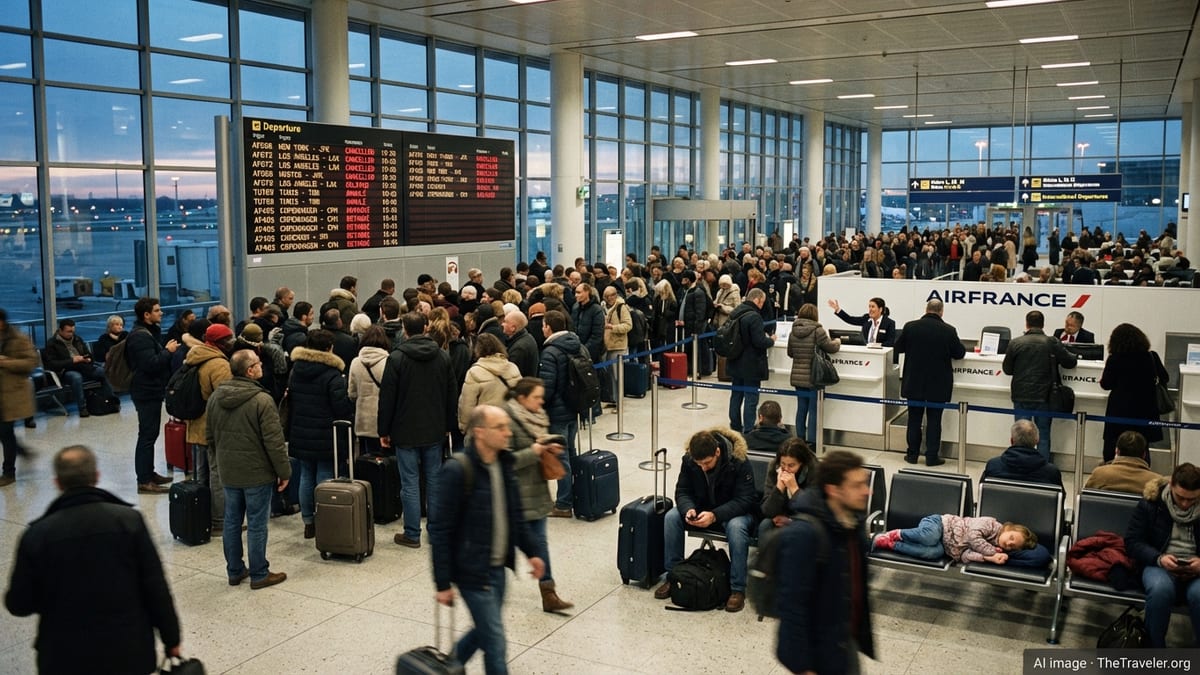
Reports emerging from recent Frontier Airlines operations indicate that a routine domestic flight turned into an overnight stay in an unintended city after severe weather forced a diversion and the crew later timed out. Passengers described arriving at a smaller regional airport with limited late-night services and being informed that the flight could not continue because the crew had exceeded duty-time limits after hours of weather-related holding and diversion procedures.
Publicly available flight-tracking data for several Frontier services in early September show multiple diversions and extended delays on routes affected by thunderstorms and congested airspace, particularly around major hubs. In at least one case, the aircraft diverted to a secondary airport where the carrier does not maintain a large ground presence, complicating efforts to quickly dispatch a replacement crew or arrange onward transportation.
Travelers posting about the incident on consumer forums and social media platforms describe confusion over next steps once it became clear the crew could not legally continue operating. Some passengers reported spending the night in terminal seating or arranging their own hotel rooms and ground transport while they waited for updated departure information the following morning.
The episode adds to a pattern of disruption complaints that have followed the carrier through the busy summer and early fall travel period, particularly when severe weather intersects with already tight schedules for aircraft and crews.
Crew Time Limits and Safety Rules Explained
Under federal aviation rules, airlines must comply with strict duty and rest requirements for pilots and cabin crew designed to prevent fatigue. These regulations limit how long crews may be on duty or flying within a given period and specify minimum rest times before they can take another flight. When weather delays accumulate, extended taxi times, holding patterns, and diversions can push a crew beyond those limits, triggering a mandatory timeout.
Aviation safety guidance emphasizes that once a crew times out, they are not permitted to continue flying, regardless of passenger inconvenience or the proximity of the final destination. Publicly available industry analyses note that this situation is particularly likely during widespread storm systems, when traffic management initiatives and airport congestion add to overall duty times.
In the Frontier incident, passengers reported being told late at night that their crew could no longer operate because of accumulated duty hours during the weather disruption. Commenters with aviation experience on public forums explained that this outcome is a predictable result of safety rules and not unique to one airline, although it can feel abrupt to travelers who have already endured long delays.
Operational experts frequently point out that while crew timeouts help preserve safety, they can also expose how much slack, or lack of it, exists in an airline’s network. Carriers with thin staffing or aggressive scheduling may have fewer reserve crews positioned to step in when a diversion occurs at an out-of-the-way airport.
Passenger Support, Vouchers and the Weather Exception
What happened after the timeout is at the center of many passenger frustrations. Accounts shared online indicate that stranded travelers received limited assistance with overnight arrangements, with some reporting only modest transportation vouchers or instructions to contact customer service for rebooking. Several passengers stated they were told the disruption was classified as weather-related, which can significantly reduce the carrier’s obligation to cover hotels or additional expenses.
Frontier’s publicly posted customer policies note that refunds or additional support may be more constrained when disruptions are caused by weather rather than by factors the airline directly controls, such as mechanical issues. Independent consumer-rights resources similarly highlight that in the United States, airlines are generally not required by regulation to provide meal or hotel vouchers in weather events, leaving much of the response to company policy.
Travel advocates who monitor ultra-low-cost carrier practices say incidents like this illustrate the importance of carefully reading fare conditions. Basic economy-style products commonly used by budget airlines often include more limited protections, and rebooking options may be restricted compared with traditional network carriers. Some passenger accounts from the recent diversion suggest that those who purchased additional travel protection or flexible tickets found it easier to secure alternative arrangements.
According to consumer complaint summaries and airline-rating services, overnight disruptions with minimal support have been a recurring theme in grievances involving discount carriers. Advocates recommend that travelers document communications and receipts when they incur extra costs, which may be useful when pursuing compensation, credit card claims, or travel insurance reimbursements.
Spotlight on Frontier’s Operational Resilience
The diversion and subsequent overnight stranding arrive at a time when Frontier’s operational reliability is under sustained public scrutiny. Airline performance trackers and passenger review platforms in 2026 have frequently cited delays, cancellations, and missed connections as common pain points for customers of the carrier. Analysts attribute some of these issues to the high utilization strategy typical of ultra-low-cost airlines, where aircraft and crews are scheduled for long daily rotations to maximize efficiency.
Industry research and consumer guides on Frontier’s performance note that such lean scheduling can leave limited room to recover when unexpected events occur. A single extended delay caused by storms or air-traffic restrictions can ripple across the network, affecting flights hours or even days later. In cases where a flight diverts to a smaller airport without Frontier’s own staffing or maintenance support, arranging a rapid recovery flight can prove particularly challenging.
In public-facing materials, Frontier emphasizes that safety remains its top priority and that weather and air-traffic control constraints are significant factors in irregular operations. However, passenger narratives from recent travel seasons underscore how vulnerable the airline’s model can be when major disruptions arise, especially for travelers on tight schedules or with onward international connections.
Aviation analysts suggest that as travel demand remains strong, competitively priced carriers may face growing pressure to demonstrate that low fares do not come at the expense of basic reliability or clear communication during irregular operations.
What Travelers Can Do When a Diversion Becomes an Overnight Stay
The latest Frontier incident is prompting renewed discussion about how travelers can better prepare for the possibility that a diversion and crew timeout could strand them overnight. Travel advisors generally recommend booking the earliest feasible departure of the day on routes prone to weather disruption, building in long layovers for self-arranged connections, and considering the trade-off between ultra-low fares and more flexible options offered by other carriers.
Passenger-rights groups advise that when a flight is disrupted, travelers should first confirm the reason recorded in the airline’s system, since this can determine eligibility for vouchers, refunds, or credits. Keeping screenshots of delay notifications and recording the sequence of events can help later if there is a dispute over whether the primary cause was weather, maintenance, or staffing.
Experts also highlight the value of travel insurance and credit cards with trip-interruption benefits, which may cover hotel stays, meals, or alternative transportation when schedules collapse. Even when an airline classifies a diversion as weather-related, these third-party protections can provide a financial backstop that the carrier itself does not offer under its standard policies.
For travelers caught up in the Frontier diversion, the experience has become an example of how quickly a routine flight can turn into a prolonged disruption when multiple stress points converge: severe weather, congested skies, tight crew schedules, and limited backup resources at smaller airports. As stories continue to circulate, the episode is likely to remain part of the broader debate over the cost and value calculus of ultra-low-cost air travel.