


More news on this day
A new analysis of aircraft drinking water is putting the spotlight on in-flight coffee and tea, with American Airlines, JetBlue and several other U.S. carriers earning some of the lowest scores for onboard water quality and drawing renewed criticism from travelers wary of what is in their cup at cruising altitude.
Get the latest news straight to your inbox!
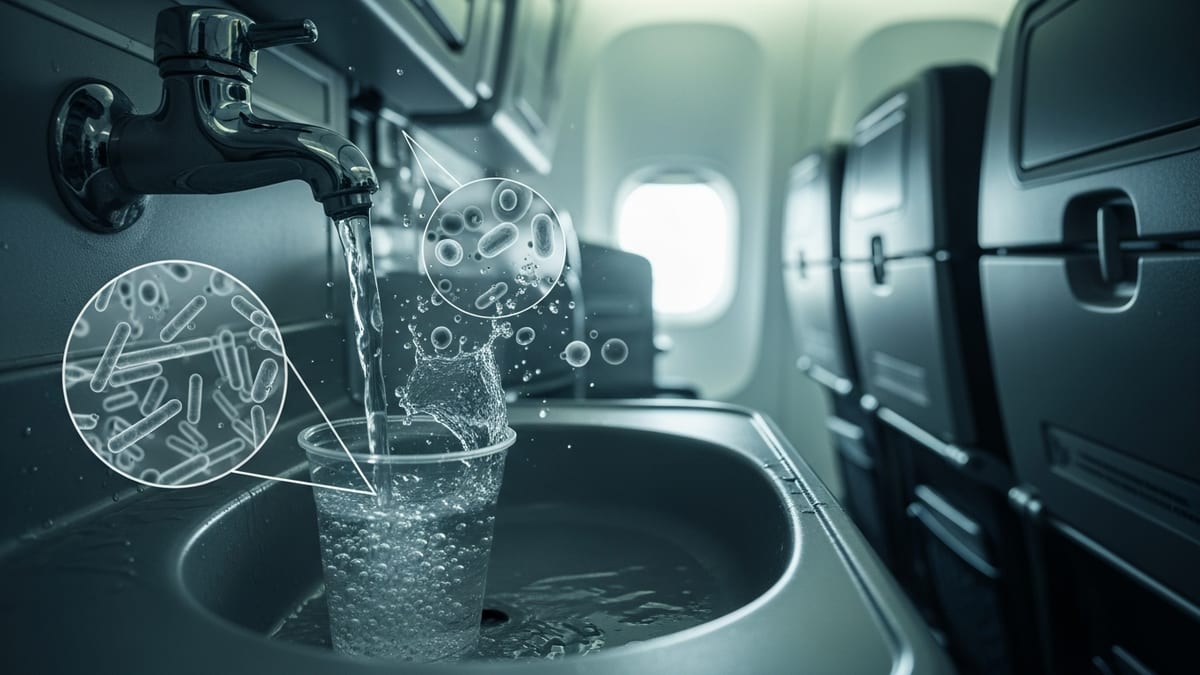
New Airline Water Study Raises Red Flags
A 2026 Airline Water Study by the Center for Food as Medicine and Longevity, which reviewed federal data on aircraft drinking water systems, reports that water quality can vary sharply from one airline to the next and that many carriers continue to fall short of safety benchmarks designed to protect passengers and crew. Published coverage of the findings indicates that the researchers relied on testing records and violation reports collected under the Aircraft Drinking Water Rule, the primary federal framework governing water supplied to commercial aircraft in the United States.
Among major U.S. airlines, American Airlines and JetBlue registered some of the lowest overall scores in the study, landing in the bottom tier for water safety. Reports summarizing the analysis state that both carriers received “D” grades on a 0 to 5 scale, reflecting a combination of microbial test results, violation histories and compliance actions related to onboard water tanks.
The same study ranked several competitors, including Delta Air Lines, United Airlines and Alaska Airlines, noticeably higher, suggesting that passengers on some carriers face a lower likelihood of encountering contaminated tap water during a flight. Researchers behind the report emphasized that they were evaluating relative performance rather than declaring any individual flight unsafe, but public discussion around the findings has centered on how water from aircraft tanks is routinely used for hot drinks served in the cabin.
Bacteria Findings Put Focus on Coffee and Tea
Attention on in-flight coffee quality is not just about flavor. Earlier academic work on aircraft water systems has documented a wide range of bacteria present in onboard tanks, including coliform organisms that are used as indicators of possible fecal contamination. One widely cited analysis of potable water from multiple airlines identified dozens of bacterial species in samples taken from aircraft galleys and lavatories, underscoring the challenge of keeping closed water systems clean over time.
The 2026 Airline Water Study drew on more recent regulatory testing data and found ongoing instances in which aircraft water samples from U.S. carriers tested positive for total coliform bacteria, and in some cases triggered additional checks for Escherichia coli. While the majority of samples met safety standards, the pattern of violations led the authors to conclude that the risk of exposure to microbes through coffee, tea or tap water in the lavatory remains a public health concern, particularly for travelers with weakened immune systems, older adults and very young children.
Consumer-focused travel outlets that reviewed the study have highlighted the practical implications for passengers who rely on mid-flight caffeine. Because galleys typically draw water for hot beverages directly from aircraft tanks rather than bottled supplies, a low water quality score for an airline can translate into both off-tasting coffee and a higher theoretical risk of ingesting unwanted bacteria, even when the water has been heated.
American and JetBlue Face Taste and Safety Criticism
The water findings arrive at an awkward moment for American Airlines, which has recently promoted a partnership with Italian coffee brand Lavazza as part of an effort to refresh its onboard beverage lineup. Travel industry coverage notes that American now serves Lavazza coffee across its network and lounges, framing the change as a premium upgrade. The new water study, however, has prompted some commentators to question whether improving the beans matters if the water quality used to brew them is inconsistent.
JetBlue, which has previously marketed its onboard snacks and drinks as part of a broader focus on customer experience, is also under scrutiny after scoring near the bottom of the latest rankings. Aviation news and passenger forums are filled with complaints that coffee on certain U.S. airlines tastes weak, metallic or chemical, and discussion of the study has fueled speculation that aging water tanks, infrequent flushing or contamination in ground-based water trucks could be contributing factors.
Online reaction from frequent flyers shows that many travelers were already wary of hot drinks prepared with tank water, choosing instead to accept only sealed bottled beverages. The latest report appears to be reinforcing that behavior, with some travel commentators advising readers to skip coffee and tea entirely on board airlines that scored poorly and to plan ahead by buying drinks in the terminal before boarding.
How Airline Water Is Regulated
Water quality on U.S. aircraft is governed primarily by the Environmental Protection Agency’s Aircraft Drinking Water Rule, which was introduced to bring airline practices more in line with standards used for public water systems. Under this rule, airlines must obtain potable water from approved sources, test onboard systems at prescribed intervals and disinfect and flush aircraft water tanks several times per year. The Federal Aviation Administration oversees compliance as part of broader maintenance programs, while the Food and Drug Administration regulates the airport watering points and servicing areas that supply the planes.
Despite these layers of regulation, previous government reviews have found that aircraft water systems frequently fall out of full compliance. Historical enforcement documents and technical support reports show that major carriers, including American and JetBlue, have accumulated hundreds of test results over the years in which coliform bacteria were detected in aircraft water, though not every detection represents an immediate health hazard. The new study’s critics have argued that context matters, pointing out that large airlines operate vast fleets and therefore have more opportunities for isolated problems to appear in the data.
Publicly available information from regulators stresses that the presence of total coliforms in a water sample serves as a warning sign requiring further investigation, while confirmed findings of E. coli indicate a stronger likelihood of contamination with human or animal waste. In response to earlier scrutiny of aircraft water quality, the industry has said through trade groups that it complies with federal requirements and that onboard water remains generally safe for normal use when systems are properly maintained.
What Travelers Are Being Advised to Do
Health and travel publications that have analyzed the latest water rankings are offering straightforward guidance to passengers. The consistent recommendation is to avoid drinking any water on board that does not come from a factory-sealed bottle and to be cautious about consuming coffee or tea prepared in the galley. Some experts cited in this coverage also suggest using alcohol-based hand sanitizer instead of washing hands with sink water in aircraft lavatories, particularly when traveling with infants, older relatives or anyone with underlying medical conditions.
For airlines, the findings present both a reputational and operational challenge. Improving scores would likely require more frequent testing and flushing of tanks, closer monitoring of the water trucks and hoses that connect airport infrastructure to aircraft, and potentially new investment in filtration or treatment systems. Passenger expectations are also rising, as travelers increasingly compare not just legroom and Wi-Fi, but also the quality and safety of the beverages they are served in flight.
The latest study has not prompted regulatory changes so far, but analysts say it is adding momentum to long-running questions about how often onboard water systems should be cleaned and tested, and whether regulators should tighten existing requirements. For now, the spotlight remains on carriers like American and JetBlue, where low water safety scores are colliding with high-profile coffee branding efforts and sharpening debate about what really goes into a seemingly simple cup of coffee at 35,000 feet.