


More news on this day
A residential "cruise for life" marketed as a chance to live indefinitely at sea has abruptly halted in Cambodia, leaving hundreds of long-stay passengers scrambling for housing, flights and refunds after being ordered to abandon their floating homes.
Get the latest news straight to your inbox!
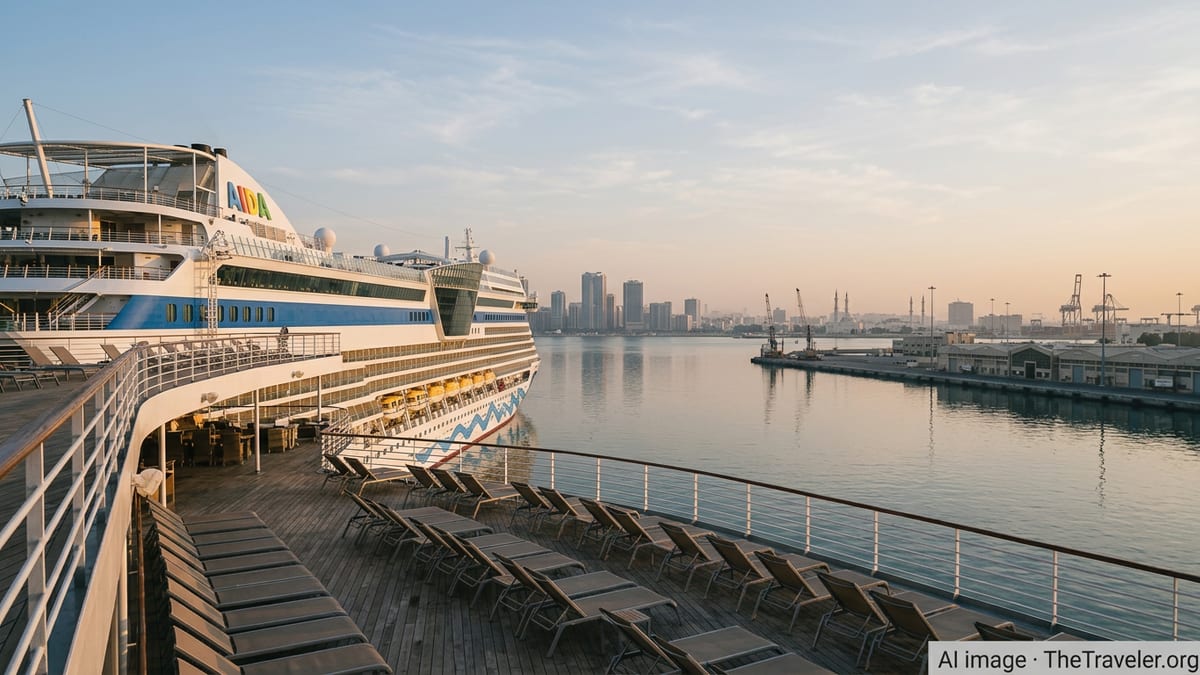
Dream of life at sea ends in Cambodian port
Publicly available coverage indicates that the vessel at the center of the disruption is the Villa Vie Odyssey, a residential cruise ship that had been promoted as a way to combine long-term living with a slow global circumnavigation. Around 200 residents had reportedly committed to multi-year or open-ended stays, boarding earlier in the year with the expectation that the ship would remain their primary home while visiting ports on several continents.
According to reports from passenger blogs and international news outlets, the ship’s global voyage came to a sudden halt during a scheduled call in the Cambodian port city of Sihanoukville. Residents who had expected only a short stopover were instead informed that the company was suspending operations and that they would have to leave the vessel with their belongings.
Accounts compiled by travel publications and regional media describe scenes of confusion in Sihanoukville as passengers tried to understand the implications of the shutdown. Many had already sold or rented out homes on land or restructured their finances to support life at sea, leaving them with limited immediate housing options ashore.
Coverage from Cambodian and regional outlets notes that the ship has been laid up in port while company representatives attempt to address financial and operational questions. No firm timeline has been publicly confirmed for any possible resumption of service, leaving the residential community effectively dissolved.
Fuel price shock and financial strain blamed for halt
Information shared by Villa Vie and cited in multiple reports points to a surge in fuel prices as the main trigger for the suspension. The operator reportedly described “extraordinary increases” in fuel costs that it said made it impossible to continue the planned itinerary while meeting existing financial obligations.
Residential cruises are heavily exposed to operating costs such as fuel and port fees, which are normally spread over long itineraries and high occupancy. In this case, reports indicate that revenues from the small, long-stay passenger base were no longer sufficient to absorb the sharp rise in fuel expenses. That imbalance appears to have forced an abrupt decision rather than a gradual reduction in service.
Some business coverage has framed the situation as part of a broader pattern of ambitious residential and multi-year cruise ventures facing financial headwinds once they move from marketing to day-to-day operation. Observers point out that these projects often require significant upfront investment, careful hedging of fuel costs and robust contingency planning to cope with volatile global energy markets.
Public filings and industry commentary further highlight that residential vessels can face higher-than-typical expectations from guests, who are treating the ship as a long-term home rather than a short holiday. Delivering that standard of service over many months adds additional cost pressures when margins are already tight.
Stranded residents confront housing, visas and travel costs
For those on board, the immediate concern has been far less abstract than fuel markets and balance sheets. Coverage by travel news outlets and accounts shared by passengers online describe a rapid scramble in Sihanoukville to secure hotel rooms, apartments and airline tickets out of Cambodia, often at short notice and in the middle of the northern hemisphere’s busy travel season.
Reports indicate that the company has arranged or funded some short-term accommodation and local transfers for affected residents, but that many costs associated with onward international travel remain the responsibility of individual passengers. With people originating from North America, Europe and other regions, routing options and fare levels vary widely, and not all travelers had budgeted for an unexpected relocation from Southeast Asia.
Visa rules have added another layer of complexity. Cambodia offers visa-on-arrival and e-visa schemes to citizens of many countries, but these generally assume short tourist stays rather than sudden, open-ended relocations. Travel law specialists quoted in broader cruise industry coverage stress that passengers disembarking unexpectedly in a foreign port must pay close attention to entry conditions, permitted lengths of stay and any need to extend or convert visas while they arrange new housing.
Health care continuity is another concern mentioned in multiple reports. Some long-stay residents had been relying on the ship’s medical facilities and scheduled access to pharmacies in port. Once ashore unexpectedly, they have had to transfer prescriptions, locate clinics and ensure they remain covered by insurance policies that may not have been designed around an unplanned stay in Cambodia.
Questions over consumer protections for long-term cruises
The sudden end of the “cruise for life” voyage has renewed scrutiny of consumer protections for unconventional cruise products that blur the line between travel and housing. Traditional holiday cruises are typically covered by well-established refund rules and financial security requirements in major markets, designed to protect travelers if an operator collapses or a voyage is cancelled.
By contrast, legal experts and industry commentators note that long-term residential arrangements at sea often rely on bespoke contracts, installment schedules and resale clauses that can be more complex. In some jurisdictions, passengers may not benefit from the same level of protection as package-holiday customers, especially if payments are structured more like lease agreements than conventional cruise fares.
Publicly available documents from other residential cruise ventures show that many operators reserve broad rights to alter itineraries, suspend service or cancel voyages when operating conditions change. The fine print can significantly limit liability for consequential losses such as the cost of selling or renting out a home on land, even when marketing materials have emphasized the idea of a life-changing move aboard ship.
Consumer advocates cited in recent analyses of the sector recommend that would-be residents scrutinize contract clauses on cancellation, financial guarantees and escrow arrangements before committing large sums. Some advise asking whether customer payments are ring-fenced from day-to-day operating expenses, and what mechanisms exist to secure partial repayments if a project is delayed, substantially altered or ended early.
Setback underscores risks in booming residential cruise market
The Cambodian shutdown is unfolding against a backdrop of growing interest in extended and residential cruising. In recent years, several companies have announced multi-year world cruises or purpose-built residential ships, pitching them to retirees, remote workers and digital nomads seeking an alternative to traditional housing on land.
Other projects have already faced difficulties. A high-profile three-year “live aboard” cruise branded as Life at Sea was cancelled before departure after its operator failed to finalize a suitable ship, prompting disputes over refunds and financial transparency. Another residential concept has repeatedly postponed its inaugural voyage while continuing to market long-term cabins, drawing investigative attention from international media and consumer watchdogs.
Industry analysts observing the latest events say that the Villa Vie Odyssey episode may make future customers more cautious, at least in the short term. Some predict that regulators in major cruise source markets could revisit how long-term and residential sea products are classified, potentially extending package travel protections or requiring clearer disclosure of financial safeguards.
For the passengers who boarded believing they had secured a “cruise for life,” however, the focus remains on immediate realities: finding a place to sleep in Sihanoukville or beyond, arranging flights and storage for luggage and possessions, and trying to recover funds that in many cases represented savings earmarked for a once-in-a-lifetime experiment in living at sea.