


More news on this day
Around 200 people who bought into a “cruise for life” dream on the residential ship Villa Vie Odyssey have been left stranded in Cambodia, after the operator abruptly halted its world voyage and cited spiralling fuel costs linked to the Iran war.
Get the latest news straight to your inbox!
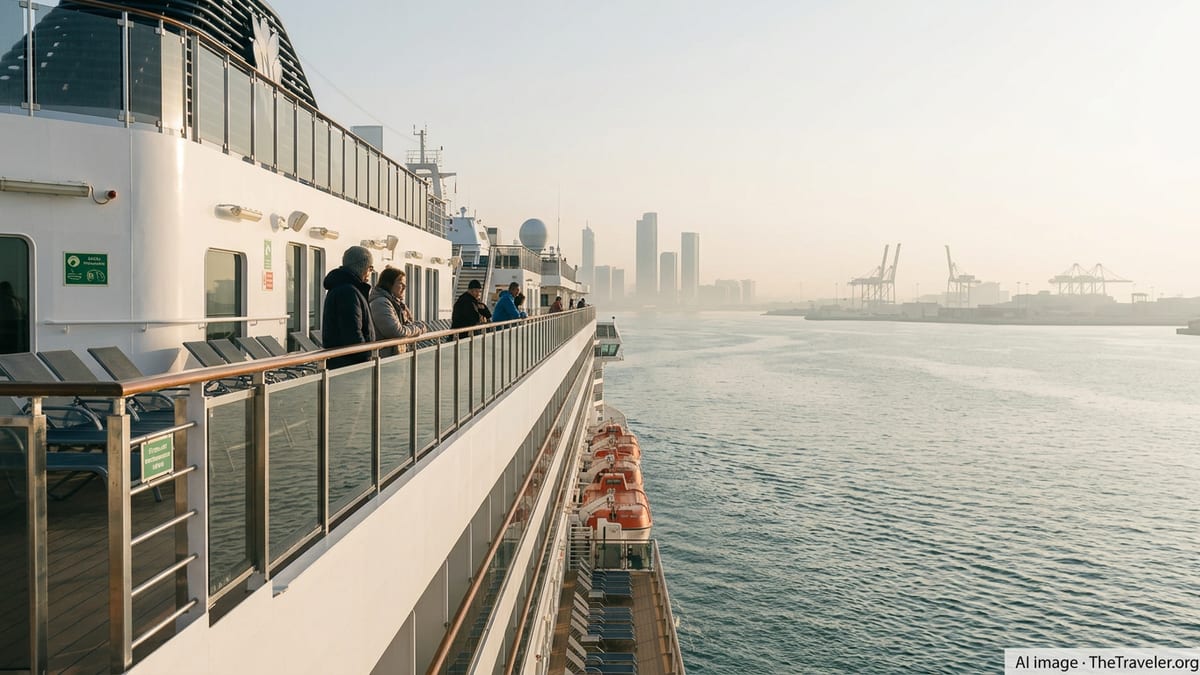
Dream of endless cruising cut short in Cambodian port
The US based company behind the project, Villa Vie Residences, confirmed through public statements that it has suspended operations while the ship is docked in Cambodia. Coverage from European and regional outlets indicates that residents were given limited notice to disembark with their belongings and seek accommodation ashore after the business determined it could no longer cover operating expenses.
The Villa Vie Odyssey had been marketed as a long term, potentially open ended way of life at sea, with apartments sold to travelers who wanted to combine global travel and full time residence. Passengers on board had planned to spend years circumnavigating the world, using the ship as a floating home rather than taking conventional time limited cruises.
Reports from Cambodia describe a sudden surge in demand for hotel rooms and serviced apartments around the coastal city where the ship is docked, as approximately 200 former residents scrambled to secure a place to stay. Some had already sold or rented out their homes on land to fund the move, leaving them heavily dependent on how quickly they can reorganize their lives and finances on short notice.
Publicly available information suggests that the ship remains in port while the company explores options, but there is no clear timetable for any potential resumption of service. For now, the voyage that was promoted as a new model of permanent travel has effectively ended in a single unplanned stop in Southeast Asia.
Iran war sends fuel costs soaring for cruise operators
Villa Vie Residences attributed its decision to suspend operations to what it described as an extraordinary rise in fuel prices since the outbreak of the Iran war earlier in 2026. The conflict has disrupted tanker traffic and raised risk premiums in and around the Strait of Hormuz, one of the world’s critical oil export corridors, helping to push up global marine fuel costs.
Industry and news reports over recent months have traced a pattern of shipping and cruise disruptions connected to the conflict, including vessel attacks, rerouted cargo traffic and higher insurance costs for ships operating near the Gulf. For cruise operators, which already work with thin margins, higher bunker prices and longer routes can rapidly turn once viable itineraries into loss making propositions.
According to statements cited in published coverage, the company behind Villa Vie Odyssey had already slowed its itinerary and increased time in port in an effort to reduce consumption after the war began. Those measures were not enough to offset the rising cost of fuel and other operating expenses, leaving the business unable to keep the ship sailing without fresh capital.
The Villa Vie episode underlines how geopolitical shocks can quickly hit niche corners of the travel market. Residential cruising models depend on sustained, predictable operating costs over many years, and a sudden spike in fuel prices can be far more damaging than for mainstream cruise brands that sell shorter itineraries and can redirect vessels or adjust pricing more rapidly.
Stranded residents face housing, visa and refund challenges
For the former residents now on shore in Cambodia, the end of the voyage has created a cascade of practical concerns, from immediate accommodation to longer term immigration and financial questions. Media accounts and online posts from passengers describe travelers working to secure local hotel rooms, short term rentals and onward flights while also navigating visa rules in a country many had not expected to stay in for more than a few days.
Because the Villa Vie Odyssey operated as a residential ship rather than a conventional cruise, some passengers had structured their lives around the expectation of remaining at sea for the foreseeable future. That means decisions such as terminating leases, selling homes or downsizing possessions now complicate their efforts to reestablish a land based base, whether temporarily in Cambodia or elsewhere.
How much of their investment passengers may eventually recover remains uncertain. Publicly available material about the project indicates that residents purchased cabins or long term stays, rather than buying traditional cruise tickets that are more directly covered by existing consumer protection schemes. The specific contract terms will shape what recourse, if any, they have to claim refunds in the event of prolonged suspension.
Travel law specialists note that in some major cruise markets, especially in North America and parts of Europe, operators embarking guests from domestic ports are required to demonstrate financial responsibility or maintain surety to cover passenger claims if a voyage is canceled before departure. Residential cruise models that embark in other jurisdictions, or sell their arrangements as real estate like products, may sit in a more ambiguous regulatory space, leaving passengers more exposed when things go wrong.
War reshapes cruise routes far beyond the Gulf
The troubles facing Villa Vie Odyssey are unfolding against a wider backdrop of cruise and shipping disruption linked to the Iran war. Cruise industry updates over the past several months have detailed a series of itinerary changes, suspended Middle East seasons and ship redeployments as operators reassess safety and profitability in the region.
Some cruise lines serving the Eastern Mediterranean and Arabian Gulf have removed calls in sensitive areas, lengthened routes to avoid chokepoints, or withdrawn vessels entirely from seasonal homeports affected by the conflict. Trade publications have also highlighted cancellations of specific sailings and the suspension of certain Eastern Mediterranean programs after ships were detained or repositioned due to financial and operational strain.
While the Villa Vie Odyssey case is unusual because of its residential model and its location in Southeast Asia, analysts point out that it reflects the same underlying pressures. Escalating geopolitical risk and higher energy prices are forcing cruise operators of all sizes to reconsider deployment plans, revise pricing and, in some cases, mothball or dispose of older or less efficient ships.
For travelers, that means a higher likelihood of last minute itinerary changes, rerouted voyages and even cancellations when external shocks collide with tight operating budgets. Travel advisories from several cruise brands already urge guests booked on routes touching the broader Middle East to monitor updates closely and be prepared for adjustments.
What the collapse means for future ‘live at sea’ projects
The abrupt end of the Villa Vie Odyssey voyage adds a new layer of scrutiny to the emerging residential cruise and “live at sea” sector. Over the past few years, several companies have marketed multi year or open ended world cruises, appealing to retirees, remote workers and digital nomads who want to swap land based housing for a cabin on a continuously sailing ship.
Some of those earlier ventures have also struggled. One high profile three year “life at sea” project was canceled before departure after concerns about ship readiness and financing, leaving would be residents seeking refunds and drawing regulatory attention in the United States and Europe. The Villa Vie situation, unfolding amid a major regional conflict that has driven up fuel costs, introduces an additional layer of perceived risk for prospective buyers.
Analysts following the sector suggest that future residential cruise projects may need to demonstrate stronger capitalization, more conservative fuel assumptions and clearer consumer protections in order to attract wary customers. Investors and passengers alike are likely to look more closely at charter arrangements, fuel hedging strategies and contingency plans for geopolitical shocks.
For now, the case of the Villa Vie Odyssey is serving as a cautionary tale for travelers considering tying their housing and lifestyle to a single ship. The promise of a “cruise for life” has met the reality of war driven fuel shocks and fragile business models, leaving hundreds of people to rebuild their lives on shore while the vessel that was meant to be their permanent home sits idle in a Cambodian port.