


More news on this day
A luxury residential cruise ship marketed as a multi-year “live at sea” world tour has abruptly suspended its voyage in Cambodia, stranding hundreds of passengers who had sold or rented out homes on land to relocate aboard the vessel, after the operator cited soaring fuel costs linked to the Iran conflict.
Get the latest news straight to your inbox!
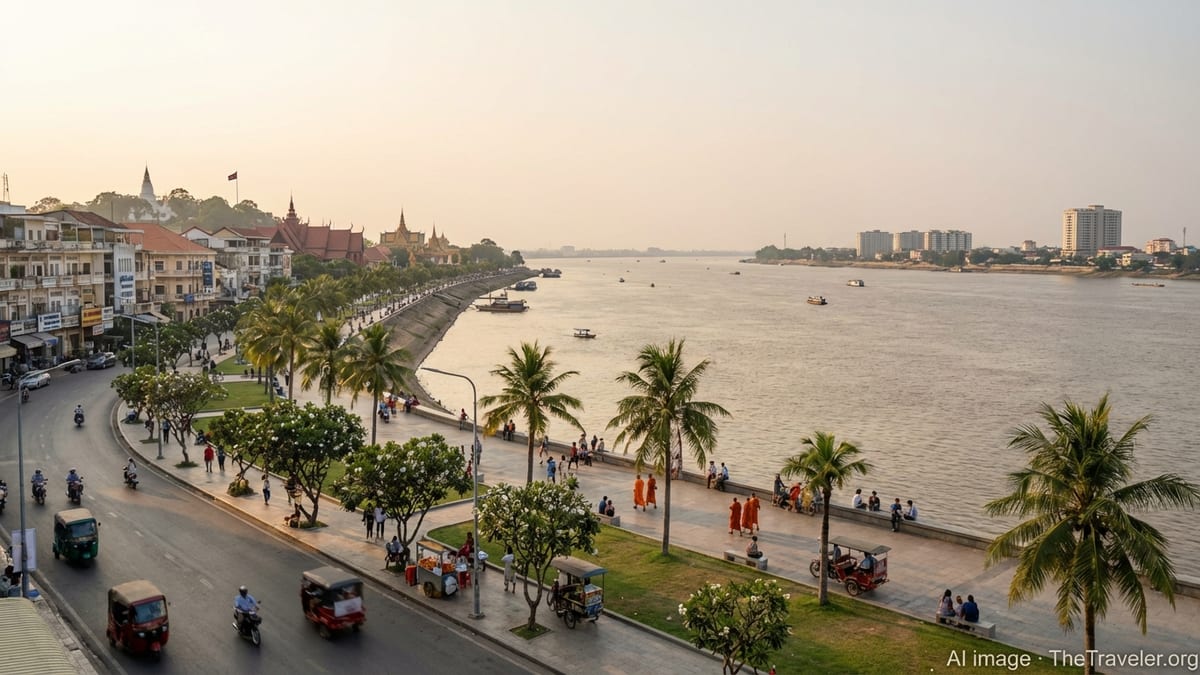
World-Circling Voyage Ends Abruptly in Sihanoukville
The Villa Vie Odyssey, operated by Florida-based company Villa Vie Residences, arrived in the Cambodian port of Sihanoukville this week and informed residents that its three-and-a-half-year global itinerary was being suspended. According to published coverage, the ship had departed Belfast, Northern Ireland, in October 2024 on a continuous voyage that was expected to visit nearly 150 countries across seven continents.
Reports indicate that around 200 to 650 people were on board at the time of the announcement, reflecting a mix of full-time “residents” and shorter-stay guests who had joined for specific segments. Many had planned to remain on board for years, having structured their finances and housing around the promise of long-term life at sea.
The suspension turned Sihanoukville, a busy deep-water port on Cambodia’s southern coast, into the ship’s unplanned final stop. Publicly available information shows that passengers were instructed to disembark with their belongings while the company evaluates its financial position and options for future operations.
The Odyssey is now expected to remain in lay-up in Cambodia while the company seeks additional capital and assesses whether the residential world-cruise concept can continue under current operating conditions.
Residential Cruising Concept Collides With Fuel Reality
The Odyssey was marketed as an alternative to traditional cruising and conventional retirement. Instead of booking short sailings, residents bought, leased, or rented cabins on long-term contracts, effectively turning the ship into a floating apartment building combined with a world tour. Promotional materials highlighted the ability to wake up in a new country every few days while enjoying the predictability of a single “home” on board.
According to publicly available information, the current voyage was designed to last approximately three and a half years, with an itinerary that circled the globe and emphasized slower travel and extended port calls. The ship itself is an older cruise vessel extensively refurbished to suit long-stay living, with dining rooms, lounges, fitness spaces, and work-friendly areas intended for passengers who continued their careers remotely.
However, the residential model also left the operator more exposed to long-term cost trends, particularly for marine fuel. Unlike conventional cruises that can rapidly adjust pricing and itineraries season by season, a multi-year, contract-based voyage has less flexibility to raise fares once residents are locked in, even as operating expenses escalate.
Industry filings from major cruise groups show that fuel has long been one of the largest and most volatile cost items for ocean travel. Those documents also note that geopolitical shocks, regulatory changes, and supply disruptions can quickly alter fuel pricing and availability, with knock-on effects for itineraries, ticket prices, and even route viability.
Surging Fuel Prices Linked to Iran Conflict
Published coverage on the Odyssey’s suspension points to “extraordinary” increases in marine fuel costs across Asia since the escalation of conflict involving Iran. The operator has indicated that average monthly fuel expenses per cabin on the current voyage rose from about 1,800 dollars to an estimated 6,000 to 8,000 dollars in certain parts of the region, a jump of more than 200 percent.
Broader energy data cited in news reports show that the price of diesel in the United States has moved sharply higher since late February 2026, when the latest phase of the Iran conflict intensified. Average prices reported by motoring associations increased from under 4 dollars per gallon before the conflict to well above 6 dollars in recent weeks, with similar or greater volatility in marine-grade fuels used by commercial shipping.
Analysts note that cruise operators can sometimes mitigate fuel spikes through hedging strategies, slower cruising speeds, schedule adjustments, or surcharges. Residential itineraries like the Odyssey’s, however, are less suited to sudden changes in route or pricing, especially once guests have committed to long-term contracts on the promise of a specific, globe-spanning journey.
In this environment, Villa Vie’s business model, which relied on stable or at least manageable fuel prices, appears to have come under severe strain. The company has said publicly that without significant new investment, it cannot keep the ship sailing at the current cost of fuel.
Stranded Residents Face Complex Logistics and Financial Questions
With the voyage halted, passengers are now facing the challenge of reorganizing their lives and travel plans from a port thousands of miles from home. Reports from passengers and local media describe residents scrambling to secure hotel rooms in Sihanoukville, book flights out of Cambodia, and arrange the shipment of luggage and personal effects that had accumulated during more than two years at sea.
For some, the disruption is more than a logistical inconvenience. Many residents had sold primary homes, terminated long-term leases, or put possessions into storage in order to finance cabin purchases or leases. Publicly available accounts suggest that some also structured remote work, schooling, or retirement around the expectation that the ship would remain their base through at least mid-2028.
Questions are emerging about refunds, future credits, and the status of contracts tied to cabins on the Odyssey and a second planned vessel that had been marketed for future delivery. The company has stated that it is pursuing restructuring and potential new funding, but detailed information on compensation, rebooking options, or the fate of the planned sister ship has not yet been finalized in public documents.
Travel industry observers note that the Odyssey case illustrates the particular vulnerability of long-duration products to sudden cost shocks. While most conventional cruises last days or weeks, multi-year residential voyages require passengers to take on significantly more financial and lifestyle risk if the operator’s assumptions about fuel, financing, or demand prove inaccurate.
What the Cambodia Stranding Means for Future “Live Aboard” Travel
The sudden halt of the Odyssey’s world tour is drawing attention across the cruise and long-stay travel sectors, which have increasingly experimented with extended itineraries, residential ships, and “work from sea” packages. Other operators, from luxury brands to expedition specialists, have introduced world cruises lasting 100 nights or more, and some have explored hybrid models where cabins can be purchased or leased.
Industry reports emphasize that fuel volatility is now a central strategic issue for these concepts. Regulatory changes in Europe and other regions are encouraging a shift toward cleaner, often more expensive fuels, while carbon-pricing initiatives and emissions regulations are expected to add further costs over the coming decade. Analysts argue that long-duration products may need more conservative pricing, stronger balance sheets, and flexible itinerary planning to withstand future shocks.
For travelers considering residential or multi-year cruises, the Odyssey episode underscores the importance of examining an operator’s financial strength, contingency plans, and contract terms related to cancellations and major itinerary changes. Travel specialists also highlight the value of maintaining some form of land-based safety net, such as retained housing options or flexible storage arrangements, when committing to life at sea for extended periods.
In Cambodia, the Odyssey now serves as a visible reminder of how quickly a dream of endless travel can be overtaken by global events. As passengers disperse from Sihanoukville to destinations around the world, the residential cruise experiment that promised a seamless, years-long circumnavigation has instead become an emblem of how fuel markets and geopolitics can reshape even the most carefully planned voyages.