


More news on this day
A cascading series of fuel routing and dispatch failures is rippling across some of Asia’s busiest air corridors, with Kuala Lumpur joining Singapore, Bangkok, New Delhi, Tokyo Haneda and Incheon in grappling with more than 2,600 single-day flight delays that have disrupted tens of thousands of passengers and strained regional airline operations.
Get the latest news straight to your inbox!
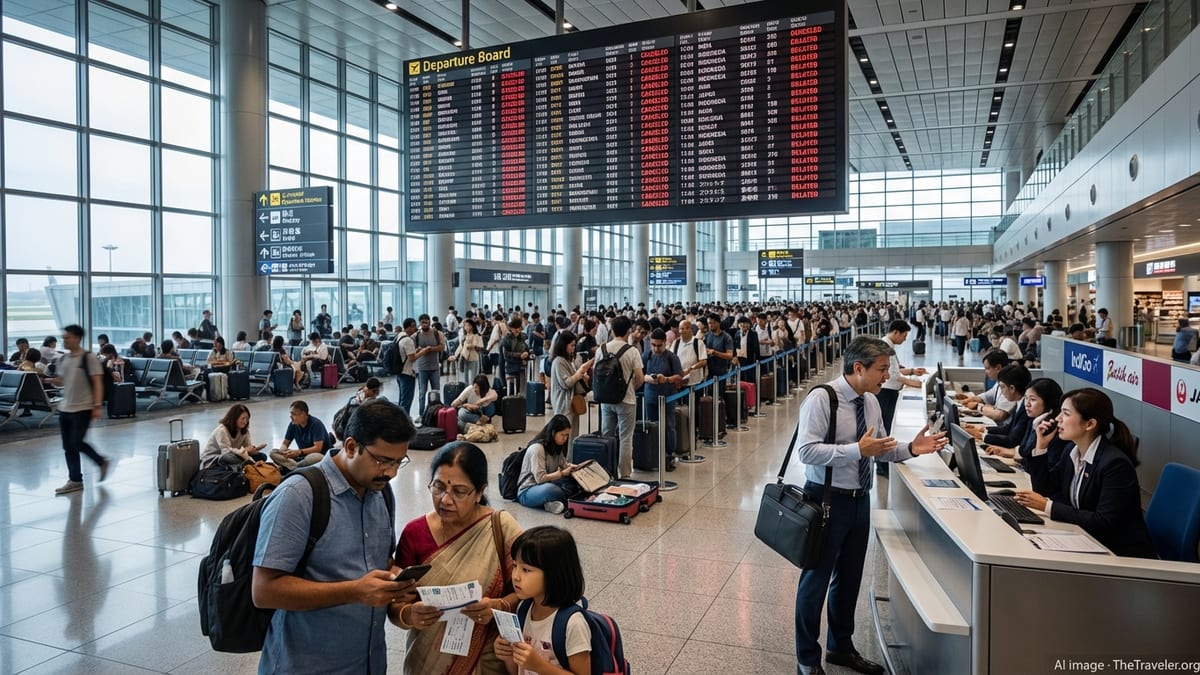
Regional Hubs Buckle Under Single-Day Wave of Delays
Major aviation data providers tracking day-of-operation performance across Asia report that, within a 24-hour window, more than 2,600 scheduled flights touching Kuala Lumpur, Singapore, Bangkok, New Delhi, Tokyo Haneda and Seoul Incheon recorded departure or arrival delays linked, at least in part, to routing and fuel planning disruptions. Publicly available dashboards show each of these hubs handling several hundred delayed movements, a concentration that stands out even against the backdrop of a generally busy summer travel period.
These airports form the backbone of Southeast and Northeast Asia’s trunk routes, connecting long haul services from Europe, the Middle East and North America with dense regional networks. When schedule integrity breaks along this spine, knock-on effects spread quickly to secondary cities across Malaysia, Thailand, India, Japan and South Korea, as aircraft rotations and crews fall out of position.
Operational bulletins and airport advisories indicate that the worst of the disruption has been concentrated in peak bank periods, particularly morning and late evening waves when long haul arrivals feed onward regional departures. Average delays of between 45 and 90 minutes on heavily trafficked city pairs such as Singapore–Kuala Lumpur, Bangkok–Tokyo and Delhi–Bangkok have been enough to cascade through the day’s rotations.
Fuel Supply, Routing Constraints and Dispatch System Strains
Industry reporting points to a convergence of fuel-related constraints and routing complications as a key trigger behind the unusually high volume of same-day delays. Airlines operating through the affected hubs have faced tighter tankering strategies, altered routings around congested or politically sensitive airspace, and last-minute changes to alternates, all of which increase the pressure on dispatch and flight planning systems.
Global coverage on aviation supply chains has highlighted how higher jet fuel costs, refinery bottlenecks and more circuitous routings on some long haul sectors have complicated uplift planning. When carriers are forced to tank more fuel at certain hubs and less at others, even small disruptions in supply or trucked deliveries can create shortfalls that push departures back while uplift is rebalanced and paperwork is reissued.
Dispatch centers and flight planning software have also been running under heightened load, as operators constantly recalculate great-circle routes, weather diversions and fuel burn assumptions to maintain regulatory reserves. When multiple hubs are simultaneously experiencing weather, air traffic flow restrictions and fuel planning adjustments, minor system slowdowns can rapidly translate into gate holds and prolonged ground times.
Kuala Lumpur’s Growing Role in a Stressed Corridor
Kuala Lumpur International Airport has emerged as a crucial node in this wider disruption pattern. Schedule data shows that the Malaysian hub has been handling a steadily rising volume of regional and medium haul flights, both from local carriers expanding their networks and from foreign airlines using Kuala Lumpur as an intermediate stop on dense Southeast Asian flows.
Recent route launches and capacity additions into the Kuala Lumpur area, including new services into the city’s secondary Subang airport, have increased the complexity of fuel logistics around the capital. More aircraft turns, greater diversity of aircraft types, and a mix of low cost and full service operations place extra pressure on hydrant systems, fuel trucks and documentation teams, especially during weather-related holding or peak evening departures.
On the day in question, tracking services show Kuala Lumpur recording several hundred delayed departures and arrivals, many of them on routes that interline with Singapore, Bangkok and major Indian cities. This created a feedback loop in which inbound late flights forced outbound delays, narrowing turnaround windows and leaving little margin to recover the schedule before the end of the operating day.
Knock-On Impacts Across Singapore, Bangkok, Delhi, Haneda and Incheon
Singapore Changi, Bangkok Suvarnabhumi, New Delhi Indira Gandhi, Tokyo Haneda and Seoul Incheon all reported elevated levels of delay across the same period, according to day-of-operation metrics published by flight tracking platforms and airport movement logs. Many of the late-running services at these hubs were part of multi-leg routings that also included Kuala Lumpur, amplifying the interconnected nature of the disruption.
At Changi and Suvarnabhumi, dense low cost carrier banks were especially vulnerable, as tight turn times leave little buffer for additional fueling checks or revised load sheets. Analysts note that even brief delays at a single gate can ripple across shared ground equipment, buses and stands, driving further schedule slippage as the day progresses.
In Delhi, Haneda and Incheon, the disruption was more visible on long haul and premium regional services, where complex crew duty limits and slot-controlled arrival windows limit flexibility. Any extended ground time for fuel recalculations or routing changes can force aircraft to miss optimal departure slots, resulting in additional holding in the air or rescheduled departure times that push into off-peak hours.
Passengers Face Missed Connections as Carriers Rebuild Schedules
For travelers, the most immediate effect of the cascading delays has been missed connections and extended ground waits at the major Asian hubs. Airline public statements and airport social media updates have urged passengers to allow extra time between connecting flights and to remain attentive to gate changes, as carriers juggle aircraft assignments and re-time services in real time.
Travel industry observers report that some carriers have prioritized maintaining long haul departure windows to protect slot portfolios at constrained airports in Europe, North America and the Gulf, accepting deeper delays on shorter regional legs instead. This has left certain intra-Asian sectors operating significantly behind schedule, particularly in the evening, as airlines attempt to reposition aircraft for the following day.
While most of the affected flights have eventually departed, rather than being cancelled outright, the concentration of more than 2,600 delays in a single day across six of Asia’s busiest hubs underscores how sensitive modern air networks are to disruptions in fuel routing and planning. With traffic volumes in the region continuing to grow, analysts suggest that more resilient fuel supply chains, greater automation in dispatch systems and wider operational buffers may be needed to prevent similar cascades across these critical corridors in the future.