


More news on this day
Bangladesh, Nepal and Thailand are scaling back selected flight frequencies as a sudden spike in jet fuel prices and uneven post-pandemic travel demand reshape route planning across South and Southeast Asia.
Get the latest news straight to your inbox!
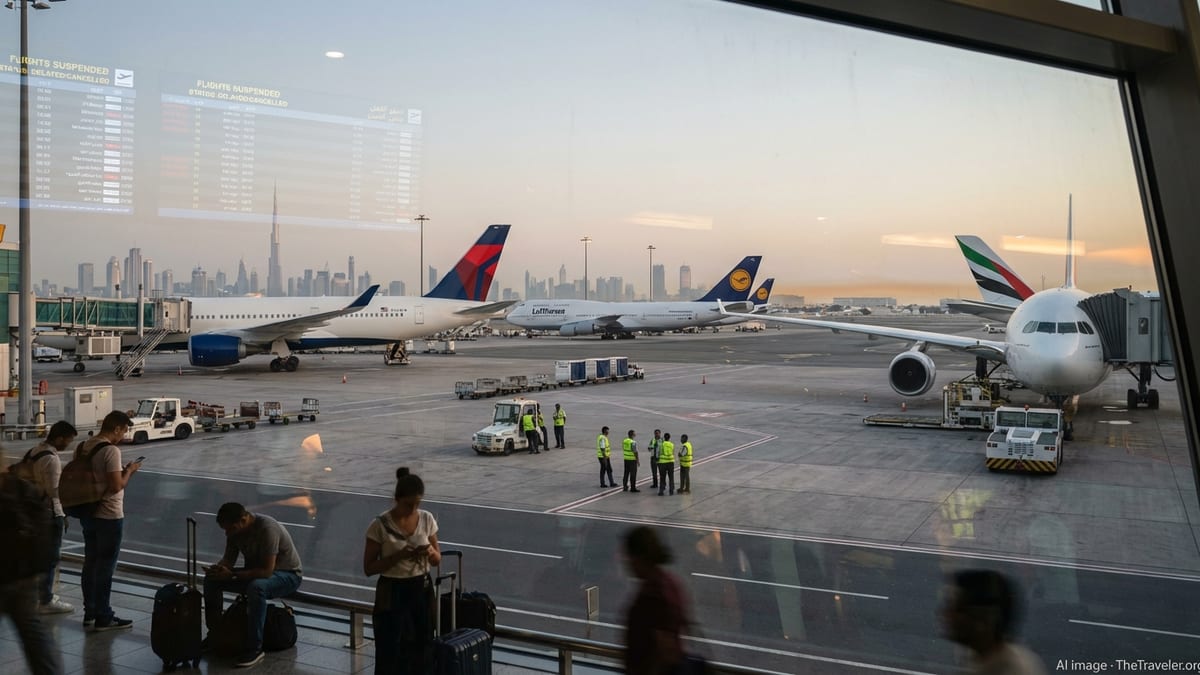
Fuel Costs Climb on Global Supply Disruptions
Aviation fuel prices have climbed sharply since late February 2026, following the escalation of conflict in the Middle East and the effective closure of the Strait of Hormuz. Publicly available market data indicates that benchmark jet fuel prices have nearly doubled in a matter of weeks, eroding already thin margins for airlines across Asia.
Analysts describe the current shock as one of the most severe fuel supply disruptions in recent years, with Asia particularly exposed because it relies heavily on imported oil and refined products routed through Gulf shipping lanes. Airlines that entered 2026 expecting broadly stable fuel costs are now confronting unplanned increases that can add millions of dollars to annual operating budgets.
Industry commentary from aviation consultancies and trade bodies shows that fuel, which typically accounts for about one quarter of an airline’s operating costs, has surged to well over 30 percent for many Asia Pacific carriers. The squeeze is forcing operators to reprice fares, adjust surcharges and, in some cases, trim flight frequencies on marginal routes where demand is too soft to absorb higher ticket prices.
Carriers in Bangladesh, Nepal and Thailand are among those recalibrating capacity as they weigh rising operating expenses against still-fragile demand patterns on regional and long-haul sectors. Their decisions offer an early indication of how the broader South and Southeast Asian aviation market may respond if fuel prices remain elevated through the peak northern summer season.
Bangladesh Carriers Reassess Regional and Long-Haul Networks
In Bangladesh, publicly available schedule data and local media coverage point to a measured pullback in frequencies rather than wholesale route closures. Biman Bangladesh Airlines and several foreign carriers serving Dhaka have been adjusting weekly flights on selected South Asia and Gulf routes, targeting rotations that show weaker load factors or limited premium-cabin demand.
Reports indicate that higher jet fuel costs are compounding existing headwinds such as currency depreciation and competitive pressure from larger Gulf and Indian carriers. On thinner point-to-point routes, especially those requiring longer flight times or circuitous routings to avoid congested airspace, even modest increases in fuel prices can quickly render additional frequencies unprofitable.
Network planners appear to be prioritizing connectivity to major labor and diaspora markets in the Middle East while trimming some regional services where travelers are more price sensitive and have alternative options via nearby hubs. Industry observers note that while headline passenger demand from Bangladesh remains resilient, the mix has shifted toward lower-yield traffic, limiting the ability of airlines to fully pass on surging fuel costs through higher fares.
Bangladesh’s experience underscores a broader regional challenge. Airlines that rely on narrow profit margins from migrant and visiting-friends-and-relatives traffic are more vulnerable when fuel costs spike, as aggressive fare hikes risk pushing budget-conscious travelers onto buses, low-cost competitors or indirect itineraries routed through third countries.
Nepal’s Domestic Market Contracts as Costs Spike
Nepal is facing one of the most acute adjustments, particularly in its domestic aviation sector. According to published coverage from Kathmandu-based outlets, aviation turbine fuel prices for domestic carriers have nearly doubled over the past year, with Nepal Oil Corporation citing global energy market turmoil as a key driver. The increase has pushed fuel to historically high levels in local currency terms.
Airlines such as Buddha Air and other domestic operators have responded by scaling back flight frequencies on several routes. One major carrier has reported cutting around a quarter of its daily flights after passenger numbers fell and fuel costs soared. Publicly available airport statistics show only a modest increase in domestic passengers in 2025 compared with the previous year, suggesting that demand was already plateauing before the latest fuel shock.
Carriers operating out of Tribhuvan International Airport and newer regional airports are reportedly consolidating services, focusing on peak-time flights to key tourism and business destinations while reducing off-peak rotations. Industry analysts say that for short, high-altitude sectors in Nepal, fuel burn per available seat can be substantial, so operating lightly booked flights at current fuel prices is increasingly difficult to justify.
The situation is further complicated by uncertain inbound tourism demand. While trekking and adventure travel have largely recovered from the pandemic era, booking patterns remain uneven, and travelers are highly sensitive to airfare spikes. Nepali airlines are therefore balancing the need to preserve essential connectivity for remote communities with the financial imperative to avoid flying loss-making frequencies.
Thailand Balances Strong Demand With Targeted Cutbacks
Thailand presents a more mixed picture. International demand to and from Bangkok, Phuket and other tourism centers has been among the strongest in Asia, with many long-haul routes reporting high load factors. Yet even in this comparatively buoyant market, sharply higher fuel prices and geopolitical uncertainty are prompting selective capacity adjustments.
Recent Thai-language business reporting shows that Thai Airways is preparing fare increases of roughly 10 to 15 percent on some routes to offset higher oil costs and the impact of Middle East airspace disruptions on flight times. At the same time, airline strategy research notes that the carrier’s earnings are highly sensitive to fuel price swings, encouraging managers to fine-tune schedules to focus on the most profitable city pairs.
Industry commentary indicates that while Thai Airways plans to add new aircraft and grow capacity on high-demand European and regional routes, it is also paring back frequencies on lower-yield services where demand is volatile or where alternative carriers offer dense competition. Some regional and secondary-city routes that were reinstated during the post-pandemic rebound are seeing reduced weekly flights as fuel surcharges rise and price-sensitive travelers reassess their plans.
Low-cost carriers serving Thailand are facing similar trade-offs. Travel industry analysis across Southeast Asia shows that budget airlines are cutting back on marginal cross-border routes and late-night rotations, reallocating aircraft to core leisure corridors where they can sustain higher fares. For Thailand, this means that while headline visitor numbers remain robust, connectivity to certain secondary destinations may become less frequent in the months ahead.
Travelers Face Higher Fares and Thinner Schedules
For passengers, the combination of rising fuel costs and uncertain demand is translating into higher average fares and fewer flight options on some routes linking Bangladesh, Nepal and Thailand to the wider region. Fare-tracking platforms and travel agencies across Asia are reporting double-digit percentage increases on select routes compared with early 2026, alongside a noticeable thinning of shoulder-period frequencies.
On heavily trafficked corridors, airlines are generally favoring price increases over deep capacity cuts, betting that leisure and visiting-friends-and-relatives traffic will absorb higher costs, at least in the short term. On thinner or more seasonal routes, however, the pattern is the opposite, with carriers quietly removing marginal frequencies and consolidating passengers onto remaining services to keep load factors high.
Industry analysts warn that if the fuel shock persists through the second half of 2026, further adjustments are likely. Airlines in Bangladesh, Nepal and Thailand may be compelled to shelve or delay planned route launches, extend the retirement of older, less fuel-efficient aircraft, or deepen partnerships and code-shares to maintain connectivity without bearing the full cost of operating every sector themselves.
Travelers planning trips involving these markets are being advised by regional booking platforms to build in more flexibility, including considering alternative routings, midweek departures and nearby airports where competition remains stronger. As the aviation industry waits for clarity on fuel supplies and prices, flight schedules across South and Southeast Asia are expected to remain fluid, with capacity decisions closely tied to the evolving economics of each route.