


More news on this day
The UK government has tightened its travel advice for Turkey and Egypt as regional tensions linked to the conflicts in Israel, Gaza and Iran heighten security concerns and raise the prospect of sudden disruption for holidaymakers across the eastern Mediterranean.
Get the latest news straight to your inbox!
Sharper Warnings For Key Tourist Regions
Updated Foreign, Commonwealth and Development Office (FCDO) guidance in late October 2026 underlines a more cautious stance on travel to parts of Egypt and Turkey, even as major tourist hubs remain open. The changes sit against a backdrop of ongoing conflict involving Israel, Gaza and Iran, which officials and security analysts describe as unpredictable in scope and duration.
For Egypt, the FCDO now reiterates that it advises against all travel to the Governorate of North Sinai and to areas close to the Libyan border, and against all but essential travel to defined buffer zones along Egypt’s western frontier. Publicly available information stresses that these recommendations are driven by a sustained risk of terrorist attacks, kidnapping and cross-border smuggling activity rather than by incidents at the main tourist sites along the Nile or Red Sea coast.
In Turkey, the UK government continues to advise against travel to areas of the south east bordering Syria and Iraq, while leaving popular destinations such as Istanbul, Cappadocia and the Turquoise Coast under standard safety guidance. The security section of the Turkey travel advisory highlights recent attacks and plots, noting that extremist groups in neighbouring Syria retain both intent and capability to strike within Turkish territory.
The overall message for British tourists is that while package holidays to established resort areas continue, travel closer to conflict-adjacent frontiers now carries a higher level of formally recognised risk, with implications for insurance cover and evacuation support if conditions deteriorate.
Middle East Conflict Drives Regional Risk Reassessment
The tightening of advice for Turkey and Egypt is closely linked to a wider reassessment of risk across the Middle East following an escalation in hostilities that spread beyond Israel and Gaza during 2026. Reports from multiple governments describe a pattern of missile and drone strikes, cyber operations and attacks on maritime shipping, particularly in and around the Strait of Hormuz, which has disrupted air routes and fuelled concerns over spillover instability.
Egypt’s updated guidance explicitly references the broader regional context, warning that the situation remains deeply unpredictable and that further strikes or retaliatory attacks by Iran or allied groups cannot be ruled out. The travel advice notes that while such incidents have so far been concentrated away from core visitor corridors like Cairo, Luxor and Sharm el Sheikh, they have had knock-on effects on aviation and border management.
In Turkey, the FCDO emphasises that events in Israel and Palestine have contributed to heightened tensions domestically, including a sharper security posture around diplomatic premises, places of worship and large public gatherings. Advisory language points to the potential for demonstrations or protests in larger cities, some of which may turn confrontational or attract a heavy police or gendarmerie presence, even if many pass peacefully.
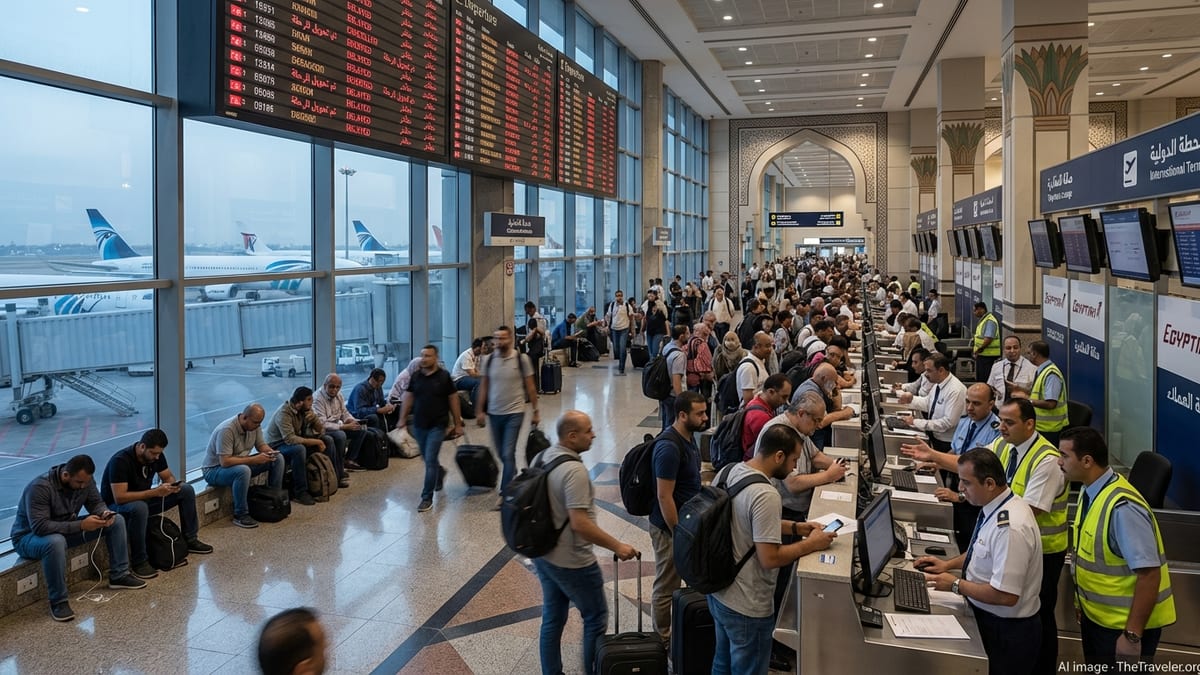
Regional observers also highlight that both countries play important logistical roles in air and sea movements around the eastern Mediterranean. Adjustments to regional airspace, diversions around higher-risk corridors and increased screening at transit hubs have added a layer of uncertainty for travellers using Istanbul or Cairo as gateways between Europe, the Gulf and Asia.
Border Crossings And Airspace Under Scrutiny
One of the clearest areas of concern in the latest UK advice is the possibility of sudden closures or tighter controls at key land borders and crossings. Egypt’s frontier with Gaza at Rafah, and its desert borders with Libya and Sudan, are described in multiple international advisories as vulnerable to rapid operational changes during periods of unrest or military activity.
The updated Egypt travel guidance points out that routes into and out of North Sinai remain highly restricted, with ongoing counter-terrorism operations and sporadic armed clashes. Travel from mainland Egypt towards Gaza can be curtailed at short notice, and potential visitors are warned that humanitarian or diplomatic considerations often take precedence over tourism-related movements when capacity is limited.
For Turkey, UK guidance underlines the longstanding prohibition on travel within close range of the Syrian border, reflecting risks from residual Islamic State elements, other armed groups and intermittent cross-border shelling. Although most UK visitors fly directly into western airports and stay far from these provinces, the advisory stresses that land travel in the south east, including to smaller cities and rural areas, should be carefully reconsidered.
On the aviation side, commercial carriers continue to adjust routings to avoid the most sensitive air corridors linked to the Iran conflict and to missile activity around the Red Sea and Gulf. Industry notices circulated to tour operators in March and April 2026 reported partial airspace closures over multiple Middle Eastern states, prompting longer flight times and occasional diversions. Travellers using Turkey and Egypt as transit points are advised to monitor airline notifications closely.
Implications For UK Holidaymakers And Tour Operators
The refined wording of the UK’s advice for Turkey and Egypt has practical consequences for travellers, particularly around insurance and package holiday protections. When the FCDO advises against all travel, or all but essential travel, to a region, many standard travel insurance policies exclude cover for trips that go ahead in spite of that guidance, which can leave visitors financially exposed if they encounter security incidents or evacuation costs.
Tour operators and airlines operating from the UK typically treat a formal change in government advice as a trigger for offering refunds, date changes or alternative destinations. Industry updates published following the early 2026 escalation in the Middle East indicate that major British travel firms have periodically re-routed or consolidated flights, especially those passing near higher-risk airspace, to align with evolving risk assessments and maintain insurance compliance.
At the same time, the FCDO continues to distinguish between high-risk border zones and the main holiday belts along Turkey’s Aegean and Mediterranean coasts and Egypt’s Red Sea resorts. Public guidance notes that millions of visitors still travel to these destinations each year, and that local tourism industries have in many cases strengthened private security, entry screening and contingency planning since earlier regional crises.
Travel planners suggest that British visitors pay particular attention to the exact wording of the advisory for the province or area they intend to visit, rather than assuming that a country-wide red rating applies. Booking flexible airfares, checking that insurance policies remain valid under the latest FCDO guidance, and registering contact details with consular services are increasingly presented as prudent steps rather than optional extras.
How Travellers Can Respond To The Changing Guidance
For UK residents with trips booked to Turkey or Egypt in late 2026 and beyond, the latest advisories do not amount to a blanket prohibition on travel, but they do call for more careful preparation. Travel and insurance specialists recommend monitoring the official FCDO pages for both countries in the weeks and days before departure, as updates can be issued with little advance notice when incidents occur.
Holidaymakers are also encouraged to think through their own risk tolerance and itinerary choices. Avoiding overland routes near high-risk borders, allowing extra time for security checks at airports, and staying informed about any local protests or political events in major cities can help reduce exposure to disruption. In resort areas, hotels and tour companies typically pass on new safety instructions or curfews, but travellers are advised to pay close attention rather than treating them as routine.
Those planning multi-country itineraries through the wider region face an added layer of complexity, particularly where journeys involve transiting Israel, Jordan or Gulf states that may themselves be subject to changing advisories. Travel analysts note that Turkey and Egypt may simultaneously serve as safer alternatives to direct travel into active conflict zones and as potential flashpoints if tensions spill over, which reinforces the need for up-to-date information.
Ultimately, the UK’s tighter advice on Turkey and Egypt reflects a volatile security environment rather than a categorical closure of two of its most popular long-haul holiday markets. For now, the emphasis is on informed decision-making, flexible arrangements and close attention to official updates, as travellers and the industry alike adapt to a more uncertain Middle East travel landscape.