


Few Istanbul views are as instantly recognisable as the panorama from Galata Tower. Yet many visitors arrive at the wrong time, face slow security lines, or miss sunset by just a few minutes. With visiting hours and ticket rules updated in 2026, timing your visit matters more than ever. This guide explains the current opening hours, last entry, crowd patterns and real-world strategies to help you enjoy the tower with minimal stress and maximum views.
Get the latest updates straight to your inbox!
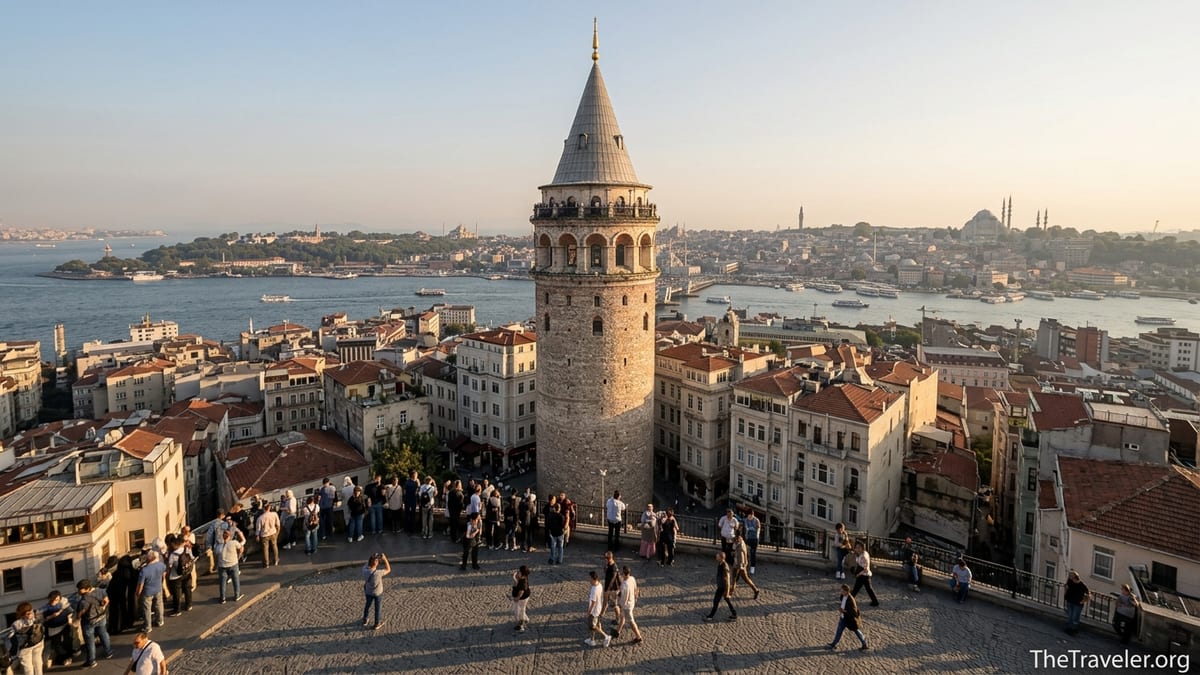
Current Opening Hours and Last Entry in 2026
As of mid‑2026, Galata Tower is open every day of the year, including Mondays and public holidays. The general visiting window is from 08:30 in the morning until 23:00 at night. Last entry is currently at 22:00, which means you must have passed the ticket check and security screening by that time to be allowed up. This schedule applies seven days a week, and there is no regular weekly closing day.
The museum day is effectively split in two parts. The daytime “museum visit” covers roughly 08:30 to 18:30. After that, the tower operates an evening or “night museology” session until closing. For most visitors, the practical implication is simple: standard museum passes are accepted during the daytime hours, but the evening session is treated like a separate experience with its own ticketing. If you are relying on a Turkish Museum Pass or Müzekart, plan to arrive in the earlier part of the day.
In practice, the 22:00 last entry time still allows for a night visit if you are staying nearby. For example, travelers based in Beyoğlu or Karaköy often have dinner around 20:00 and then walk up to the tower for a late visit between 21:00 and 22:00. The viewing gallery remains open long enough that a 21:30 arrival will still give you ample time to enjoy the city lights before closing.
Unplanned closures are rare but can occur during severe storms or unusually high winds, mainly for safety on the outdoor gallery. In winter, if the weather forecast shows heavy rain and strong gusts over the Bosphorus, it is wise to check the latest notices on local news or ask your hotel concierge before setting off, especially for an evening visit when alternative viewpoints will be harder to improvise.
Daytime vs Night: How Timing Changes the Experience
Your experience at Galata Tower will differ dramatically depending on whether you visit in bright daylight or after dark. In the daytime, you see the full sweep of the city: ferries crossing the Bosphorus, the domes and minarets of the Historic Peninsula, and the dense residential hills rolling back toward Şişli. This is the best time for first‑time visitors who want to get their bearings and understand Istanbul’s geography in context.
Night visits, by contrast, trade detail for atmosphere. The Golden Horn glows with strings of bridge lights, the mosques on the peninsula are illuminated, and the lanes around Karaköy and Taksim feel almost stage‑lit. Many visitors report that they take their “postcard” photographs during the day but remember the mood of the city more vividly from a late‑evening visit. If you are a photographer, a common strategy is to schedule your visit for late golden hour so you experience both daylight and night in a single trip.
There is also a practical element. During the busiest months, the narrow outdoor gallery becomes congested in the middle of the day, which can be uncomfortable if you dislike crowds or heights. Late evening, especially after 21:00 on weekdays, tends to be calmer. For example, travelers staying near İstiklal Caddesi in June often report long midday lines but relatively quick entry when they walked over after a late dessert or coffee in Galata’s side streets.
Families should consider the timing carefully. With young children, a morning visit is often easier: there is less queuing, the interior museum floors can be explored without rush, and you can reward them afterward with an ice cream in the small square at the base of the tower. Night visits can be magical, but the combination of darkness, height and a crowded gallery may be overwhelming for very small kids.
Understanding Sunset Crowds and How to Beat Them
Sunset is the most coveted time slot at Galata Tower, and it shows. On clear days between late April and early October, crowd levels spike from roughly one hour before sunset until about 30 minutes after the sun goes down. This is when queues at the ticket office and security screening can easily stretch across the square, particularly on Fridays and Saturdays when both tourists and local visitors converge on the area.
The key is to think in terms of arrival time, not sunset time. If the sun is scheduled to set at 20:30, arriving at the tower at 20:00 is already too late to count on a relaxed experience. A realistic buffer is 45 to 60 minutes. That means arriving between 19:30 and 19:45 in midsummer to account for buying tickets, clearing security, using the elevator and navigating the museum floors before reaching the outdoor gallery. In shoulder seasons when daylight is shorter and the sunset may be around 17:30, adjust that buffer accordingly.
Real‑world experiences from recent seasons illustrate the point. Visitors who reached the square at 19:15 in June often reported a 20 to 30 minute wait, enough to make it to the gallery just as the sky turned pink and orange over the Golden Horn. Those who turned up after 19:45 often found the line moving slowly enough that they missed the peak colors and arrived as the sky had already shifted to deep blue. The difference between a memorable sunset and a merely pleasant twilight can be a matter of fifteen minutes.
If you dislike crowds but still want warm light, aim for the “reverse sunset” window. In spring and autumn, arriving an hour or so after sunrise gives you similar golden light over the city without the sunset congestion. For example, in late September when sunrise is around 07:00, being at the tower around 09:00 still offers soft light and long shadows while the square and gallery remain relatively quiet.
Best Times of Day to Avoid Long Lines
Across the year, the same pattern repeats: the quietest, easiest visits tend to be early in the morning and later in the evening on weekdays. From 08:30 to about 10:00, there are usually only short lines, and you can move through ticketing, security and the interior exhibits at a comfortable pace. Many travelers staying in nearby neighborhoods like Karaköy, Cihangir or Şişhane treat Galata Tower as their first stop of the day before heading to the Historic Peninsula or Taksim.
Midday is typically the most crowded period. Tour groups who have spent the morning at Hagia Sophia or Topkapı Palace often arrive by late morning or early afternoon, filling the square with buses and guides holding flags. Between roughly 11:00 and 16:00, especially in high season, waiting times can increase significantly and the viewing gallery can feel packed, with people edging slowly around the narrow rim for photos.
After 20:00, crowds thin again, particularly Sunday through Thursday. Travelers who time their visit for after dinner often report walking straight to the ticket window with only a handful of people in front of them. A common pattern is to have a meal at one of the mid‑range restaurants in Asmalımescit or Nevizade, then stroll down to the tower around 21:00 for a relatively peaceful night visit.
If your schedule is flexible, combining timing with day‑of‑week can make a big difference. A Monday or Tuesday morning in May will feel utterly different from a Saturday afternoon in July. Even in peak tourist months, a weekday 09:00 visit usually means minimal queuing, while Saturday around 14:00 will bring the longest lines of the week as visitors from elsewhere in Turkey add to the tourist crowds.
Seasonal Patterns: Summer Heat, Winter Light and Holiday Peaks
Seasonality affects visiting Galata Tower just as much as time of day. The summer months, especially from mid‑June to early September, bring the longest queues and the most intense heat. Standing in line under a strong midday sun in the small stone‑paved square can be draining, particularly if you have young children or older relatives with you. In July and August, avoiding the 11:00 to 16:00 window is strongly recommended unless you have no other option.
Winter, meanwhile, brings a different trade‑off. Days are shorter and the weather can be cold, misty or rainy, but crowd levels are much lower. Travelers visiting in January and February often describe walking straight into the tower on weekday mornings, and the softer, slanting light over the Bosphorus can be beautiful when skies clear after rain. Heavy fog does sometimes obscure the view entirely, so if the city wakes up blanketed in low cloud it may be worth postponing your visit to a clearer afternoon.
Religious and national holidays create their own peaks. During major Turkish holidays such as Ramadan Bayramı and Kurban Bayramı, domestic tourism surges and popular Istanbul landmarks, including Galata Tower, see far more local visitors. On these dates, expect crowds across the entire day and consider visiting in the early morning if your itinerary allows. New Year’s week also tends to be busy, as Istanbul fills with both regional and international visitors looking for festive views over the city.
Spring and autumn are the sweet spots for many travelers. From late April to early June and again from late September through October, temperatures are milder, skies are often clear, and crowd levels are moderate outside weekends and holidays. A Thursday morning in late April, for example, often combines comfortable weather with manageable lines, and still leaves you the rest of the day to explore nearby areas like Galata’s boutique‑lined streets or the waterfront at Karaköy.
Real‑World Timing Strategies for Different Types of Travelers
Because Galata Tower sits close to many hotels and transit lines, it is easy to weave into a broader day of sightseeing. For first‑time visitors staying near Sultanahmet, one practical plan is to spend the morning at Hagia Sophia and the Basilica Cistern, cross the Galata Bridge after lunch, and then visit the tower in the later afternoon. If you want sunset, you could aim to arrive around an hour before, then end the day with dinner in Beyoğlu or a tram ride back to your hotel.
Travelers with limited time sometimes consider squeezing Galata Tower into an already packed route. A common example is a cruise passenger with only one full day in the city. In that case, the tower works best either right at opening, before heading to the Historic Peninsula, or as the last stop of the day before re‑boarding. What you want to avoid is arriving in mid‑afternoon on a busy day when multiple cruise ships are docked; the combination of land‑based tourists and cruise groups can make lines much slower.
Photographers and content creators often build their day around light conditions rather than landmarks. For them, a tried‑and‑tested strategy is to shoot sunrise from the waterfront below the tower, perhaps near the Karaköy ferry piers, then have a relaxed breakfast in the Galata backstreets and head up the tower around 09:00 when it opens and light is still soft. In summer, another popular pattern is to nap or rest during the hottest hours and return to the area around 19:00 to secure a sunset spot on the gallery.
If mobility is a concern, factor in not only the tower’s elevator but also the steep streets around it. Approaching from the Karaköy side involves an uphill walk over cobblestones. Visitors with knee issues or strollers often prefer arriving from the Şişhane metro end, where the climb is gentler. Either way, avoid planning that walk under the midday sun in July or August if you can; a morning or evening visit will make the ascent more comfortable.
Practical Tips to Minimize Waiting and Make the Most of Your Visit
A few simple habits will smooth your visit considerably. First, try to buy your ticket or have your museum pass ready before joining the main queue. Lines often look longer than they are because people stand waiting while searching for passes, counting cash or discussing options. Having your payment sorted out in advance keeps the line moving and reduces your own stress at the ticket window.
Second, treat the elevator as only part of the journey. Even with a working lift, there are still stairs to climb to reach the outdoor gallery, and those stairs can become bottlenecks when groups arrive at the same time. If you see a large tour group entering the elevator lobby, it may be worth pausing for a few minutes in the museum exhibition floors, then continuing upward once the group has dispersed. This way you avoid crowding in the narrow stairwell and emerge to a less congested viewing area.
Third, think through your timing for photography. If you are visiting in the late afternoon, consider starting your circuit of the gallery by facing east over the Historic Peninsula, then moving slowly around to the Bosphorus and the newer districts as the light shifts. At night, spend the first few minutes simply taking in the view before reaching for your phone or camera. Many visitors say their best memories of Galata Tower are not the photos they took, but the feeling of looking out over the city in silence for a moment.
Finally, plan what you will do immediately after your visit. The area around the tower offers plenty of options: a quick Turkish coffee on Galip Dede Caddesi, a slow walk down to the Karaköy waterfront, or a tram ride along İstiklal Caddesi toward Taksim Square. If you leave the tower at sunset, consider continuing your evening with a ferry ride from Karaköy or Eminönü, which offers another perspective on the skyline you have just seen from above.
The Takeaway
Visiting Galata Tower is about more than ticking off a famous landmark. The timing of your visit shapes everything from how long you wait in line to how you feel when you step onto the viewing gallery. With the tower now open daily from 08:30 to 23:00 and last entry at 22:00, you have flexibility to choose the experience that suits you best, whether that is a quiet weekday morning, a sunset spectacle, or a calm late‑night look over the city lights.
By avoiding the midday peak, arriving well ahead of sunset and paying attention to seasonal patterns, you can turn what might have been a rushed, crowded stop into one of the most memorable hours of your time in Istanbul. Combined with a stroll through the surrounding streets, a visit to Galata Tower becomes a natural centerpiece of a day exploring Beyoğlu and the Golden Horn.
Use the tower’s generous hours to your advantage, plan around the type of light and atmosphere you enjoy, and you will find that this medieval stone landmark still delivers some of the city’s most timeless views.
FAQ
Q1. What are the current opening hours of Galata Tower in 2026?
Galata Tower is currently open every day from 08:30 in the morning until 23:00 at night, with last entry at 22:00. This schedule applies throughout the week, including Mondays and public holidays, unless there is a rare temporary closure for severe weather or maintenance.
Q2. What is the best time of day to visit if I want to avoid long lines?
The quietest times are usually early morning, from opening at 08:30 until about 10:00, and later in the evening after 20:00 on weekdays. Midday, especially between 11:00 and 16:00 in summer, tends to be the busiest and can involve longer waiting times at the ticket office and elevators.
Q3. How early should I arrive for sunset at Galata Tower?
Plan to arrive at least 45 to 60 minutes before the scheduled sunset time. This buffer allows for buying tickets, clearing security, riding the elevator and moving through the interior floors before stepping onto the outdoor gallery. On busy summer weekends, arriving a full hour early is advisable to secure a good spot.
Q4. Is Galata Tower open on Mondays and public holidays?
Yes. Unlike some museums that close one day a week, Galata Tower is open every day, including Mondays. It also remains open on national and religious holidays, although crowds can be heavier during major holiday periods when domestic tourism increases.
Q5. Can I use a Museum Pass or Müzekart for evening visits?
Standard museum passes are generally valid during the daytime museum hours, up to the early evening cut‑off. The late “night museology” session is treated as a separate ticketed experience, so pass holders typically need to purchase an additional evening ticket if they want to visit after that cut‑off.
Q6. Is a daytime or nighttime visit better for first‑time travelers?
For first‑time visitors, a daytime visit is often better because it helps you understand Istanbul’s layout and landmarks clearly. You can see the Bosphorus, the Historic Peninsula and modern districts in one sweep. Night visits are more about atmosphere and city lights. If possible, time a single visit to span late afternoon into evening so you can experience both.
Q7. How do seasons affect the experience at Galata Tower?
In summer, high temperatures and school holidays mean longer lines and crowded galleries, particularly in the middle of the day. Winter brings shorter days and occasional rain or fog, but significantly fewer crowds. Spring and autumn usually offer the best balance of mild weather, decent visibility and moderate visitor numbers, especially on weekdays.
Q8. What should I do if the weather is bad on the day I planned to visit?
If heavy rain, strong winds or dense fog are forecast, consider shifting your visit to another day or another time. Light rain or overcast skies can still produce atmospheric views, but dense fog may obscure the skyline entirely, and very strong winds can lead to temporary closures of the outdoor gallery for safety reasons.
Q9. How long should I plan for a visit to Galata Tower?
Most visitors spend about 45 to 90 minutes in total. This includes buying tickets, passing security, exploring the museum floors, taking photos from the outdoor gallery and spending some time in the square afterward. If you are a photographer or visiting at sunset, allow on the longer side of that range to move slowly and wait for the best light.
Q10. Are there good places to go before or after visiting the tower?
Yes. Before or after your visit you can wander the cobbled streets of Galata, walk down to the cafés and seafood restaurants of Karaköy, or head up toward İstiklal Caddesi and Taksim Square. Some travelers like to combine a tower visit with a ferry ride from Karaköy or Eminönü, which offers a completely different angle on the skyline they have just seen from above.