


More news on this day
Summer travelers looking for relief in the water or on the rails are facing fresh disruptions this week, as a popular community pool battles an unexpected goose takeover and rail passengers navigate delays after a recent derailment.
Get the latest news straight to your inbox!
Geese Turn Community Pool into No‑Swim Zone
In one U.S. suburb, a neighborhood pool that usually fills with families and swim teams has been forced to limit access after large numbers of Canada geese began spending their days on the deck and in the shallow end. Recent local coverage and parks bulletins describe birds gathering along the fence line, leaving droppings on walkways and making it difficult for maintenance crews to keep the water and surrounding areas clean enough for routine public use.
Publicly available guidance from lake and pool managers notes that a single adult goose can produce more than a pound of waste daily, which can quickly overwhelm filtration systems and raise concerns about bacteria in heavily used recreation facilities. As a result, staff at the affected pool have shifted to shorter open‑swim windows while they increase skimming, deck washing and water‑quality testing, creating longer lines outside the gate during peak afternoon heat.
Local social media posts show families arriving with towels and coolers only to discover sections of the pool deck roped off for cleaning, while clusters of geese rest nearby in the grass. Parents describe weighing whether to stay in line or retreat to indoor air‑conditioned venues when surprise mid‑day closures are announced over the public address system.
Park managers in several states have reported similar seasonal problems at lakes and splash pads, where resident goose populations have grown steadily over the last decade. Wildlife agencies and municipalities are increasingly turning to a mix of habitat changes, temporary fencing and professional hazing services to push the birds toward less sensitive shorelines and away from crowded family recreation sites.
Cities Turn to Dogs, Lasers and Design Tweaks to Deter Geese
Across the country, busy waterfronts and pool complexes are experimenting with new ways to discourage geese from settling in. Recent coverage from Pittsburgh and suburban Philadelphia highlights contracts for specialty “goose control” teams that deploy trained border collies to herd birds off lawns and riverfront paths, reducing droppings and aggressive encounters without harming the animals.
Other parks departments are trying low‑tech modifications to make pools and ponds less appealing. Landscape plans now favor taller shoreline plantings instead of manicured grass, breaking up the open sightlines geese prefer. Some facilities are adding low railings or temporary fencing during peak migration periods, limiting easy access from parking lots to the pool edge.
Consultants who work on lake and pool management say the goal is to balance wildlife with human recreation, not eliminate geese entirely. That means combining gentle harassment, vegetation changes and strict rules against feeding birds, which can keep flocks from congregating in numbers that close pools or create slipping hazards on wet decks.
For travelers, these changes may be invisible until they arrive at a park and see dogs working the shoreline or signs warning against feeding waterfowl. But as more destinations adopt these approaches, last‑minute pool closures due to geese could become less common, easing a recurring headache for families planning day trips during heat waves.
Latest on Train Derailment and Travel Disruptions
On the rail network, passengers are contending with lingering consequences of a recent derailment that disrupted both commuter and intercity services along a busy corridor. Public service alerts and rider reports from early July describe a freight train leaving cars off the tracks near a suburban junction, forcing commuter lines to suspend or reroute morning rush‑hour trains while crews cleared debris and inspected rails.
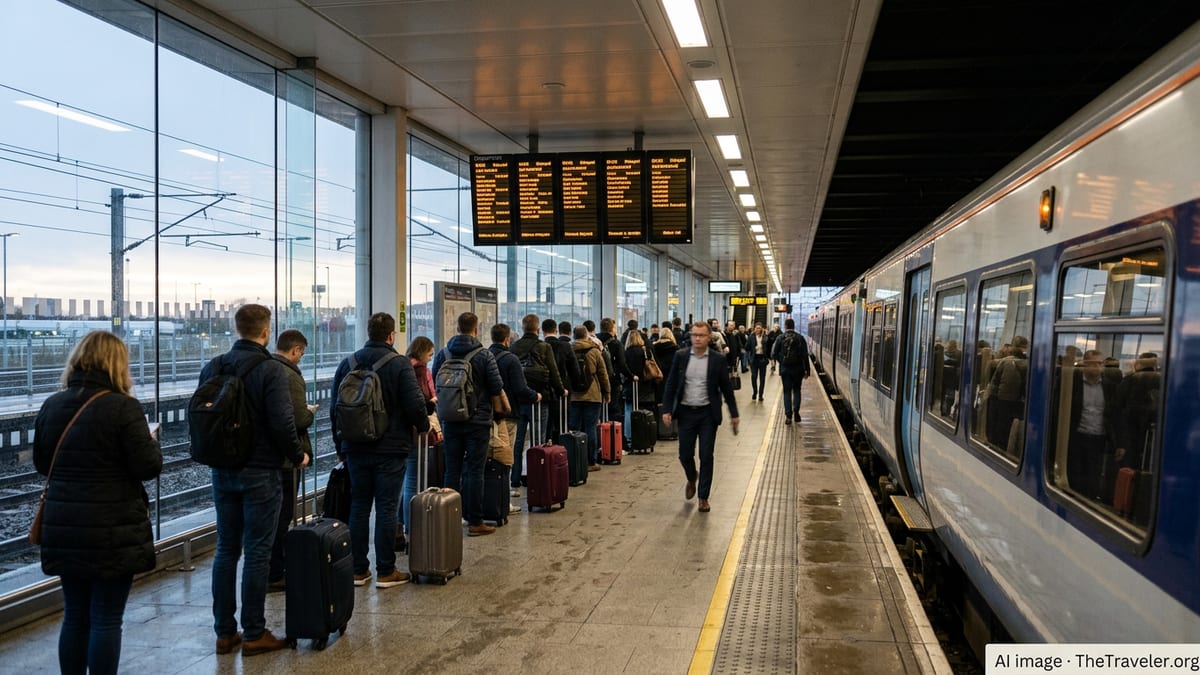
Amtrak riders in the same region reported canceled departures, replacement buses and last‑minute schedule changes as passenger trains were slotted around freight recovery work. Some travelers documented spending hours on station platforms as dispatchers held trains outside affected areas until track inspections were completed, while others were advised to rebook for later dates or switch to air travel.
Transportation safety documents indicate that even derailments without major injuries can trigger multi‑day slow orders and capacity limits while investigators and track crews assess damage. In practice, that often means fewer trains, longer trip times and missed connections far from the actual accident site, especially on single‑track segments where freight and passenger services share infrastructure.
For travelers planning rail journeys in the coming days, transit advocates and rail user groups are urging careful attention to real‑time alerts, particularly on routes that rely heavily on freight‑owned tracks. Online tracking tools and agency social feeds are emerging as essential trip‑planning resources when major incidents ripple across the system.
How Derailments Shape Rail Travel During Peak Season
Research on post‑disruption rail operations suggests that the impact of a derailment often extends well beyond the initial outage window. Academic work published this year on metro and regional rail recovery patterns notes that irregular headways and temporary speed restrictions can persist after tracks reopen, creating unpredictable wait times and crowding as operators work to rebalance schedules.
In recent incidents in North America and Europe, high‑speed and commuter operators have temporarily suspended segments of service for full‑day intervals, then restored partial service while maintenance continues. Passengers booking summer trips through these corridors have encountered rolling adjustments, with trains that appear on timetables weeks in advance later shortened, diverted or replaced by buses as infrastructure work evolves.
Travel industry analysts point out that derailments landing in the middle of peak vacation season magnify their effects. Full trains leave less room to rebook stranded passengers, and tight hotel and rental markets in popular destinations can make overnight delays costly. In some cases, riders have documented journeys stretching to double their scheduled duration as crews navigate work zones and single‑track bottlenecks.
These cascading delays are prompting more travelers to build in buffer nights at key transfer hubs and to consider flexible tickets that allow date changes without heavy penalties. For long‑distance international routes, agencies and tour operators are beginning to warn customers more explicitly about the possibility of infrastructure‑related disruptions during hot weather and major maintenance windows.
Other Travel Headlines Shaping Late‑Summer Plans
Beyond geese and rail disruptions, several other developments are influencing how and where travelers move this month. In New York City, a major outdoor public pool serving Brooklyn’s Red Hook neighborhood remains partially offline after mechanical problems forced a temporary shutdown just as extreme heat set in, according to local television coverage. Residents have turned to smaller neighborhood pools and cooling centers, increasing pressure on already crowded facilities.
Farther west, a series of upgrades and bond‑funded projects at regional aquatic centers in Oregon and the Pacific Northwest are beginning to reshape local recreation options. Public documents describe plans for rebuilt indoor‑outdoor pool complexes, expanded splash pads and new accessibility features, though many of the projects will not fully open until late 2026 or beyond, leaving some communities in a transitional phase with construction‑related closures.
On the wildlife front, attention has also turned to higher‑profile aquatic residents. Recent international reporting on the relocation of beluga whales from a troubled Canadian marine park to U.S. aquariums has raised fresh questions about the ethics of animal tourism and the future of marine parks that rely on large captive mammals as star attractions.
Together, these stories underscore how fragile many summer travel rituals can be, from neighborhood pool days interrupted by geese or pump failures to long‑planned rail journeys reshaped by derailments and heat‑related slow orders. For travelers, the emerging theme of late summer is flexibility, with backup plans and real‑time information now as essential as sunscreen and swimsuits.