


More news on this day
Royal Caribbean’s newest flagship, Legend of the Seas, has skipped its scheduled call in Naples, Italy twice in two weeks, turning headline Mediterranean itineraries into unexpected sea days and prompting fresh scrutiny of how last-minute port changes are handled.
Get the latest news straight to your inbox!
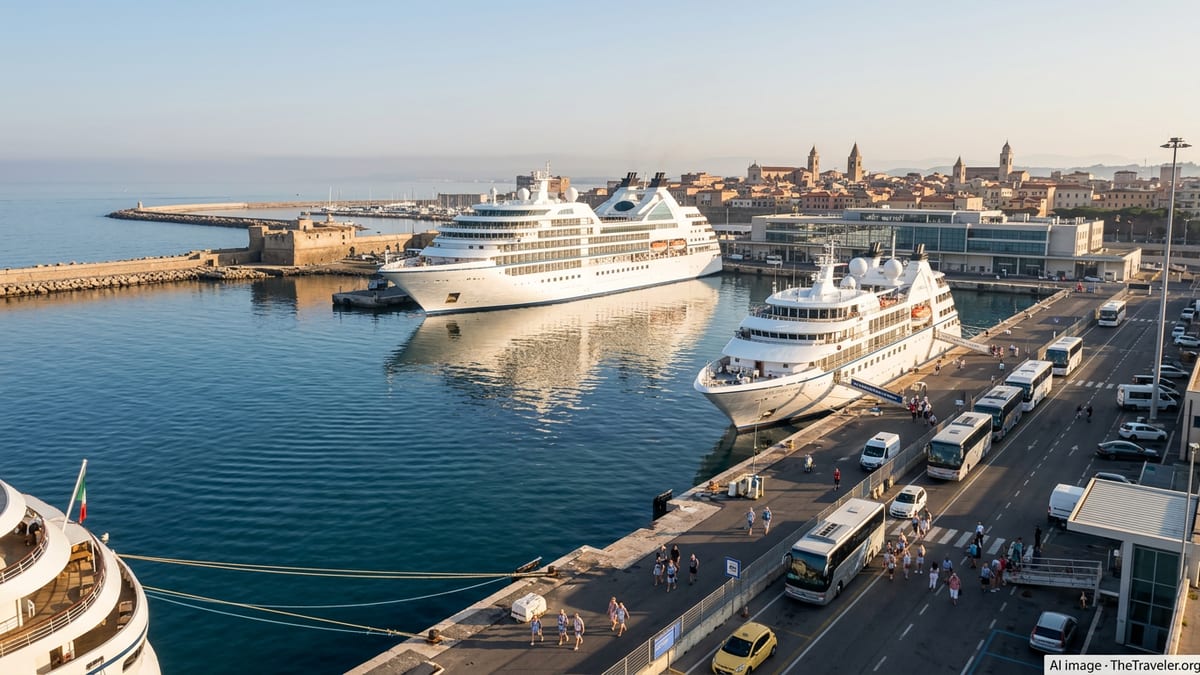
Back-to-back cancellations on marquee Mediterranean route
Legend of the Seas is operating a summer 2026 program of Western Mediterranean cruises from Rome (Civitavecchia) that prominently feature Naples as a gateway to Capri, Pompeii and the Amalfi Coast. Deployment schedules published earlier this year list multiple July sailings with Naples as a key stop, including seven-night cruises departing July 11 and July 18 and an eight-night voyage leaving July 25.
According to publicly available itinerary trackers and cruise-agency listings, the ship’s late July calls at Naples were removed at short notice, with guests informed on board that the vessel would remain at sea and proceed toward France instead. Coverage from specialist cruise outlets indicates that one July call was cancelled just hours before arrival, when Legend of the Seas was already approaching the Bay of Naples.
Passenger accounts shared on cruise forums describe two consecutive itineraries where Naples did not take place as planned, despite being highlighted in marketing materials and in pre-cruise documentation. Guests on the July 25 departure report that the port was again dropped, with the ship spending an additional day at sea before continuing to its next scheduled stop.
Port calendars for Naples in July 2026 continue to list Legend of the Seas as a caller on several dates, underscoring how quickly the situation has evolved and how official schedules can lag behind operational decisions made closer to the sailing date.
Safety concerns and recent seismic activity around Naples
The cancellations come amid heightened attention on safety conditions in and around the port city. In late July 2026, a magnitude 4.7 earthquake near Naples drew international coverage and highlighted broader concerns about the region’s seismic and volcanic risk profile, including long-standing monitoring of the Campi Flegrei area west of the city.
Reports from cruise-focused publications and discussion platforms suggest that operational assessments of port infrastructure and local conditions have become more cautious following the quake. Some travelers have referenced earlier incidents in which large vessels faced challenges at Naples, such as concerns about pier condition and the need to adjust docking or tendering plans.
While there has been no detailed public technical explanation tying Legend of the Seas’ missed calls directly to specific damage or engineering findings, the pattern of consecutive cancellations has fueled speculation that a mix of safety evaluations, infrastructure checks and navigational considerations is playing a role. Cruise lines typically retain discretion to alter routes when conditions are judged suboptimal for berthing large ships.
Travel observers note that the combination of a high-profile new vessel, a heavily promoted marquee port and a recent seismic event has created an unusually visible test case for how modern cruise operations balance safety margins with passenger expectations in a busy Mediterranean season.
Impact on passengers and compensation expectations
For guests on board, the skipped calls have translated into missed opportunities to visit some of Italy’s most famous historical and coastal sites. Many travelers book Mediterranean cruises specifically for access to Pompeii, Herculaneum, Capri and the Amalfi Coast, all commonly sold as shore excursions from Naples.
Accounts posted by passengers indicate frustration over the timing of the notices and uncertainty about how compensation would be calculated. Some describe receiving onboard credit or partial refunds for cancelled excursions, while others express concern that a single additional sea day does not match the value of a lost port experience at a once-in-a-lifetime destination.
Consumer advocates generally advise cruise travelers to review contract terms that allow lines to modify itineraries without prior notice, as well as any protections offered by travel insurance, especially for trips built around specific ports. The recent events surrounding Legend of the Seas are likely to reinforce calls for clearer, more proactive communication about potential itinerary risks where port access could be constrained.
For passengers planning upcoming departures on the same route, the back-to-back cancellations serve as a reminder to keep expectations flexible and to consider alternative plans that can make use of an unscheduled sea day, such as taking advantage of onboard amenities or rebooking independent tours in more easily accessible ports.
What the episode signals for Naples and Mediterranean cruising
Naples remains one of the central hubs of Western Mediterranean cruising, with multiple international brands scheduled to call throughout the summer. Port timetables for July and August 2026 list a steady stream of large ships, including newbuilds from major cruise companies alongside more established vessels.
Travel analysts suggest that the recent Legend of the Seas disruptions do not signal a wholesale pullback from Naples but could prompt a short-term review of capacity, scheduling and infrastructure readiness for the largest ships. Adjustments could include revised berthing priorities, more conservative weather or swell thresholds, and closer coordination on contingency plans if approaches to the harbor are deemed unsuitable on a given day.
For the Mediterranean cruise market, the situation illustrates how flagship itineraries can be affected by localized issues even at long-established ports. Naples, with its dense urban setting, busy ferry traffic and proximity to active geological zones, presents a complex operational environment that requires continual assessment as ships grow larger and passenger numbers increase.
Travelers considering Western Mediterranean voyages in 2026 and 2027 are likely to watch how cruise lines refine their Naples calls, and whether any pattern of cancellations persists or proves confined to a brief period of heightened caution following this summer’s seismic activity.
Planning advice for future cruisers eyeing Naples
For prospective guests booked on Legend of the Seas or similar itineraries that include Naples in the coming months, travel planners recommend monitoring itinerary updates regularly through cruise-line portals and travel agents. Pre-booked independent tours that involve advance payment may carry cancellation penalties, so building flexibility into shore plans can help mitigate disappointment if last-minute changes occur.
Choosing refundable or pay-on-arrival excursions, arranging activities that can be shifted to alternative ports, and allowing time buffers before and after a cruise can all help travelers better absorb schedule changes. In regions where seismic activity, infrastructure upgrades or congestion can affect port operations, those strategies may be especially relevant.
Observers also point out that while missed ports can be frustrating, they sometimes open opportunities to experience new aspects of a ship that are harder to appreciate on port-intensive itineraries, from entertainment and dining to wellness facilities. On a vessel as new and feature-rich as Legend of the Seas, an unplanned sea day can still provide value if travelers pivot quickly from shore-focused plans.
As the key summer season continues, future calls will show whether the twin cancellations in late July were an exceptional cluster of disruptions or an early sign of longer-term adjustments to how and when the industry’s newest ships access Naples.