


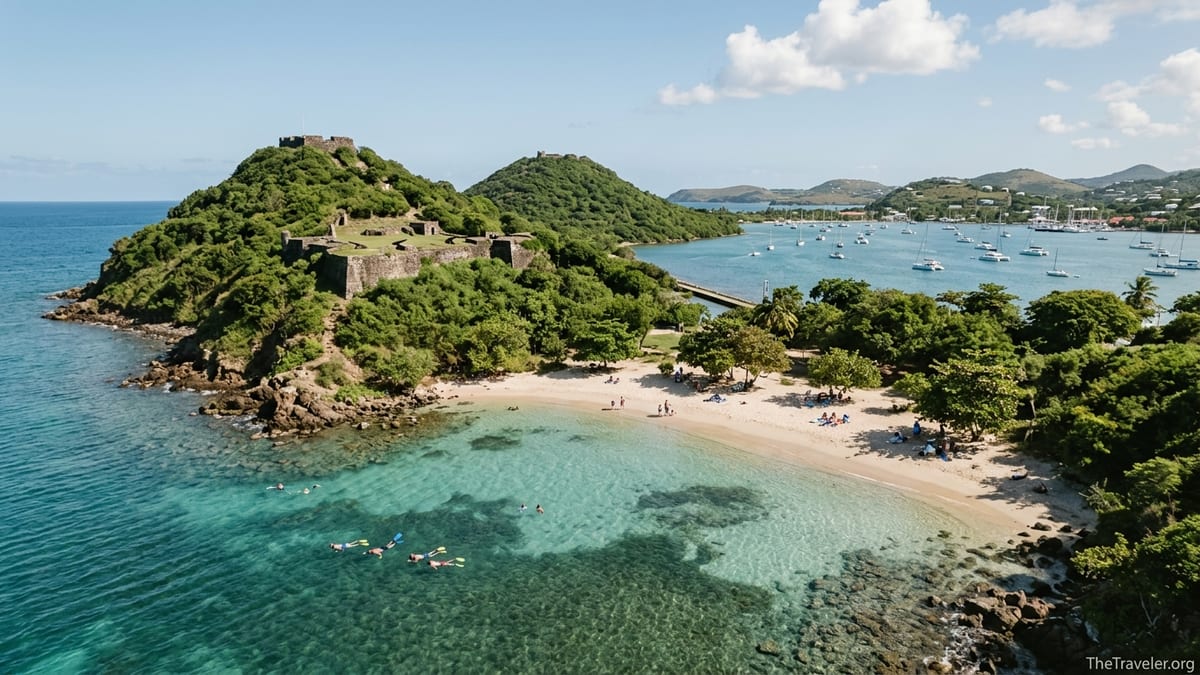
Pigeon Island National Landmark, on the northern tip of Saint Lucia, is better known for its historic ruins and hilltop views than for world-class coral. Yet its sheltered coves, easy shore entry and calm Caribbean waters make it one of the most approachable places on the island for casual and beginner snorkelers, especially if you are based around Rodney Bay. This guide walks you through where and how to snorkel from shore at Pigeon Island, what you are likely to see, what to bring, how to stay safe, and whether another Saint Lucia beach might be a better choice if snorkeling is your top priority.
Get the latest updates straight to your inbox!
Getting Oriented: Pigeon Island and Its Beaches
Pigeon Island National Landmark sits just north of Rodney Bay on Saint Lucia’s Caribbean coast, connected to the main island by a man-made causeway. Inside the landmark, you will find two small main beaches on the leeward (Caribbean) side. These are simple, gently shelving strips of sand and pebbles framed by rocky headlands and low cliffs, with views across to Gros Islet and, on clear days, Martinique in the distance. The sheltered setting keeps the water relatively calm compared with Atlantic-facing beaches elsewhere on the island.
Most people enter the Landmark through the Saint Lucia National Trust gate and follow the short paths downhill to the beaches. There are basic changing rooms and restrooms near the entrance, but facilities directly on the beach are minimal, usually limited to simple picnic tables and shaded trees rather than full resort infrastructure. Because Pigeon Island is managed as a protected historic and natural site, vendors are controlled and the overall feel is quieter than at nearby resort beaches, especially outside weekend afternoons when local families come to swim.
For visitors staying at larger properties around Rodney Bay, such as the resorts strung along Reduit Beach or the all-inclusive resort at the base of the causeway, Pigeon Island is a straightforward half-day excursion. A taxi from most Rodney Bay hotels typically costs in the range of 10 to 20 US dollars each way, and many guests choose to simply walk along the causeway in around 20 to 30 minutes. This ease of access is one reason Pigeon Island is so attractive for beginners or families who want to try snorkeling without committing to a long boat trip or a drive down the island.
Entry fees to the Landmark are modest and subject to periodic adjustment, but tend to fall around the cost of a casual restaurant lunch per adult, with reduced rates for children. Since the site closes in late afternoon, this is very much a daytime snorkeling destination, which also simplifies safety for inexperienced swimmers who are better off staying out of the water after dark.
Shore Entry: How and Where to Get in the Water
Snorkeling at Pigeon Island is entirely shore-based. You walk directly into the water from one of the small beaches or step carefully from the rocks near the edges of the coves. For most visitors, the easiest entry is from the main sandy section of the lower beach on the Caribbean side, where the bottom slopes gradually and wave action is usually limited to low chop created by passing boats or breezes across Rodney Bay.
As you wade out, you will feel a mix of sand, small stones and patches of seagrass underfoot. Water shoes or open-heel fins are helpful because there are scattered rocks and bits of broken shell, and the occasional sea urchin near the rockier margins. Once you are in waist-deep water, you can put on your mask and snorkel, inflate a snorkeling vest if you are using one, and gently kick out along the edge of the rocky shoreline where fish and other marine life are more concentrated.
More confident swimmers sometimes enter from the rocks closer to the northern headland to get nearer to slightly deeper water more quickly. This can be appealing if you are trying to avoid sand stirred up by other bathers on busy days. However, rock entries require careful footing and a good sense of balance; sharp edges, algae and wave surge can make them slippery. For beginners, the sandy beach remains by far the safest and most straightforward option, even if it means a slightly longer surface swim to reach the most interesting patches.
Because boat traffic to and from Rodney Bay Marina can pass outside the Landmark, it is wise to stay close to the headlands and within the clearly swimming-designated zones. A brightly colored snorkel or a small surface marker float increases your visibility. Although the water is generally calm, there can still be mild currents tugging along the coastline, especially on breezier afternoons, so it is sensible to check conditions from shore, note where other swimmers are comfortable, and plan to snorkel up-current first so you have an easy return.
What You Will See: Marine Life and Underwater Landscape
Pigeon Island is not a marine reserve and you should not expect dense, pristine coral reefs like those at Saint Lucia’s famous southern snorkeling beaches. The underwater landscape here is more modest: patches of seagrass, small clusters of hard and soft corals clinging to the rocks, and scattered sponges and sea fans in the slightly deeper pockets. Visibility can vary from beautifully clear to slightly milky depending on recent rainfall, boat activity in Rodney Bay, and the direction of the breeze.
That said, there is still enough life to keep a relaxed snorkel interesting, especially for newcomers. Shallow areas near the rocks are often visited by small schools of sergeant majors, blue tangs and wrasses. In the seagrass beds, you may spot trumpetfish hanging motionless, waiting for prey, or juvenile parrotfish grazing on algae. On calmer days, it is common to see sea cucumbers resting on the sand and clusters of urchins tucked into crevices, which is another reason to avoid standing on or clambering over submerged rocks barefoot.
Very occasionally, snorkelers at Pigeon Island report sighting a turtle cruising past the headland or a larger jack or barracuda gliding through the deeper water, especially farther out toward the channel. These encounters tend to be brief and should be enjoyed from a respectful distance. This is not an area where you would typically see very large schools of reef fish or extensive coral gardens, but rather a place for easy pottering along the shore, getting comfortable with your gear, and enjoying the novelty of swimming in the Caribbean with fish in view below you.
Because Pigeon Island is a protected Landmark, touching or collecting any marine life is strictly prohibited, and there are broader environmental restrictions in place, such as bans on spear fishing and regulations against damaging reef structures. In practice, this means you should adopt a “look but do not touch” approach at all times, keep your fins off the bottom as much as possible, and avoid chasing or cornering any animals you encounter.
Beginner Suitability, Kids and Less Confident Swimmers
From a comfort and logistics perspective, Pigeon Island ranks among the most beginner-friendly places to try snorkeling on Saint Lucia. The combination of short walks from the parking area, gentle shore entry, and shallow water close to land makes it far less intimidating than some of the deeper reef walls farther south. For parents with children or adults who are cautious in the ocean, being able to stand up in waist-deep water just a few meters from shore is a major advantage.
Children who are comfortable swimming in a pool generally adjust well here, especially if equipped with properly fitted child-sized masks and snorkels and bright flotation vests. Families often use the first 5 to 10 meters from the waterline as a practice zone, letting children float face down while holding a parent’s hand or a pool noodle, before venturing closer to the rocks where fish are more frequent. Weekday mornings tend to be quieter, which can make it easier to keep track of children without the distraction of crowds.
For adults who have never snorkeled before, Pigeon Island is a good place to schedule an informal “lesson” with a resort watersports team based in Rodney Bay or to hire a local guide through your hotel or tour desk. Some providers include mask, snorkel and fin rentals in introductory packages that also cover basic safety, finning technique and de-fogging masks. Even if you choose to go independently, it is worth spending ten minutes in very shallow water just practicing breathing through the snorkel and clearing your mask before swimming farther out.
People who are not strong swimmers should treat snorkeling here more like a relaxed surface float than an athletic activity. A simple inflatable snorkeling vest, sold in many beach shops around the island for roughly the price of an inexpensive lunch, can dramatically improve confidence. Staying inside the protected coves, avoiding days when there is obvious chop, and agreeing on a fixed turnaround point with your companion are sensible precautions that keep a beginner outing enjoyable rather than stressful.
Rocky Sections, Gear and Water Conditions
Although the main beaches at Pigeon Island have bands of sand, many of the interesting snorkeling spots hug rocky edges. These rocks are what create habitat for algae, sponges and small corals, which in turn attract fish. They also present small hazards in the form of uneven footing, slippery algae and hiding places for urchins. If you plan to enter or exit the water near the rocks, consider wearing flexible water shoes and then switching to fins once you are floating, or using open-heel fins that you can walk in very carefully.
Water clarity is typically best in the morning, especially after a calm night with little wind. By midday, as the breeze picks up and boat traffic in Rodney Bay increases, fine sand can be stirred into the water column, reducing visibility. During the Atlantic hurricane season from June through November, passing weather systems can also send swell into the bay, which can temporarily make the water rough or murky. Tour operators and hotel concierges in Rodney Bay are accustomed to these seasonal changes and can often give you a same-day sense of whether conditions at Pigeon Island are currently inviting.
Basic snorkel gear is easy to source around Rodney Bay. Beach shops and dive centers sell or rent masks, snorkels and fins at prices that are typical for Caribbean resort towns. Expect to pay an amount per day that is comparable to a casual sit-down dinner for two if you rent a full set from a dedicated dive center, and somewhat less for simple mask-and-snorkel combinations from beach stalls. That said, frequent snorkelers often prefer to travel with their own well-fitting masks and snorkels and then rent fins locally if needed.
Because Pigeon Island is part of a protected Landmark, you should also be mindful of sun protection choices. Many Caribbean destinations now promote reef-conscious behavior, encouraging visitors to use long-sleeved rash guards and hats instead of relying solely on high-SPF sunscreen. Where sunscreen is needed, mineral formulations labeled as reef-friendly are the safer choice. This approach not only reduces potential impact on nearshore marine life but also means you are not constantly reapplying lotion between every snorkel session.
Safety, Rules and Practical Logistics
Pigeon Island National Landmark is managed by the Saint Lucia National Trust, which enforces a set of site-wide regulations aimed at protecting both heritage structures and the surrounding environment. Smoking is not allowed anywhere inside the Landmark, and activities that disturb wildlife or damage natural features are prohibited. For snorkelers, this mostly translates to leaving all marine life undisturbed, avoiding any collection of shells or coral, and respecting posted signs about swimming zones or restricted access areas.
Lifeguard coverage on the beaches is limited or absent, depending on the day and season, so you should treat the area as an unsupervised natural beach. Always snorkel with at least one companion, keep an eye on changing weather, and avoid pushing beyond your comfort zone just to “see what is around the next headland.” If conditions look rough from shore, with visible whitecaps or strong side chop, it is perfectly reasonable to relegate snorkeling to another day and simply enjoy the Landmark’s walking trails and viewpoints instead.
Hydration and sun exposure are often underestimated by visitors. There is relatively little natural shade directly on the sand, and even when a breeze keeps you feeling cool, the tropical sun is intense. Bring more drinking water than you think you will need, consider a lightweight long-sleeved shirt or rash guard for time spent out of the water, and plan your longest snorkel sessions for early morning or late afternoon when the sun is lower. Many travelers time a mid-day break to hike up to Fort Rodney for the views while avoiding the peak UV hours in the water.
Because Pigeon Island closes in the late afternoon and the area becomes quiet after gates shut, it is not practical to plan sunset or night snorkeling here. If you are interested in guided night snorkel or dive experiences elsewhere on Saint Lucia, most such trips depart from dive centers associated with resorts farther south, and you would typically arrange transport separately. For visitors based in the north, Pigeon Island works best as part of a daytime exploration of Rodney Bay, with snorkeling as one of several low-key activities.
How Pigeon Island Compares to Other Saint Lucia Snorkeling Beaches
If your main priority on a Saint Lucia trip is high-quality reef snorkeling, it is important to understand that Pigeon Island, while pleasant and convenient, is not considered the island’s top site for marine life. That reputation belongs overwhelmingly to a cluster of beaches on the west coast, particularly Anse Chastanet and Anse Mamin near Soufrière, which multiple marine guides and tourism sources describe as having some of the best shore-access snorkeling in Saint Lucia. These bays sit within or adjacent to protected marine reserves and offer more extensive coral cover and fish diversity than the modest rocky patches around Pigeon Island.
At Anse Chastanet, for example, healthy reef begins within a short swim of the sand, with clearly marked snorkeling zones running along the right-hand side of the bay. Experienced snorkelers often praise the variety of corals, from brain and elkhorn corals to colorful sponges, and the likelihood of seeing turtles grazing or larger schools of reef fish. Nearby Anse Mamin, accessed via a short coastal path, offers a slightly quieter experience with similarly rich underwater life, again entered easily from shore. Several dedicated snorkeling reports and regional guides repeatedly name these beaches, along with Anse Cochon and Sugar Beach, as standouts for visibility and marine diversity.
By contrast, Pigeon Island is best thought of as a gentle, accessible introduction rather than a destination for dedicated snorkel enthusiasts. If you are staying in the north and do not have the inclination to drive 60 to 90 minutes to Soufrière or join a full-day boat excursion, a half-day at Pigeon Island may perfectly satisfy your desire to float over turquoise water and see fish in a relaxed setting. However, travelers who have snorkeled widely in places like Bonaire or Cozumel, or who are planning their Saint Lucia itinerary around underwater experiences, generally find that at least one day trip to the southern bays offers a much more memorable reef encounter.
Practical options to access these other beaches include organized boat excursions departing from Rodney Bay, which often combine snorkeling stops at one or two south-coast sites with sightseeing around the Pitons and a stop in Soufrière. Prices for such tours vary depending on group size and inclusions, but typically run to the level of a higher-end excursion elsewhere in the Caribbean, reflecting fuel costs and the distance covered. For independent travelers comfortable with mountain driving, renting a car to reach Anse Chastanet or Anse Cochon can be cost-effective, but roads are narrow, winding and require patience.
The Takeaway
For many visitors staying in or around Rodney Bay, Pigeon Island National Landmark offers a gentle, low-effort way to add snorkeling to a day of exploring history and scenery. The sheltered coves, straightforward shore entry and shallow nearshore waters suit beginners, children and anyone who wants to get comfortable with a mask and snorkel close to land. Marine life is modest but present, especially along the rocky edges, and the experience of swimming in clear Caribbean water under the gaze of old fort walls has its own quiet charm.
At the same time, it is helpful to calibrate expectations. Compared with Saint Lucia’s celebrated snorkeling beaches farther south, Pigeon Island cannot compete in terms of coral density or fish diversity. If your heart is set on vibrant reef scenes and regular turtle sightings, planning at least one excursion to places like Anse Chastanet, Anse Mamin, Anse Cochon or Sugar Beach will almost certainly be rewarding. Many travelers choose a blend: an easy practice session at Pigeon Island soon after arrival, followed by a more ambitious day trip once they are confident in the water.
Whichever approach you choose, a successful snorkeling outing on Saint Lucia comes down to simple habits: choose calm days, use well-fitting equipment, protect yourself and the reef from the sun, and respect local rules and conditions. In doing so, you not only improve your own experience but also help ensure that the island’s nearshore ecosystems remain intact for future visitors and for the local communities who depend on healthy coastal waters.
Seen in this light, Pigeon Island is less about ticking off a world-famous reef and more about easing into the rhythm of Saint Lucia itself: unhurried, scenic and welcoming, with just enough underwater life at your fins to remind you that the Caribbean’s most compelling stories are often found a few quiet strokes from shore.
FAQ
Q1. Is Pigeon Island a good place for first-time snorkelers?
Yes. The sheltered coves, gentle shore entry and shallow water near the beaches make Pigeon Island well suited to first-timers, especially if you stay close to the rocks along the protected side and avoid choppy days.
Q2. Do I need to join a tour to snorkel at Pigeon Island?
No. Most visitors snorkel independently from the beach after paying the Landmark entry fee. However, if you are nervous in the water, arranging a simple introductory session with a local guide or resort watersports team can be reassuring.
Q3. What kind of marine life can I expect to see?
You are likely to see small reef fish such as sergeant majors, wrasses and blue tangs, along with sea cucumbers, urchins and occasional trumpetfish near the rocks. Larger animals like turtles or barracuda are possible but not common.
Q4. Are there strong currents around Pigeon Island?
Currents are usually mild inside the coves, particularly on calm mornings, but there can be gentle drift along the shoreline on breezier days. Staying close to shore, snorkeling with a buddy and turning back before you are tired minimizes any risk.
Q5. Can I rent snorkel gear at Pigeon Island?
There is not a large equipment rental operation directly on the Landmark’s beaches, so most visitors bring their own gear or rent from shops and dive centers around Rodney Bay before arriving.
Q6. How does Pigeon Island snorkeling compare to Anse Chastanet or Anse Cochon?
Pigeon Island is easier to reach from the north and great for practice, but it offers less coral and fish diversity. Anse Chastanet, Anse Mamin, Anse Cochon and Sugar Beach on the west coast are widely regarded as superior for serious snorkeling.
Q7. Is Pigeon Island suitable for children who are not strong swimmers?
Yes, if they use flotation aids and remain in the shallow areas under close adult supervision. Many families treat it as a place to practice basic snorkeling skills rather than attempt long swims.
Q8. What is the best time of day to snorkel at Pigeon Island?
Morning is generally best. Winds are often lighter, visibility is better before sand is stirred up, and the sun is less intense, making conditions more comfortable and forgiving for beginners.
Q9. Are there any rules I should know before snorkeling there?
Because Pigeon Island is a protected Landmark, you must not touch or collect marine life, and you should follow posted signs about swimming areas. Smoking and activities that disturb wildlife are not allowed anywhere on site.
Q10. Should I skip Pigeon Island if I plan to snorkel in Soufrière?
Not necessarily. If you have time, Pigeon Island works well as a relaxed warm-up near Rodney Bay, while Anse Chastanet, Anse Mamin or Sugar Beach can provide a more impressive reef experience later in your trip.