


Germany remains one of the world’s largest advanced economies and a core industrial hub in Europe, yet its growth performance since 2022 has been weak compared with earlier decades. After two consecutive years of economic contraction, output returned to marginal positive growth in 2025, supported mainly by domestic demand and rising public investment. At the same time, German industry is undergoing structural adjustment as high energy prices, shifting global trade patterns and intense competition in key sectors such as autos and machinery weigh on traditional strengths. For individuals and companies evaluating relocation, understanding the country’s economic outlook and industrial resilience over the next five years is critical.
Macroeconomic Performance and Growth Outlook
Germany’s economy has been through a prolonged period of stagnation. Real GDP fell in 2023 and 2024, reflecting energy price shocks, weaker global trade and tighter financial conditions. Most major forecasting institutions estimate that real GDP grew only marginally in 2025, in the range of about 0.2 to 0.3 percent, marking the first year of positive growth since 2022 but still far below historical norms. This pattern aligns with a broader European context of subdued but stabilizing growth.
Forward-looking projections indicate that Germany is likely to transition from stagnation to moderate expansion rather than strong recovery. Consensus forecasts from central bank, international and research institute assessments typically cluster around real GDP growth of roughly 1 to 1.3 percent in 2026, with similar or slightly higher rates in 2027. This implies that growth may run only modestly above estimated potential, suggesting a recovery that is gradual rather than dynamic.
Key drivers of the expected upturn include a normalization of energy prices compared with the immediate post‑2022 surge, a gradual easing of global trade headwinds and a sizable increase in public investment, particularly in infrastructure and defense. Private consumption is projected to benefit from lower inflation and still‑resilient labor markets. At the same time, external demand for German exports remains weaker than in the 2010s, and trade tensions, especially higher tariffs in major markets, continue to weigh on the outlook.
Risks to the baseline scenario are two-sided. Upside risks include faster-than-expected implementation of infrastructure programs and stronger investment in green and digital technologies. Downside risks include renewed energy market volatility, slower global demand, or delays and legal challenges related to public investment plans. For relocation planning, these dynamics translate into an environment of relative macroeconomic stability, but not high growth, over the medium term.
Fiscal Position, Investment Plans and Policy Direction
Germany enters this phase of subdued growth with comparatively strong public finances by international standards, even after the series of shocks since 2020. General government deficits in recent years have remained contained at a few percent of GDP, and public debt levels are still moderate relative to many advanced peers. Nonetheless, fiscal space has been under pressure due to court rulings that constrained the reallocation of off‑budget funds and due to new spending priorities.
A significant policy change is the reform of Germany’s fiscal framework, including adjustments to the constitutional debt brake to allow higher borrowing for defense and infrastructure. The political agreement reached in 2025 provides for multi‑year additional spending on transport networks, digital infrastructure and the energy transition, alongside a substantial and more permanent increase in defense expenditure. Over the forecast horizon, this is expected to support aggregate demand and partially offset private sector caution.
For the real economy, the scale and execution speed of these investment packages will be central to productivity and competitiveness. Upgraded rail, road and port infrastructure can reduce logistics bottlenecks, while expanded electricity grids and new generation capacity are prerequisites for the electrification of industry. However, administrative complexity and permitting delays remain recurring concerns raised by businesses and economists alike, suggesting that the growth impact could materialize only gradually.
From a relocation perspective, the commitment to higher public investment signals that policymakers are aiming to stabilize and modernize the economic base rather than pursue fiscal consolidation at any cost. At the same time, the need to reconcile higher spending with medium-term fiscal rules may periodically re‑ignite political debate around budget priorities, which could affect the timing and composition of economic stimulus.
Industrial Structure and Core Strengths
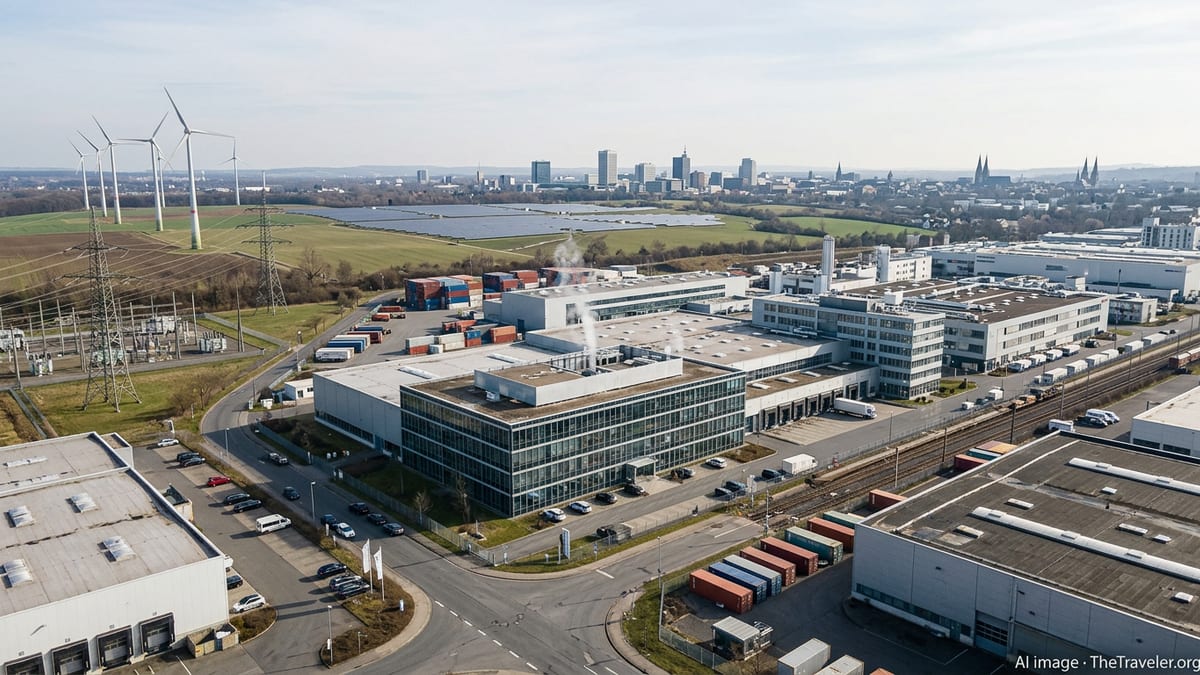
Industry remains a defining feature of Germany’s economy. Manufacturing accounts for roughly one fifth of gross value added, significantly above the share in many other advanced economies. The country hosts globally competitive clusters in automobiles, mechanical engineering, chemicals, pharmaceuticals, electrical equipment and precision instruments. These sectors are deeply integrated into European and global value chains and have traditionally underpinned high export surpluses.
Within this landscape, several branches stand out. The automotive sector, including passenger cars, commercial vehicles and suppliers, is a major employer and export earner, with German brands historically dominant in premium segments. Mechanical and plant engineering produces a wide variety of capital goods, from machine tools to complex production lines, and has long benefited from demand from emerging markets. The chemical and pharmaceutical industries contribute both to domestic value creation and to the wider European industrial base, while Germany’s electrical and electronics industry accounts for around one tenth of total national industrial output and is a key supplier of components and systems for automation, power distribution and digital infrastructure.
Germany’s industrial strength is also institutional. The Mittelstand, a large base of medium-sized, often family-owned firms, plays a central role in niche markets and in the supply chains of larger corporations. Strong vocational training systems and applied research institutions have historically supported skill formation and incremental innovation. These features provide a degree of structural resilience even as headline growth rates disappoint.
However, the industrial structure is highly exposed to international trade conditions. Many leading sectors sell complex capital goods whose demand is closely linked to global investment cycles. As a result, shifts in overseas demand, especially from major partners in Asia and North America, have an outsized effect on German industrial performance compared with more domestically oriented economies.
Current Industrial Performance, Pressures and Diverging Sectors
Recent industrial data show that German manufacturing has been under significant pressure. Industrial production indices through 2024 and into 2025 indicate that output in aggregate remains below pre‑pandemic levels, with particularly sharp declines in energy‑intensive industries such as basic chemicals, metals, paper and certain building materials. Year-on-year contractions of several percent have been recorded in some of these branches, reflecting both high energy input costs and the global cyclical downturn in demand for intermediate goods.
Automotive production has faced a complex mix of challenges. On the one hand, the normalization of global supply chains after the semiconductor shortages has supported volumes. On the other hand, structural competition from electric vehicle producers in other major economies, including both cost-competitive mass-market producers and technologically advanced rivals, has intensified. This is pressuring profit margins and forcing incumbents to accelerate their transition away from internal combustion engines while simultaneously investing heavily in software and battery technology.
Chemicals and related sectors have been particularly affected by elevated European energy and feedstock prices after 2022. Several producers have scaled back capacity or re‑evaluated investment plans within Germany, citing higher operating costs relative to regions with cheaper energy. At the same time, more specialized segments of the chemical and pharmaceutical industry remain competitive, relying on advanced know‑how, regulatory expertise and integration into high-value European ecosystems.
Not all sectors are contracting. Electrical equipment, electronics, renewable energy components and certain segments of advanced machinery linked to automation and digitalization show more robust order books, supported by the global push for energy transition and smart manufacturing solutions. The shift towards resilient and diversified supply chains, including nearshoring within Europe, also offers opportunities for German manufacturers that can provide high-quality, reliable equipment and services.
Energy Transition, Competitiveness and Industrial Policy
Energy costs and security of supply have become central to Germany’s industrial outlook. The abrupt reduction of Russian pipeline gas since 2022 triggered a sharp rise in energy prices and prompted an accelerated energy transition strategy. Germany has expanded liquefied natural gas import capacity, scaled up renewable electricity generation and begun to roll out substantial support schemes for industrial decarbonization, including contracts for difference and targeted subsidies for green hydrogen and low-carbon production processes.
By 2024, renewables, particularly wind and solar, accounted for a large share of Germany’s power generation mix, and policy targets for 2030 involve further rapid expansion. Over the medium term, a richer renewable base and upgraded grids are expected to improve cost stability and reduce exposure to imported fossil fuels. However, industrial consumers have so far continued to face higher average electricity prices than competitors in some other major manufacturing regions, and long-term price trajectories depend on investment execution, network charges and wholesale market design.
Industrial competitiveness is therefore at the center of policy debates. Temporary relief measures, differentiated power pricing models for energy‑intensive firms and accelerated permitting for strategic projects are being discussed or implemented. At the same time, European-level initiatives, such as common funding for clean-tech value chains and adjustments to state aid rules, shape the environment in which German industrial policy operates. The interplay between national and European measures will be a key determinant of whether energy-intensive sectors stabilize their domestic footprint or shift more capacity abroad.
For potential corporate relocations, these dynamics imply both risk and opportunity. Firms heavily reliant on low-cost bulk energy may treat Germany more cautiously in the short term, while those in higher value-add, technology-intensive segments may view the country’s innovation ecosystem and emerging green industrial infrastructure as strategic assets despite cost pressures.
Labor Market, Skills and Productivity Trends
Germany’s labor market remains relatively tight despite weak output performance. Employment has broadly continued to rise since 2022, while unemployment has increased only moderately, remaining in the mid-single-digit percentage range. This apparent resilience reflects both labor hoarding by firms and demographic constraints that limit the available workforce. Many industrial companies report persistent shortages of skilled workers, particularly in engineering, IT, electronics, metalworking and technical trades.
Demographic aging exerts a structural drag on labor supply, and net migration flows have become less supportive than in the decade before 2020. Tight labor markets contribute to upward pressure on wages and unit labor costs, which can erode cost competitiveness if not matched by productivity gains. Recent years have seen relatively strong nominal wage increases as workers sought compensation for high inflation, while measured productivity per hour has been comparatively weak.
At the same time, Germany maintains strong vocational training and apprenticeship systems and a dense network of applied research institutes and universities of applied sciences. These institutions underpin the country’s capacity to adapt to new technological demands, including digitalization, automation and the green transition. Numerous programs aim to re‑skill and up‑skill workers in energy and digital technologies, advanced manufacturing and industrial software.
Productivity growth in Germany has been modest for more than a decade, partly reflecting slow diffusion of digital technologies in some sectors and infrastructure bottlenecks. The planned scaling up of digital infrastructure, including broadband and 5G coverage, as well as investments in transport networks, are intended to address some of these constraints. Whether these initiatives translate into a sustained productivity acceleration will significantly influence Germany’s medium‑term growth potential and its attractiveness as a location for knowledge-intensive industrial activities.
External Position, Trade Patterns and Strategic Sectors
Germany continues to run sizable current account surpluses, reflecting its strong export base and still significant net foreign asset position. However, the composition and geographical distribution of exports are evolving. Trade with some traditional partners has become more challenging, due to slower growth, geopolitical tensions and tariff measures. In particular, the long-standing pattern in which Germany exported high-value machinery, vehicles and chemicals to rapidly growing emerging markets while importing intermediate goods has weakened.
Competition from producers in Asia has intensified in several core German specialties, notably autos, batteries, solar equipment and some categories of industrial machinery. Chinese and other Asian manufacturers increasingly compete not only on price but also on technology and quality, compressing margins for German exporters and encouraging them to focus on higher value-added niches, services and system integration rather than standardized products.
At the same time, new trade and industrial policy initiatives seek to support strategic sectors. These include efforts to expand semiconductor manufacturing capacity in Europe, develop battery and hydrogen value chains, and enhance defense and security-related production. Germany’s sizeable increase in defense spending could strengthen its aerospace and defense industries and related supplier networks, adding another pillar to its industrial base.
For relocation decisions, the evolving trade landscape matters in two ways. First, companies that rely on access to specific export markets should monitor policy and demand developments closely. Second, firms operating in or supplying strategic sectors backed by European and German industrial policy may find growing opportunities, public support instruments and deeper ecosystems in relevant clusters across the country.
The Takeaway
Germany’s economic outlook over the next five years is characterized by modest growth, high structural resilience and significant transition pressures. After several years of weak or negative real GDP growth, forecasts point to a gradual recovery supported by public investment, easing energy headwinds and relatively stable labor markets. However, growth rates are likely to remain moderate by historical standards, and multiple downside risks persist.
Industrial strength remains a core asset. Germany still hosts dense, technologically sophisticated manufacturing clusters with global reach, underpinned by the Mittelstand, a strong skills base and well-established research institutions. At the same time, cyclical weakness in energy-intensive sectors, mounting international competition and demographic constraints require extensive adaptation. Policy responses center on accelerating the energy transition, upgrading infrastructure and supporting strategic sectors, although implementation challenges and regulatory complexity are non-trivial.
For individuals and organizations assessing relocation, the picture is nuanced. Germany offers a large, diversified industrial economy with stable institutions and an ongoing program to modernize its economic base. Yet it is not currently a high-growth environment, and sectoral conditions diverge sharply. Careful attention to industry-specific trends, regional clusters and the trajectory of energy, infrastructure and labor market reforms will be essential when evaluating the country as a medium to long-term operating base.
FAQ
Q1. Is Germany’s economy currently in recession or recovery?
Germany moved out of recessionary conditions in 2025, with GDP returning to slight positive growth after two years of contraction. Most forecasts point to a gradual recovery rather than a rapid upswing over the next few years.
Q2. How strong is Germany’s industrial base compared with other advanced economies?
Germany retains one of the largest and most diversified industrial bases among advanced economies, with manufacturing accounting for a higher share of value added than in many peers and strong positions in autos, machinery, chemicals, electrical equipment and precision engineering.
Q3. Which industrial sectors in Germany are currently under the most pressure?
Energy-intensive industries such as basic chemicals, metals and certain materials have been hardest hit by high energy costs and weaker global demand. Parts of the automotive sector also face structural pressure due to the shift to electric vehicles and increased international competition.
Q4. Are any German industrial sectors growing despite the overall weakness?
Yes. Segments linked to the energy transition, automation and digitalization, including renewable energy components, electrical equipment, industrial software and advanced machinery for smart factories, generally show more robust demand and more positive medium-term prospects.
Q5. How do energy prices affect Germany’s industrial competitiveness?
Elevated energy prices since 2022 have eroded cost competitiveness for energy-intensive producers and triggered production cuts or investment relocations in some cases. Over time, expansion of renewable capacity and targeted support schemes are intended to stabilize industrial energy costs.
Q6. What role will public investment play in Germany’s economic outlook?
Higher public investment in transport infrastructure, digital networks, defense and the energy transition is expected to be a key driver of growth in the coming years, supporting demand in the short term and potentially raising productivity if implementation is effective.
Q7. How resilient is Germany’s labor market in the face of weak growth?
So far the labor market has been relatively resilient, with high employment and only moderate increases in unemployment. However, demographic aging and skills shortages create structural tightness, and firms report difficulties filling technical and engineering roles.
Q8. Does Germany still run large trade and current account surpluses?
Germany continues to record substantial current account surpluses, reflecting its strong export sectors and net foreign asset position. However, the composition of exports is shifting, and market share pressures in some traditional specialties are evident.
Q9. How important is the energy transition for German industry?
The energy transition is central to Germany’s industrial strategy. It aims to reduce exposure to imported fossil fuels, secure more predictable energy costs and support new green industries, all of which are crucial for maintaining competitiveness and attracting investment.
Q10. What is the medium-term outlook for Germany’s industrial strength?
The medium-term outlook combines enduring structural strengths with significant adaptation challenges. Germany is likely to remain a major industrial power, but performance will depend on the speed of infrastructure upgrades, energy system reforms, innovation in key sectors and the ability to address demographic and skills constraints.