


The United Arab Emirates has evolved into one of the most dynamic economies in the Middle East, combining hydrocarbons wealth with an increasingly sophisticated non-oil base. For internationally mobile professionals and businesses assessing relocation, understanding the country’s economic outlook and long-term growth prospects is central to judging its stability, opportunity set, and resilience through future cycles.
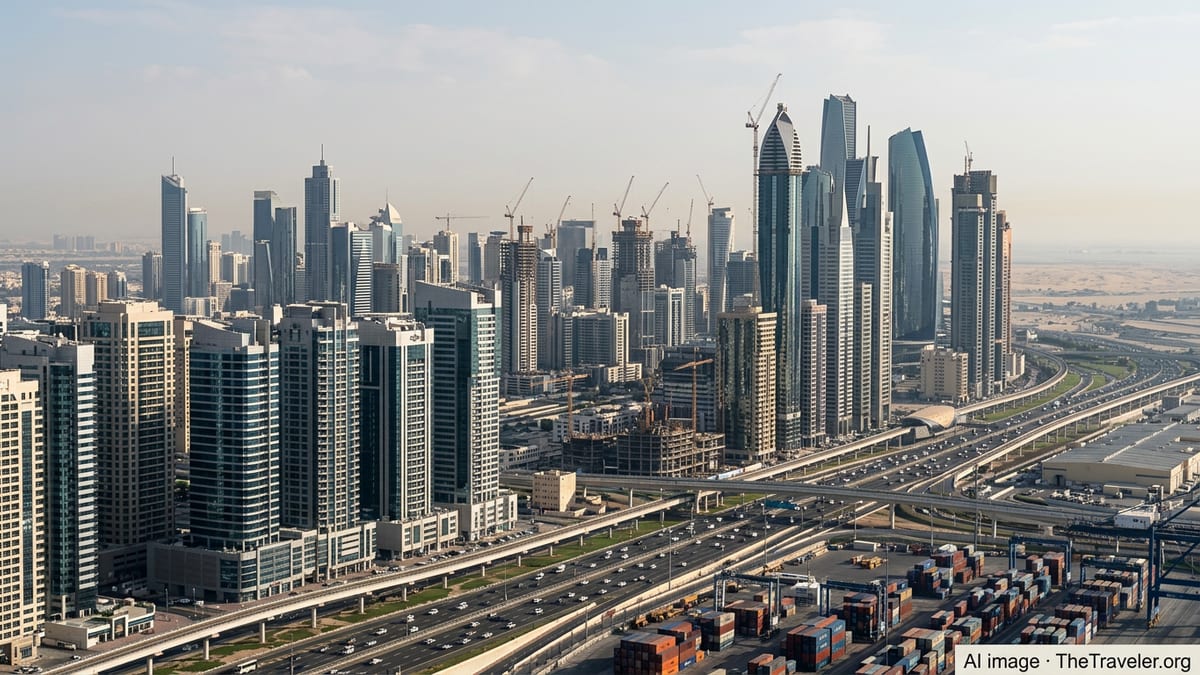
Current Macroeconomic Position and Growth Baseline
The UAE is a high-income, open economy with real GDP estimated in the mid-hundreds of billions of US dollars and one of the highest per capita income levels globally. Recent years have been characterized by a strong post-pandemic rebound, helped by favorable oil prices, robust non-oil activity and continued population inflows into major hubs such as Abu Dhabi and Dubai.
International institutions estimate that UAE real GDP growth was in the mid-single digits in 2024 and is projected to remain around 4 to 5 percent annually through 2026. IMF staff assessments point to growth of roughly 4 to 5 percent in 2025 and close to 5 percent in 2026, supported by solid non-hydrocarbon momentum and gradually rising oil output within the OPEC+ framework.
Domestic projections from the UAE central bank and major regional banks are broadly aligned, with several forecasts now assuming real growth edging up toward the mid-5 percent range by 2026 if global conditions remain broadly supportive. This positions the UAE to outperform average global growth, which most forecasters see in the high-2 to low-3 percent range over the same period.
For potential relocators, this baseline implies an economy that is not only expanding but doing so at a rate above the global average, with the benefits of growth concentrated in services, trade, logistics, advanced manufacturing and knowledge-intensive sectors rather than solely in hydrocarbons.
Progress in Economic Diversification Beyond Oil
Hydrocarbons remain vital for the UAE’s fiscal revenues and external accounts, but the domestic production structure has shifted significantly. Various estimates indicate that non-oil sectors already account for well over half of national GDP, with some analyses placing the non-oil share at around three-quarters of total output. Policymakers have articulated targets to increase the non-oil contribution to approximately 80 percent of GDP by around 2030.
Key diversification initiatives include a national industrial strategy that aims to raise manufacturing’s share of GDP from roughly high-single digits to about one-quarter by 2031, large-scale trade and logistics investments, and an ambitious program to grow digital and knowledge-intensive services. Non-oil trade has surpassed the equivalent of 2 trillion dirhams annually in recent years, underscoring the UAE’s role as a regional and global trade hub.
At the emirate level, Abu Dhabi’s strategy emphasizes capital-intensive industry, advanced manufacturing and energy, while Dubai’s economic agenda targets doubling the emirate’s economy by 2033 through expansion of trade, finance, technology, transport and professional services. Both emirates have also invested heavily in free zones and regulatory frameworks designed to attract multinational companies and specialized talent.
For relocation decisions, the degree of diversification matters because it reduces the sensitivity of local employment and business conditions to oil price cycles. The increasing weight of trade, logistics, financial and business services, digital economy activities and high-value manufacturing suggests that career options and business demand are becoming more structurally broad-based over time.
Sectoral Growth Drivers Over the Next Decade
The UAE’s medium-term growth profile is anchored in a set of priority sectors expected to outpace aggregate GDP. Among these, non-oil trade and logistics are fundamental. The country is investing in port capacity, airport infrastructure and a national rail network designed to connect all emirates and link into the wider Gulf, improving freight efficiency and passenger mobility. Estimates over a 50-year horizon suggest that the rail network alone could add several tens of billions of US dollars to cumulative GDP through productivity and connectivity gains.
Manufacturing and industrial activity are another core engine. Through the industrial strategy often referred to as Operation 300bn, authorities aim to substantially increase industrial output, incentivizing sectors such as pharmaceuticals, food processing, aerospace components, electrical equipment and other medium-to-high tech manufacturing. The objective is to build export-oriented clusters and reduce reliance on imported industrial goods.
Services will remain central to the growth story. Financial and insurance services, professional and business services, information and communications technology, and wholesale and retail trade already contribute a substantial combined share to non-oil GDP. Tourism-linked services are also significant, with travel and tourism activities contributing roughly low-teens percentages of GDP and providing large-scale employment, although this segment is more cyclical and sensitive to global demand shocks.
Renewable energy and the broader green economy are emerging as long-term growth themes. Under the Net Zero by 2050 strategy, the UAE is scaling up investment in solar, clean hydrogen, grid infrastructure and related technologies. While the immediate GDP contribution is modest relative to established sectors, the transition is expected to create new industrial niches, research and development activities, and specialized service roles over the coming decade.
Innovation, Digital Economy and Human Capital Strategy
Long-term growth prospects depend heavily on productivity, technology adoption and human capital quality. The UAE has adopted a national artificial intelligence strategy that aims to integrate AI into sectors such as transport, energy, healthcare, education and public administration by 2031. The policy mix includes regulatory sandboxes, incentives for data centers and cloud infrastructure, and targeted support for AI-focused startups.
The digital economy is expanding through e-commerce, fintech, digital payments and platform-based services. Recent estimates suggest that digital services trade already reaches into the hundreds of billions of dirhams and is growing faster than traditional goods trade. Initiatives in open banking, virtual asset regulation and digital identity are intended to position the UAE as a preferred base for regional digital finance and technology firms.
Human capital policy is designed to complement these innovation ambitions. Education reforms emphasize science, technology, engineering and mathematics, while labor market and residency initiatives seek to attract specialists in software development, data science, engineering, finance and advanced manufacturing. Several free zones have evolved into specialized clusters in fields such as media, healthcare, financial services and ICT, creating concentrated ecosystems of employers in specific professions.
For internationally mobile workers and entrepreneurs, the focus on innovation and skills-intensive sectors indicates that long-term opportunity is likely to be strongest in knowledge roles that align with the country’s technology and productivity agenda. However, it also implies rising competition for high-skilled positions and an expectation of continuous upgrading of skills to remain competitive in the local labor market.
Fiscal Strength, External Position and Structural Risks
The UAE’s long-term growth outlook is underpinned by relatively strong public and external balance sheets. Hydrocarbon revenues, sovereign wealth funds and conservative fiscal management at the federal and emirate levels provide substantial buffers against external shocks. The country’s fiscal breakeven oil price is estimated to be below that of many regional peers, reflecting disciplined spending and large accumulated savings.
Nonetheless, a significant proportion of government revenue and export earnings still originates from oil and gas. This creates vulnerability to extended periods of low oil prices or global shifts away from fossil fuels. While diversification is advanced relative to many hydrocarbon exporters, the transition to a low-carbon global economy introduces medium-term uncertainties around demand for oil and the valuation of hydrocarbon reserves.
Climate change and environmental pressures represent additional structural risks. The UAE faces high temperatures, water scarcity and exposure to sea level rise in coastal zones. Managing these risks requires continued investment in climate adaptation, resilient infrastructure and technologies that reduce carbon intensity. From an economic perspective, failure to manage environmental risks effectively could raise infrastructure costs and affect the attractiveness of certain locations over very long horizons.
On the cyclical side, the economy remains exposed to global financial conditions, given its open capital account and role as a regional financial hub. Periods of tighter global liquidity or risk aversion can translate into slower investment inflows, weaker asset prices and more volatile business conditions. For relocators, this means that while the structural trend is positive, short-term cycles in real estate, financial markets and certain service sectors should still be expected.
Comparative Position in the Gulf and Global Context
Within the Gulf region, the UAE is one of the most diversified and open economies, with a significant share of GDP generated in non-oil services, trade and manufacturing. Although Saudi Arabia has a larger absolute project pipeline by value, the UAE leads in project count and in the density of operational free zones, regional headquarters and cross-border service platforms. This translates into a wide variety of sectoral niches for professionals and firms.
Growth forecasts through the mid-2020s suggest that most Gulf economies will benefit from reform and investment agendas, but the UAE is typically projected to register real GDP expansion in the range of 4 to 5 percent annually, positioning it among the faster-growing high-income economies. When adjusted for population growth, per capita real GDP is expected to trend upward at a moderate pace, implying rising average productivity and income levels over time.
Globally, the UAE is projected to add a substantial amount of nominal GDP over the second half of the 2020s, ranking among the top contributors to incremental output within the group of smaller high-income countries. Its role as a connector between Asia, Europe and Africa, combined with extensive air and sea connectivity, positions it as a key node in reconfigured global supply chains and trade routes.
For relocation assessments, the comparative picture suggests that the UAE offers a combination of faster growth than most advanced economies, deeper diversification than many hydrocarbon exporters, and a relatively predictable policy environment. However, the economy is still closely tied to regional dynamics and vulnerable to geopolitical tensions, which should be factored into any long-term risk assessment.
The Takeaway
The UAE’s economic outlook over the next decade is broadly favorable. Consensus forecasts point to real GDP growth in the mid-single digits, outpacing global averages and supported by a deliberate shift toward non-oil sectors. Large-scale investments in infrastructure, industry, logistics, digital economy activities and renewable energy are designed to sustain momentum and reduce dependence on hydrocarbons.
Long-term growth prospects are strengthened by strong public and external balance sheets, proactive policy frameworks and a clear strategic vision that extends to 2030, 2050 and beyond. The emphasis on innovation, technology adoption and human capital upgrading suggests that opportunities will increasingly concentrate in knowledge-intensive sectors and roles.
At the same time, the outlook is not without risks. Continued reliance on hydrocarbons for fiscal and external revenues, exposure to climate and environmental pressures, and sensitivity to global financial conditions remain key structural considerations. Geopolitical risk in the broader region is an additional factor that cannot be ignored in any long-horizon decision.
For individuals and firms contemplating relocation, the UAE presents a dynamic, growth-oriented environment with expanding opportunities across diversified sectors. Decision-makers should, however, incorporate both the strengths and the vulnerabilities of the economic model into their long-term planning, recognizing that the country’s trajectory is positive but still partially shaped by forces beyond its direct control.
FAQ
Q1. What is the UAE’s expected economic growth rate over the next few years?
The UAE is generally projected to grow by around 4 to 5 percent annually through the mid-2020s, assuming stable global conditions and continued reform momentum.
Q2. How dependent is the UAE economy on oil today?
While oil and gas still provide a significant share of government revenue and exports, non-oil sectors now account for well over half of GDP, with targets to reach about 80 percent by around 2030.
Q3. Which sectors are likely to drive UAE growth in the medium term?
Key growth drivers include non-oil trade and logistics, advanced manufacturing, financial and business services, information and communications technology, tourism-linked services and emerging green economy activities.
Q4. How important is the digital economy to the UAE’s long-term prospects?
The digital economy is increasingly central, with rapid expansion in e-commerce, fintech, cloud services and digital trade, supported by national AI and innovation strategies.
Q5. Are UAE public finances and external accounts considered strong?
Yes. Hydrocarbon revenues, sizable sovereign wealth funds and prudent fiscal management provide substantial buffers and contribute to strong credit quality and external resilience.
Q6. What are the main long-term risks to the UAE’s economic outlook?
Key risks include prolonged periods of low global oil demand or prices, climate and environmental pressures, shifts in global financial conditions and broader regional geopolitical tensions.
Q7. How does the UAE compare to other Gulf economies in diversification?
The UAE is among the most diversified in the region, with a particularly strong base in services, trade, logistics and finance, though other Gulf states are accelerating their own reforms.
Q8. Will the energy transition undermine the UAE’s growth model?
The energy transition poses challenges to hydrocarbon revenues, but the UAE is investing heavily in renewables and diversification, aiming to offset these pressures with new growth engines.
Q9. How stable is the UAE’s growth outlook from a relocator’s perspective?
From a medium-term perspective, growth appears relatively stable and above global averages, though cyclical volatility and regional risks mean that conditions can still vary over shorter horizons.
Q10. What types of skills are most aligned with the UAE’s long-term economic strategy?
Skills in technology, engineering, data and AI, advanced manufacturing, finance, logistics, healthcare and other knowledge-intensive fields align best with the country’s long-term growth priorities.