


More news on this day
Germany’s rail network is entering a new phase of digital modernization in 2026, with smarter audio information systems emerging as a central tool to improve how millions of passengers experience train travel every day.
Get the latest news straight to your inbox!
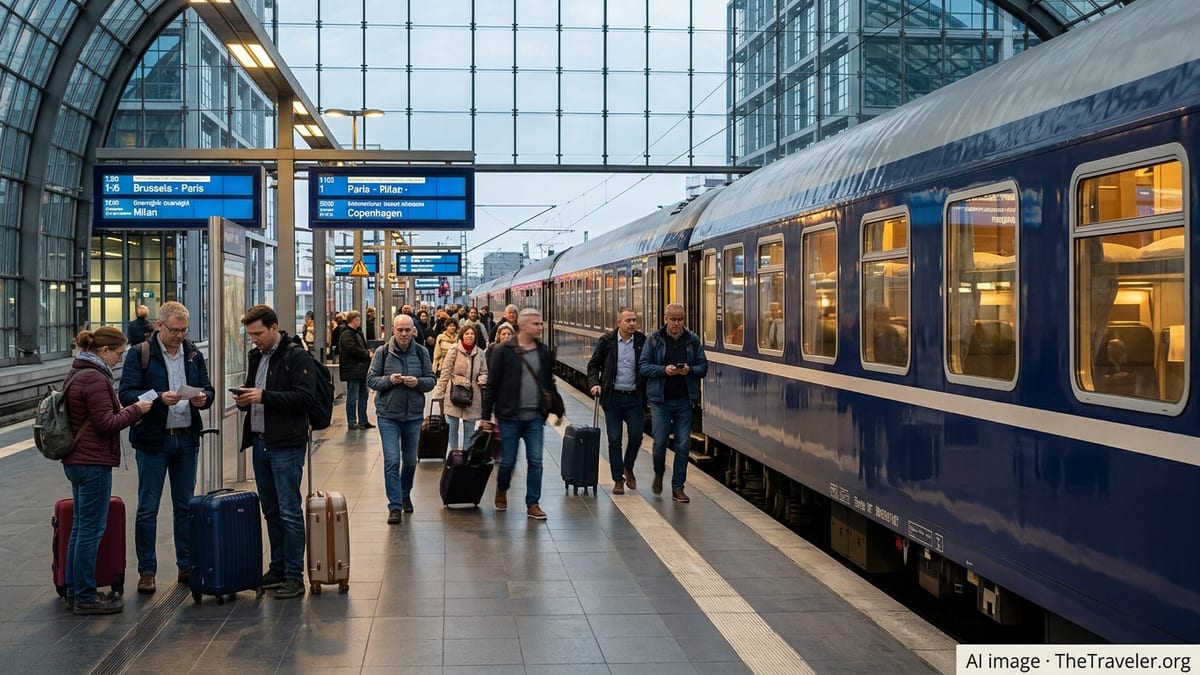
Audio Information Moves to the Heart of Deutsche Bahn’s 2026 Strategy
Germany’s rail operator is placing passenger information at the core of an ongoing modernization drive, backed by new immediate action programs launched at the start of 2026. Official documentation shows that these programs identify improved, more comprehensible information across all channels as a priority, including clearer disruption messages, better guidance on alternatives and enhanced audio support on trains and at stations.
Annual and interim reports from Deutsche Bahn describe a portfolio of measures aimed at turning real time operational data into usable passenger information. These include refining the central Reisendeninformationssystem (RIS), which converts internal traffic control data into announcements across loudspeakers, digital displays, apps and web channels. By focusing on the quality and consistency of this information, the company is attempting to address widely reported frustration with unclear or delayed announcements during disruptions.
The emphasis on information quality follows several highly publicized incidents, including a nationwide communications outage in June 2026 that temporarily halted all trains and left travelers facing long queues and uncertainty. Coverage of that event highlighted how quickly a breakdown in internal systems can translate into a lack of guidance for passengers, reinforcing the case for more resilient, intelligent audio and digital channels.
Industry material indicates that improved audio output is no longer treated simply as a loudspeaker function, but as part of a broader passenger experience strategy spanning apps, platforms and onboard systems. This shift is paving the way for “smart” audio that is context aware, customizable and closely linked to live operational data.
From Static Loudspeakers to AI‑Supported, Context‑Aware Announcements
Technical and corporate reports point to a steady evolution from traditional station loudspeakers toward dynamic, data driven passenger information systems. In Germany, RIS already aggregates timetable and disruption data, then distributes it to station displays and loudspeakers, while onboard systems in many trains use GPS or trackside signals to trigger automatic stop and delay announcements.
Recent disclosures from Deutsche Bahn highlight the growing use of artificial intelligence to support these processes. Projects completed in 2025 and expanded into 2026 use AI to help staff record delay reasons more accurately and make connection decisions that are more passenger centric. These same data streams feed into information channels, making it possible for announcements to reflect not just that a train is late, but why it is delayed and what alternatives are available.
The company has also invested in modern text to speech technology for onboard announcements, documented in supplier case studies. Instead of relying exclusively on pre recorded snippets, newer systems can generate natural sounding speech from updated text templates, allowing announcements to adapt to changing conditions while maintaining a consistent, recognizable voice across fleets.
According to sustainability and innovation reports, the 2026 action plans now build on this foundation by emphasizing accessibility and flexibility. A prominent example is the rollout of an extra audio output button on newer passenger information displays, allowing travelers to request spoken information on demand. This feature, initially documented in earlier projects, is now being extended across more stations and vehicles as part of the wider rail modernization effort.
Smarter Audio in the Wider Digital Travel Ecosystem
Smart audio on trains is increasingly intertwined with Germany’s broader digital travel ecosystem. Deutsche Bahn’s Navigator app and the bahn.de platform have been expanded as central sales and travel assistance tools, providing push notifications, real time journey previews and guidance through disruptions. In 2026, improvement programs specifically target clearer texts on deviations and alternatives, ensuring that what passengers hear onboard matches what they see on screens.
The digital travel companion functions in DB Navigator give a preview of journeys about an hour before departure, showing route segments, real time delays and carriage layouts. Travelers can receive alerts about changes well before boarding, reducing reliance on last minute loudspeaker announcements alone. Public documentation of these services shows that they are being refined in parallel with investments in onboard Wi Fi and mobile coverage, which are now standard in long distance fleets and being expanded in regional traffic.
For many passengers, the practical effect is a more coherent mix of audio and visual information. Station platforms may show live occupancy data or updated platform changes, while trains deliver automated bilingual announcements that correspond to the latest digital data. When disruptions occur, operators intend that AI supported decision tools will help staff provide earlier, more targeted information, which can be voiced through both central systems and local announcements.
At the same time, the 2026 customer communication program foresees a new information app dedicated to travelers, planned for release by the end of the year. Publicly available material suggests this app will integrate closely with existing channels and with infrastructure data, further tightening the link between back end network status and front end audio prompts that guide passengers through their journeys.
Accessibility, Safety and Reliability Drive the 2026 Audio Push
Accessibility considerations are a major driver behind Germany’s move toward smarter audio in rail transport. Reports on passenger information initiatives highlight the need to support travelers who may not wish to use digital channels or cannot easily interpret complex visual displays. Additional voice output options, clearer phrasing and standardized announcement structures are positioned as essential elements of barrier free travel.
Safety is another dimension. In regional traffic, 2026 has seen security updates that include expanded training and trials of AI assisted tools. While these measures focus primarily on staff support and incident response, improved communication is presented as a central benefit. Clearer, faster announcements about disruptions, platform changes or crowded trains are intended to reduce stress, prevent overcrowding at bottlenecks and support staff in deescalating difficult situations.
The nationwide communications outage in June 2026, attributed to a technical issue with the GSM R system during scheduled work, has sharpened attention on reliability. Media coverage following the incident documented widespread complaints about missing or confusing information during the hours long interruption. That experience has been frequently cited in public debate as evidence that digital and audio systems need not only to be smart, but also robust against failures.
Industry observers point out that building redundancy into passenger information chains is becoming as important as innovating their features. Smart audio systems that can fall back to local data, or that are closely tied to multiple independent information channels, are seen as ways to keep passengers informed even when central systems are under strain.
What Rail Travelers Can Expect on German Trains in 2026 and Beyond
In daily practice, passengers across Germany are already encountering elements of this audio focused transformation. Newer trains and refurbished fleets are increasingly equipped with integrated passenger information systems that combine LED or TFT displays, internal loudspeakers, emergency intercoms and Wi Fi into a single architecture. Suppliers active in the German market describe complete solutions that handle both visual and auditory announcements, enabling consistent, automated information inside vehicles.
On the infrastructure side, projects such as live occupancy systems on urban rail corridors and the continued expansion of station displays support more granular announcements about crowded services or alternative routes. Where light based passenger counting systems are in place, their data can feed into both platform screens and corresponding audio messages, directing travelers toward less crowded carriages or different trains.
Looking ahead, Deutsche Bahn’s planning documents up to 2027 envisage continued investment in customer communication, including further rollout of digital construction timetables, improved disruption texts and deeper integration of AI into passenger information. Observers expect that as these systems mature, the audible experience of a train journey in Germany will become more personalized and predictive, with announcements that anticipate passenger needs rather than simply reacting to events.
For visitors and regular commuters alike, the rail revolution unfolding in 2026 is less about a single new gadget and more about how many systems now work together. From a tap on a smartphone to a button on a station display and a synthesized voice in a carriage, Germany’s railways are aiming to ensure that vital travel information reaches passengers clearly, reliably and in real time.
Deutsche Bahn: Sofortprogramm "Bessere Kundenkommunikation"
DB Sustainability Statement 2025: Passenger information actions
DB Interim Report 2026: Digitalization and innovation
Associated Press: Train halt after communications system outage in Germany