


More news on this day
Ghana’s aviation regulator has launched an investigation after Accra-bound passengers on a KLM flight were left stranded in Amsterdam, prompting allegations of poor treatment and renewed scrutiny of how international airlines handle major disruptions.
Get the latest news straight to your inbox!
Videos of stranded travelers trigger regulatory response
Publicly available information from Ghanaian media indicates that the incident centers on KLM Flight KL059 from Amsterdam to Accra, which was scheduled to operate over the weekend of June 27, 2026. Travellers expecting to arrive in the Ghanaian capital instead found themselves stuck at Schiphol Airport after a prolonged delay.
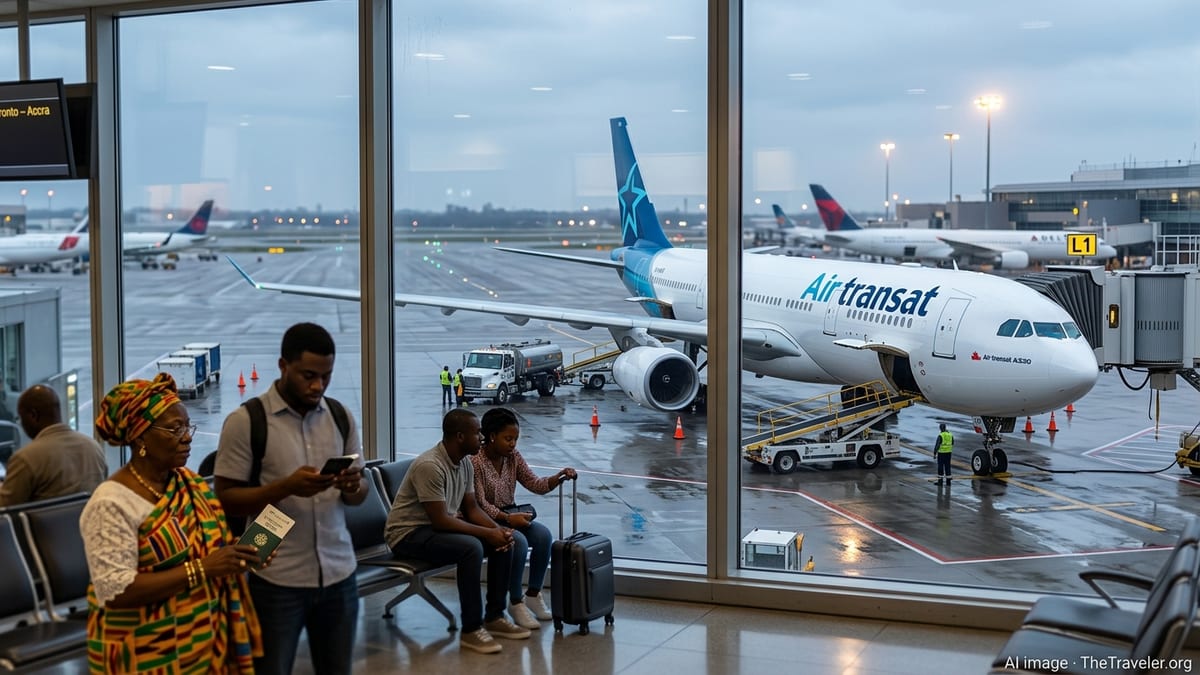
Images and videos posted on social platforms and reproduced by local outlets show visibly frustrated passengers gathered at the gate area, complaining about limited information and uncertainty over when they would be able to continue their journey. Some travelers reported confusion over rebooking arrangements and accommodation, while others alleged that ground staff were slow to respond to requests for assistance.
According to reports, these accounts prompted the Ghana Civil Aviation Authority to announce that it was opening a formal probe into what happened in Amsterdam and whether the carrier met its obligations toward affected passengers.
In its public notice, the regulator framed the review as part of its consumer protection mandate, indicating that it intends to examine both the length of the disruption and the way travelers were managed while they waited for onward travel to Accra.
GCAA focuses on passenger welfare and airline obligations
The Ghana Civil Aviation Authority has stated in its public communication that safety, security and consumer protection remain its top priorities. In line with that remit, the agency has moved quickly to gather information on the circumstances surrounding the Amsterdam delay and the treatment of those booked on the Accra service.
Published coverage explains that investigators are expected to look at a range of issues, including the reported tarmac delay, the timeliness and clarity of communication to passengers, and whether appropriate care such as refreshments and accommodations was provided when it became clear that travel would be significantly disrupted.
Ghana’s regulator is also expected to engage directly with KLM and other relevant aviation stakeholders to obtain a detailed account of operational events at Schiphol. Any potential regulatory action would follow this fact-finding process and be taken in line with the country’s aviation rules and consumer protection framework.
The authority has indicated that, once the investigation is complete, it intends to share its findings in accordance with established procedures. That commitment places additional attention on how airlines serving Ghana manage irregular operations at their foreign hubs, particularly for long-haul services connecting West Africa with Europe and beyond.
Airline disruption at Schiphol under renewed scrutiny
The Amsterdam incident comes against a backdrop of recurring passenger complaints about disruption and customer service across parts of the global aviation industry. Schiphol, one of Europe’s busiest hubs, has periodically experienced operational strains, including baggage system issues, staffing shortages and weather-related congestion, all of which can cascade into delays and missed connections.
Travel industry commentary notes that when disruption occurs at a major transfer hub such as Amsterdam, passengers bound for African destinations can be especially vulnerable. Many rely on single daily services, limited alternative routings and tight schedules for events, work commitments or onward regional flights. Any breakdown in information flow or assistance on the ground can quickly escalate frustrations.
Cases involving extended delays or overnight stranding often raise questions about how well airlines apply passenger rights rules, including European Union requirements for care and potential compensation when disruptions fall within a carrier’s control. The current Ghanaian investigation is expected to examine whether the experience of KL059’s passengers aligned with those standards and with the airline’s own customer-service policies.
Observers of the sector suggest that the outcome will be closely watched by frequent travelers between Europe and West Africa, who depend heavily on a small number of carriers and hubs for reliable access to the region.
Consumer rights and expectations for long-haul travelers
The situation involving the Accra-bound KLM passengers has also reignited discussion about what travelers can reasonably expect when schedules unravel far from home. Publicly available consumer guidance in Europe highlights that, depending on the cause and length of a delay, airlines may be responsible for providing meals, refreshments, hotel stays and rebooking on the next available services.
Advocacy groups and travel advisers often encourage passengers to document their experiences during major disruptions, including retaining boarding passes, receipts and records of communications with airline staff. Such material can be important if regulators or courts later assess whether obligations were met, or if travelers lodge formal complaints seeking reimbursement or compensation.
The Ghanaian regulator’s decision to publicly acknowledge the KL059 complaints underscores the increasing willingness of aviation authorities to intervene when large groups of passengers report substandard treatment. While the investigation is ongoing, the case is already feeding into a broader debate over how airlines balance operational challenges with their responsibility to care for stranded customers.
For KLM and other long-haul carriers serving Ghana, the episode serves as a reminder that disruptions at European hubs can quickly reverberate back to African markets, where regulators and travelers alike are paying close attention to service standards.
Potential implications for Ghana–Europe air connectivity
Ghana’s air links with Europe are a lifeline for business travel, tourism and the country’s sizeable diaspora community. Carriers such as KLM have long marketed Amsterdam as a convenient connecting point for routes between Accra and cities across Europe and North America, making the smooth handling of irregular operations a critical aspect of their value proposition.
Industry observers note that a high-profile investigation into alleged mistreatment could prompt airlines to reassess their disruption-management procedures for Ghana routes, particularly when passengers are stranded at foreign hubs. Enhanced staff training, clearer communication protocols and more proactive accommodation planning are among the measures frequently cited as ways to reduce tension in such situations.
Depending on the findings of the GCAA probe, there could also be implications for how Ghana enforces consumer protection rules across all international airlines serving Kotoka International Airport. Stronger oversight and clearer penalties for non-compliance may influence how carriers plan capacity, allocate resources during disruptions and communicate with passengers whose journeys are interrupted.
For travelers, the Amsterdam incident is likely to become a reference point in assessing airlines’ reliability and responsiveness when problems arise. As the investigation proceeds, many Accra-bound passengers will be watching closely to see whether the outcome leads to tangible improvements in how they are treated the next time flights do not go according to plan.