


More news on this day
Mumbai’s vast suburban rail network is moving closer to a generational upgrade, as plans for 238 new Vande Metro-style suburban trains advance into a fresh manufacturing phase designed to boost capacity, safety and comfort across one of the world’s busiest urban rail systems.
Get the latest news straight to your inbox!
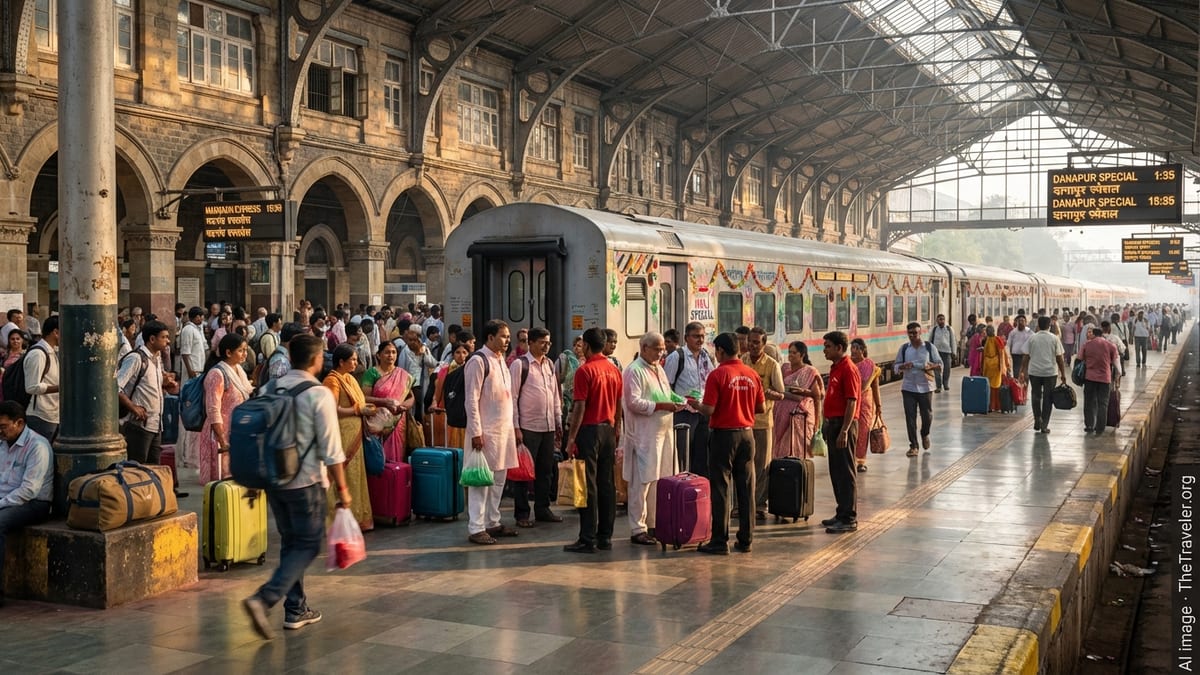
A High-Stakes Modernisation For Mumbai’s Lifeline
Publicly available information on Indian Railways’ rolling stock program indicates that the 238 new trains are being developed specifically for Mumbai’s suburban corridors under the Mumbai Urban Transport Project, with a focus on handling extreme passenger volumes while improving safety and energy efficiency. The trains are described in official and industry documents as adopting the design language and onboard systems of the Vande Bharat family, adapted for shorter, stop‑intensive suburban operations.
The move is seen as central to a wider strategy to upgrade the city’s older non air conditioned local trains, which currently operate at some of the highest passenger densities in the world. Background data on the Mumbai Suburban Railway shows that more than 7.5 million passenger journeys are made on a typical weekday, relying heavily on decades‑old electric multiple units that were never designed for present demand levels.
According to recent railway publications and industry briefings, the new suburban trainsets are being funded under successive phases of the Mumbai Urban Transport Project, which pools central and state resources to upgrade tracks, signalling and rolling stock. The 238‑train order, combined with parallel investments in metro lines and station upgrades, is expected to relieve pressure on key Western and Central Railway corridors over the next several years.
Reports indicate that this fleet program follows earlier attempts to procure large numbers of air conditioned local trains, some of which faced delays, retendering and design changes. The shift to a Vande Metro configuration reflects a push to standardise technology and maintenance practices with India’s flagship intercity trainsets, while still meeting Mumbai’s unique operating conditions.
Vande Metro Design Tailored To Suburban Demands
Technical descriptions released through official yearbooks and planning documents state that Vande Metro trains share core systems with Vande Bharat, including modern three‑phase propulsion, regenerative braking and comprehensive onboard diagnostics. For Mumbai, the trains are expected to feature higher power‑to‑weight ratios to support quick acceleration and braking between closely spaced stations, a critical factor for improving line capacity without major new track construction.
The proposed suburban configuration places strong emphasis on standing room, wide gangways and multiple doorways to shorten dwell times at platforms. Interior layouts highlighted in concept materials suggest a mix of longitudinal seating, wider vestibules and large door apertures to manage what railway engineers describe as “super dense crush load” conditions typical of Mumbai’s peak hours.
Climate control is another central feature. The new trainsets are planned as fully air conditioned, a sharp contrast to the city’s traditional open‑door coaches. Railway yearbooks and budget documents note that upgraded rolling stock will incorporate automatic door systems and continuous CCTV coverage, alongside passenger information and emergency communication systems that are now standard on newer Indian metro and intercity trains.
Manufacturing plans referenced in industry releases indicate that production of Vande‑family suburban coaches is being scaled up in phases, with dedicated lines for stainless‑steel and aluminium car bodies. The intent is to localise as much of the supply chain as possible, aligning the Mumbai order with broader “Make in India” industrial policy while building long‑term maintenance capacity inside the country.
Network Impact: Capacity, Safety And Operating Flexibility
Transport analysts tracking Mumbai’s rail upgrades point out that the 238 Vande Metro trains are only one element of a wider capacity expansion effort, but potentially a transformative one. By combining high acceleration, automatic doors and higher reliability, the fleet is expected to allow planners to run more services per hour on existing tracks, particularly on constrained approaches to major terminals such as Chhatrapati Shivaji Maharaj Terminus and Churchgate.
Safety is another key motivator. Publicly available accident data for the city’s suburban system has long highlighted the risks associated with overcrowding, open doors and track trespassing. Automatic doors and better passenger information systems are intended to reduce incidents linked to boarding and alighting, while air conditioned interiors may decrease the incentive to lean out of moving trains in search of ventilation.
Operationally, the Vande Metro concept opens scope for more flexible service patterns. Officials involved in earlier planning exercises have suggested that standardised eight and twelve‑car formations could simplify scheduling and fleet rotation between lines. With regenerative braking and lighter car bodies, the new trains are also expected to reduce energy consumption per passenger, an important factor as the network carries ever higher ridership.
However, specialists note that rolling stock alone cannot resolve all of Mumbai’s capacity bottlenecks. Track upgrades, modern signalling and additional turnback facilities are still required on several corridors. The Vande Metro order is therefore being implemented alongside signalling improvements, platform extensions and integration with new metro lines to maximise the benefits of the investment.
Timeline, Procurement Journey And Recent Turning Point
The path toward the current manufacturing phase has been lengthy. Planning references show that Mumbai’s suburban upgrade, including a large order of new air conditioned trains, was first envisaged under earlier phases of the Mumbai Urban Transport Project. Over time, the specification evolved from incremental improvements to the existing local train design to a more ambitious adoption of Vande‑style technology.
Published coverage of the procurement process notes that tenders linked to the 238‑train requirement have been retendered or modified more than once, reflecting debates over design, financing and maintenance responsibilities. At various points, timelines slipped as authorities weighed whether to prioritise proven conventional designs or move directly to a new generation of suburban rolling stock inspired by intercity trainsets.
Recent reports indicate that this impasse has started to clear, with contracts and manufacturing arrangements moving forward for Vande Bharat‑derived suburban stock, including allocations linked specifically to Mumbai. Industry statements from major rolling stock manufacturers describe new or expanded facilities preparing to ramp up production of Vande‑family coaches in the middle of this decade, positioning them to supply both intercity and suburban variants.
Sector observers say that the entry of the 238 Mumbai‑focused trains into an active manufacturing pipeline marks a turning point from planning to implementation. While exact delivery schedules can still shift, the alignment of funding commitments, factory capacity and standardised technical specifications suggests that passengers could begin to see the first of the new trains enter service in the second half of the decade, subject to testing and certification requirements.
Balancing Fares, Comfort And Accessibility
As Mumbai moves toward a predominantly air conditioned suburban fleet, questions remain around fares and accessibility. Public discussion has frequently highlighted the need to balance upgraded comfort and safety with the affordability that makes local trains the backbone of everyday commuting for millions of lower and middle income residents.
Government budget documents note that suburban services in Mumbai continue to receive substantial operating subsidies, with a significant share of costs absorbed by the railway system rather than recovered through ticket sales. The introduction of premium rolling stock such as Vande Metro is therefore likely to be paired with policy decisions on fare structures, concessions and possible differential pricing between fully air conditioned and legacy services during the transition period.
Network planners also face the challenge of integrating the new trains with ongoing metro expansion. Several metro corridors now parallel or intersect existing suburban lines, offering alternative routes for some commuters. Analysts suggest that the full benefit of the 238 Vande Metro trains will be realised only if service patterns, interchanges and ticketing systems are coordinated so that passengers can move smoothly between suburban rail and metro without excessive cost or complexity.
For now, the shift of the Mumbai‑dedicated Vande Metro program into a more advanced manufacturing phase signals that the city’s rail backbone is finally on track for a comprehensive upgrade. As key factories gear up to deliver the new trainsets and supporting infrastructure works progress, Mumbai’s daily commuters are a step closer to a suburban network that more closely matches the scale and pace of the city it serves.