


More news on this day
Delta Air Lines is preparing to launch a new nonstop route between Austin and Paris, a transatlantic link that underscores Central Texas’s booming travel demand and offers faster one-stop access to dozens of European destinations for business and leisure travelers across the state.
Get the latest news straight to your inbox!
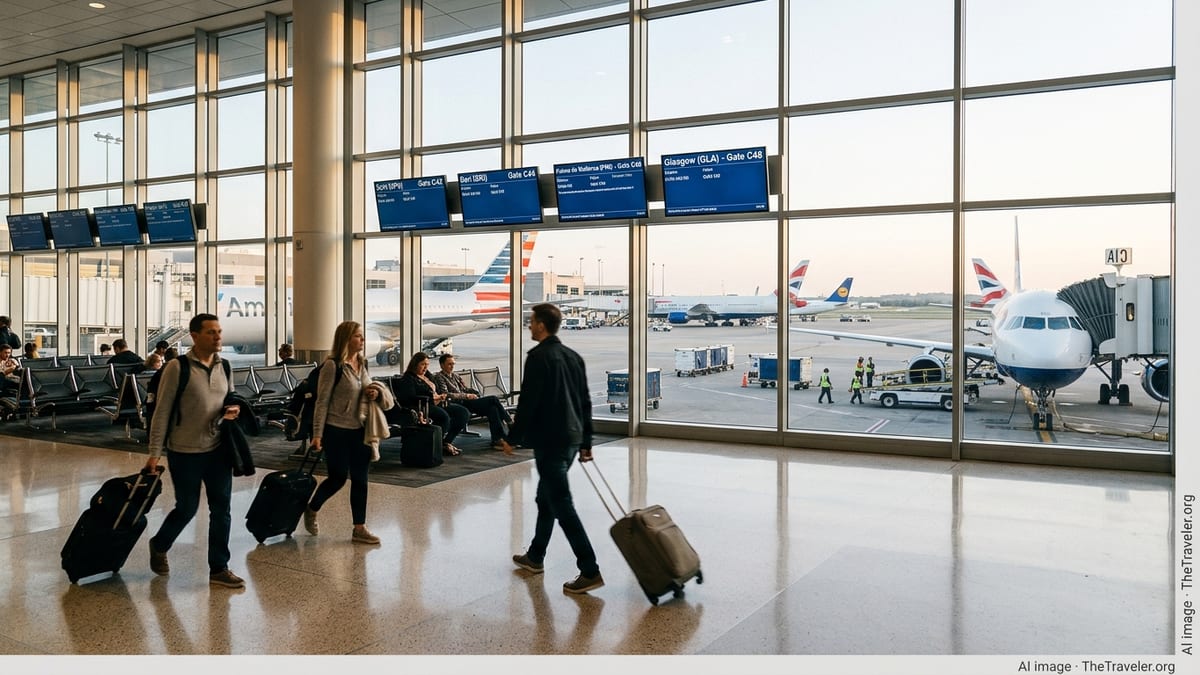
Nonstop Link From Austin to Paris Charles de Gaulle
The new service will connect Austin–Bergstrom International Airport with Paris Charles de Gaulle, one of Europe’s largest hubs and a key gateway for connections across the continent. Publicly available scheduling data indicates that the route will operate as a year-round daily service, integrating into Delta’s joint network with European partners based at the French capital.
The flight places Austin among a smaller group of U.S. cities with nonstop access to Paris, joining larger hubs where Delta already runs daily transatlantic services. Industry observers note that the move reflects an effort to round out the carrier’s presence in Texas while tapping into growing demand from Central Texas travelers who previously routed to Europe through coastal gateways.
The Paris link is expected to operate into the main international terminal at Charles de Gaulle, positioning passengers for onward same-day connections toward major European capitals and secondary cities. By eliminating a domestic connection for Austin-origin travelers, the new route is likely to save several hours on typical itineraries to popular destinations such as Rome, Barcelona, Amsterdam and Berlin.
While full operational details may evolve as launch approaches, the service is being introduced against a backdrop of rising long haul capacity across the North Atlantic, with carriers adding routes and frequencies to capture robust post-pandemic demand.
Austin’s Rapid Growth Is Reshaping Air Service
Austin has emerged as one of the fastest-growing large metro areas in the United States, and that growth is increasingly visible in its air service. Airport traffic has climbed as the region’s tech cluster, state government, music scene and tourism economy draw both visitors and new residents, leading multiple airlines to add domestic and international routes in recent years.
City air service snapshots and airline announcements show that Delta has been steadily increasing its schedule at Austin–Bergstrom, adding new domestic destinations and boosting frequencies on existing routes. The new Paris flight builds on that trajectory and gives the carrier a marquee long haul service from a market that is not currently classified as a traditional hub.
The airport itself has been working through capacity constraints as passenger volumes rise faster than earlier projections. Travelers frequently report crowded security checkpoints and busy gate areas, and local planning documents point to long term terminal expansion as a key priority. The arrival of additional widebody flying, such as a nonstop to Europe, is set to further elevate Austin’s profile among U.S. midcontinent airports.
Analysts suggest that sustained international growth could support more premium seating and upgraded onboard products on routes to and from Austin, reflecting a mix of high income leisure travelers and corporate demand generated by the region’s expanding technology and professional services base.
Gateway to Europe for Central and South Texas
For many travelers in Central and South Texas, the Austin to Paris service is poised to become a new primary gateway to Europe. In addition to drawing from Austin itself, the route is expected to attract passengers from San Antonio, the Hill Country and parts of West Texas who currently face long drives or connections through cities such as Dallas, Houston or Atlanta.
Paris Charles de Gaulle serves as a major connecting point to destinations across Western, Central and Southern Europe, as well as parts of North Africa and the Middle East. Through coordinated schedules with partner airlines, Delta customers using the new Austin service will be able to connect via a single stop to a wide range of cities without transiting through congested East Coast hubs.
Travel planners note that the schedule pattern commonly used on transatlantic routes, with overnight eastbound departures and daytime westbound returns, can allow Texas based travelers to maximize vacation and business time in Europe. The convenience of a nonstop departure from Austin is also likely to appeal to families and occasional international travelers who prefer to avoid multiple transfers.
Industry reports indicate that the route could see strong demand from both leisure travelers heading for city breaks and summer holidays, and from the corporate sector, including technology, finance and creative industries with operations on both sides of the Atlantic.
Competitive Pressure on Texas and Transatlantic Markets
The decision to add a Paris nonstop from Austin arrives amid an increasingly competitive landscape for transatlantic travel from Texas. Larger rivals already operate extensive networks from Dallas–Fort Worth and Houston to major European hubs, and some have built deep partnerships with European carriers that mirror Delta’s joint ventures.
By positioning Austin as an additional launch point to Europe, Delta is signaling confidence that demand in the state extends beyond traditional gateway cities. Aviation analysts observe that even a single additional long haul route can shift booking patterns, as travelers reevaluate whether to connect through legacy hubs or opt for closer departure points.
The new flight also has implications for regional connectivity within the United States. To support the Paris service, Delta has been building out its domestic schedule from Austin, adding links to secondary and mid sized markets that can feed long haul departures. This creates more one carrier options for travelers in outlying Texas cities who may previously have relied on competing airlines for European trips.
Pricing dynamics will likely evolve once the route is fully established, with fare data expected to show how the additional capacity affects average ticket costs between Texas and Europe. Travel agents anticipate that promotional fares around launch and shoulder seasons could stimulate incremental demand, particularly among price sensitive leisure travelers.
What Travelers Can Expect Onboard
The new Austin–Paris flight is expected to use one of Delta’s long haul aircraft types that feature a mix of premium and economy cabins, consistent with the carrier’s broader international network. Public information on the airline’s fleet strategy highlights ongoing investments in more fuel efficient aircraft and refreshed interiors, including lie flat seating in the most premium cabins and upgraded inflight entertainment.
Depending on final aircraft assignment, travelers can anticipate a configuration that offers a choice of business class, premium economy style seating and standard main cabin options. Many of the airline’s refurbished widebody aircraft include larger overhead bins, mood lighting and expanded power and USB access at the seat, features designed to compete with transatlantic offerings from European and U.S. rivals.
On the ground in Austin, the flight’s schedule will determine how it fits into existing peak departure banks, an important factor for connections and overall airport congestion. In Paris, arrival times are likely to be timed to meet morning or early afternoon connection waves that distribute passengers onward across Europe and beyond.
As the route approaches launch, further timetable adjustments and operational refinements may occur in response to booking trends and network planning decisions. For now, the addition of a nonstop link to Paris stands as one of the most visible signs of how Austin’s growing profile and Texas’s broader demand for international travel are reshaping air service options for the region.