


More women than ever are lacing up their boots and heading into the hills alone. In 2024, industry data suggests that more than 30 million women in the United States went hiking, many of them at least occasionally solo. That growth is exciting, but it also raises a fair question: how do you hike alone as a woman and actually feel safe, prepared, and in control of your experience rather than anxious the whole time? This guide brings together real-world examples, current gear recommendations, and practical strategies to help you build a solo hiking practice that is both empowering and as safe as reasonably possible.
Get the latest updates straight to your inbox!
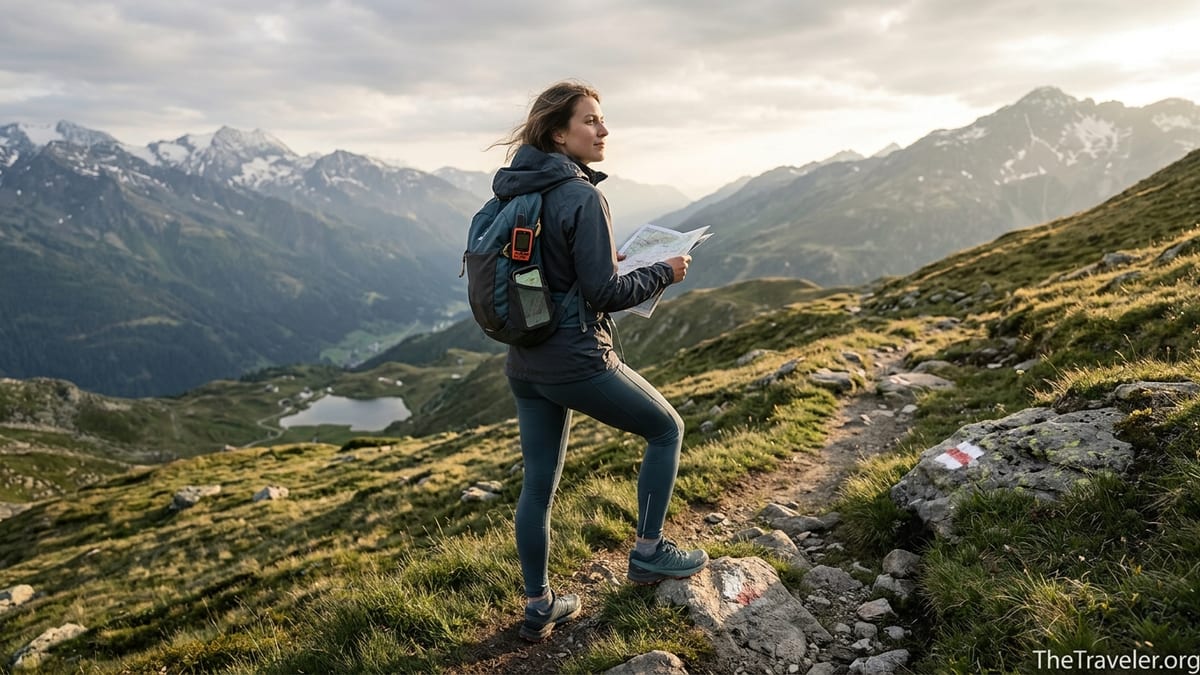
Why Solo Hiking Is Worth It For Women
For many women, solo hiking starts as a compromise with a busy life. Maybe your friends are not outdoorsy, your schedule never lines up with a group, or you simply crave quiet time after a work week of constant conversation. A Washington Post wellness feature in 2024 interviewed women who run and hike alone specifically because that is the only time they get real headspace. That same motivation shows up again and again in outdoor communities: solo trail time is often less about proving anything and more about finally getting to hear your own thoughts.
There is also a sense of competence that solo hiking builds in a way few other activities do. Planning your own route, checking a weather forecast, packing what you need, and getting yourself to and from the trailhead without help turns into a kind of low-key training program for problem-solving. Women who have done their first solo day hike on a popular trail in Colorado or Oregon often describe their second or third outing as dramatically less intimidating, because they realise that most decisions on a hike are small and manageable, not epic survival moments.
Importantly, risk in the outdoors is rarely as gendered as headlines make it sound. Search and rescue reports from US hiking clubs show that the most common incidents for all hikers are slips and falls, getting off route, weather exposure, and medical issues such as dehydration or heat exhaustion. Human threats are real and cannot be dismissed, but they are statistically much less common than twisted ankles or people caught without a headlamp after sunset. Understanding that balance can help you focus your energy on the risks you can actually manage, without minimising the things that genuinely worry you.
Solo hiking also gives you flexibility that group trips never quite match. You can choose mellow lake loops when you are tired, sunrise hikes when you wake up early, or quick local forest walks after work. In regions like the Pacific Northwest, New England, or the Alps, there are hundreds of short, well-travelled trails within an hour or two of major cities. Once you know how to assess a route and build a safety plan, solo hiking becomes a tool you can use whenever you have a free window, not something you have to wait to organise with others.
Understanding Real Risks vs Perceived Fears
Women considering solo hiking often picture worst-case scenarios first. News stories about attacks on trails or rare but highly publicized cases on long-distance paths leave a deep impression. Yet incident reports from organisations such as mountain clubs and outdoor alliances consistently show that the everyday risks are more mundane. The most common issues are falls on steep or loose terrain, hypothermia after unexpected weather, heat illness on exposed trails, and navigation errors that turn a 3-hour hike into an 8-hour one. These patterns hold across regions, from the White Mountains of New Hampshire to desert trails in Utah.
Human threats are harder to quantify, but large online communities of women hikers tend to describe a similar pattern. Many women report occasional uncomfortable encounters, such as lingering stares at trailheads or intrusive questions from strangers, rather than outright violence. When problems do escalate, they often start in predictable contexts: isolated parking areas at dawn or dusk, unmarked social trails away from the main route, or situations where alcohol is involved at backcountry campsites. Recognising those patterns lets you put your strongest safety measures where they matter most.
Wildlife is another area where perception and reality diverge. In North America, most women hiking solo will encounter dogs, deer, birds, and perhaps the occasional snake long before they see a bear or mountain lion. In places like the Rockies, Sierra Nevada, or parts of Canada, black bears are relatively common near popular hiking zones, but attacks remain very rare, especially when people store food correctly and make normal levels of noise. In Europe, most hikers are more likely to see cows or sheep on alpine pastures than any large predator. The key is to research the specific animals in the region you plan to hike and learn basic behaviour guidelines, rather than trying to memorise every scary story you see online.
It is also important to differentiate between being alone in a remote wilderness and being alone on a busy trail. A solo woman walking a packed loop around Colorado’s Chautauqua Park on a Saturday morning is in a very different risk environment than someone starting a three-day solo backpacking trip in a quiet corner of Wyoming. Early solo hikes are usually safer and less stressful when you choose popular, well-signed routes close to towns or cities, at times of day when plenty of other hikers are around. You can gradually build toward more remote outings as your skills, gear, and comfort level grow.
Planning Your First Solo Hikes With Safety in Mind
Thoughtful planning will do more for your safety than any single gadget in your pack. Start by choosing routes that match your current fitness and navigation skills, not your aspirational self. For a first solo hike, that might mean a 3 to 5 mile out-and-back with modest elevation gain on a clearly marked trail, such as parts of Runyon Canyon in Los Angeles, Bear Mountain’s main path in New York, or sections of the South Downs Way near Brighton in the United Kingdom. Look for recent trip reports on hiking forums or local hiking association pages to check whether the trail is currently in good shape and busy enough that you will not be completely alone.
Weather is your next critical filter. A blue-sky summer forecast can turn quickly to thunderstorms in the Rockies or sleet in Scottish hills. Use reliable regional forecasts from national meteorological services, and pay attention to warnings about heat indexes, thunderstorms, or high winds. If a forecast mentions afternoon storms, plan to be off exposed ridges by midday. If a heat wave is in progress in southern Spain or Arizona, choose a forested morning hike and carry more water than you think you need. In hot regions, women hiking alone often schedule their outings from sunrise to mid-morning to avoid both intense sun and emptier trailheads late in the day.
Transportation and trailhead logistics deserve as much attention as the hike itself. Ask basic but important questions: Is the parking lot visible from a road or tucked out of sight? Are there likely to be other cars there when you arrive and when you plan to leave? In some US national parks, such as Zion or Yosemite, shuttle systems let you avoid remote parking lots entirely and drop you at busy trailheads. In Europe, places like Switzerland’s Lauterbrunnen Valley or Norway’s fjord regions often have buses or trains that stop near popular trailheads, which many solo women find more comfortable than isolated car parks.
Finally, build a habit of leaving a clear plan with someone who will actually notice if you go overdue. Text a friend the exact trail name, approximate start time, planned turnaround time, and what you will do if conditions change. For example: “If the upper section looks icy I will turn around at the lake.” When hiking abroad, many solo women also share their plans with hostel staff, guesthouse owners, or guiding companies they have already done a day trip with. This does not guarantee rescue, but it makes you easier to find and encourages you to think concretely about your own schedule and limits.
Essential Safety Gear That Really Helps
There is no single piece of equipment that makes solo hiking risk free, but a few items have outsized impact. A satellite communicator or personal locator beacon has become the gold standard for solo hikers heading even slightly off grid. Models like the Garmin inReach Mini 2, Zoleo, or Spot devices use satellite networks to send SOS messages when cell coverage disappears. Some allow two-way texting so you can update rescuers about injuries or conditions. They usually cost a few hundred dollars upfront, plus a modest monthly subscription, and many search and rescue teams now explicitly recommend them for solo hikers who frequent remote trails.
Beyond a communicator, the ten essentials still matter. A lightweight headlamp with fresh batteries is critical, because many rescues begin with people stuck on a trail after dark with no light source. A small first aid kit tailored to your needs, extra water and snacks, a warm layer even in summer, and a basic emergency shelter such as a compact space blanket or bivy can turn a frightening situation into a manageable night out if you are delayed. Women who hike solo in regions like the Pacific Northwest or the Scottish Highlands often add a compact, high-quality rain jacket and gloves even on seemingly nice days, because weather shifts quickly.
Navigation tools deserve special emphasis for solo hikers. Do not rely solely on the line on a phone app. Download offline maps in advance using a trusted app, and carry a paper map or at least a printed route description as backup. Learn how to read contour lines and recognise landmarks. Many women report that navigation practice on short local trails increased their confidence dramatically and reduced the fear of “getting lost” that kept them from going solo in the first place. Consider taking a one-day navigation course through a local hiking club or outdoor retailer if maps still feel mysterious.
Finally, think about personal safety tools as part of a broader strategy, not magical talismans. A small whistle clipped to your pack strap carries farther than your voice and can be used to attract attention if you are injured or uncomfortable around someone. Some women carry pepper spray where it is legal, while others rely on trekking poles as multi-use tools that also happen to give you something solid in your hands. The most important element is that you know exactly how to use whatever you carry and that it fits within local regulations, particularly when crossing borders.
Reading the Trail: Situational Awareness Without Constant Fear
Situational awareness is the art of paying attention without scaring yourself into paralysis. On the trail, that starts with simple habits. Notice how many cars are at the trailhead and what time of day it is. Register whether the people you see seem like other hikers, local dog walkers, or something else entirely. If you greet people as you pass and someone’s behaviour feels off, trust that flicker of discomfort. You can slow your pace to let them move ahead out of sight, take a short break to create distance, or turn around if needed. Those small decisions are worth far more than trying to analyse every possible threat.
On busy popular trails, your main situational awareness challenge may be weather and route conditions rather than people. Pay attention to how damp or icy rocks feel under your boots, especially at stream crossings or on shaded switchbacks. If you notice others sliding or turning around, do not push on just because your original plan said you would. In mountain areas, watch the sky and the wind. Hikers on Colorado’s Front Range, for example, often start before sunrise to be off ridgelines before summer thunderstorms roll in around midday. Following those local patterns reduces both lightning risk and the chance of being caught out in heavy rain alone.
At rest stops or scenic viewpoints, choose spots where you will be visible to passing hikers, especially if you are setting your pack down or taking photos for several minutes. If you feel uneasy about someone nearby, you can move closer to another group or return to the main path. Many solo women develop stock phrases for leaving a conversation politely but firmly, such as “I am on a tight schedule, I need to keep my pace up” or “My friend is just behind me, I should wait for her here.” You do not owe anyone detailed explanations about your plans, your accommodation, or the fact that you are alone.
Listening to your intuition does not mean assuming every stranger is a threat. Many solo hikers have stories of other trail users helping them with a tricky creek crossing, sharing extra water, or double-checking that they got down safely when a storm rolled in. Online communities for women who hike, climb, or run often share these positive stories as a counterweight to fear. The goal is a balanced mindset: you notice what and who is around you, you act early when a situation feels wrong, and you leave room for the fact that most people on the trail are there for the same reason you are.
Trail Etiquette, Boundaries, and Dealing With Unwanted Attention
Trail etiquette is partly about courtesy and partly about safety. Yielding to uphill hikers, not blocking narrow paths, and controlling dogs may seem like small details, but they set a tone for how people treat each other in a shared space. As a solo woman, you have every right to expect basic respect and to enforce your own boundaries when someone’s behaviour crosses the line from friendly to intrusive.
Unwanted attention on trails can range from persistent small talk when you clearly want to hike in peace, to invasive questions about where you are staying or whether you are alone. A simple, firm “I am enjoying some solo time today, have a good hike” communicated with a smile but no further engagement often does the job. If someone presses for personal information, you can answer in vague terms or fabricate details that protect you, such as saying you are meeting friends at a specific time or that your partner is just behind you.
At trailheads and parking lots, trust your instincts. If a particular lot feels isolated, poorly lit, or dominated by a group whose behaviour makes you uneasy, do not force yourself to park there just because you drove a long way. Look for alternative access points, choose a different trail nearby, or come back at a busier time. Many urban women hikers arrange to meet a friend for the first portion of a trail that passes through a quiet wooded section near the city, then continue alone on busier open stretches once more people are around.
In some countries, carrying defensive tools like pepper spray is restricted or illegal. Before you hike abroad, check local regulations and adapt your approach. In many European regions, for example, women rely more on choosing busy, well-marked routes and using trekking poles, whistles, and strong boundary-setting rather than chemical deterrents. In North America, if you choose to carry spray, treat it like any other piece of safety equipment: train with an inert practice canister, store it accessibly, and understand that avoiding bad situations entirely is still the priority.
Building Skills and Confidence Over Time
Confidence does not appear on your first solo hike just because you bought the right boots. It grows in layers as you experience different conditions and learn that you can handle them. One practical approach is to treat solo hiking like a progression. Start with short, familiar trails close to home that you have already done with friends. Move next to new routes of similar difficulty in well-trafficked areas. Once those feel comfortable, you can experiment with slightly longer distances, modest elevation increases, or less touristy trails that are still near towns or villages.
Taking formal courses can accelerate that process. Many local outdoor clubs, guiding companies, and large retailers in the United States and Europe offer affordable one-day workshops on navigation, basic first aid, or women-specific hiking skills. For example, you might find an evening map and compass class in Denver, a women’s navigation clinic in the Lake District, or an introductory mountain safety course in Chamonix. These sessions not only build technical knowledge but also introduce you to other women who are navigating the same fears and ambitions.
Travel destinations with strong hiking infrastructure can be especially good training grounds for solo skills. Iceland, parts of Norway, the Swiss Alps, and popular regions of Slovenia or Austria are frequently recommended by solo female travellers because of clear trail marking, well-used routes, and a culture of outdoor recreation. In North America, national parks like Rocky Mountain, Acadia, and Zion have heavily used day trails where you are rarely truly alone, which many women find reassuring while they build confidence.
Online communities can also play a positive role when used thoughtfully. Forums and social media groups for women who hike or travel solo offer real-time information on trail conditions, recent incidents, and local norms. Women will post, for instance, that a particular canyon in Utah currently has high water, that a well-known loop outside Seattle is muddy but manageable, or that a trailhead outside Barcelona feels quiet early in the morning but fills quickly by 9 a.m. Use these discussions as one data point alongside official sources rather than as your only guide.
Special Considerations: International Trails and Overnight Trips
Hiking solo abroad adds a few extra layers of planning but can still be entirely within reach. In Europe, many solo women start with countries known for strong public transport and relatively low violent crime, such as Norway, Switzerland, or Ireland, and focus on well-marked long-distance routes or day hikes near tourist hubs. For example, someone might base themselves in Interlaken and hike signed routes in the Jungfrau region, or stay in Bergen and take day trips onto clearly waymarked fjord trails where locals and visitors mix.
Language barriers can affect safety indirectly. In countries where you do not speak the local language, it may be harder to read warning signs, understand rescue procedures, or call for help. A practical workaround is to download offline translation tools and learn a few key phrases related to emergencies, directions, and asking for assistance. In popular hiking destinations such as the Dolomites, many staff at mountain huts and tourist offices speak English or another major language, which gives solo women an additional support layer if something goes wrong.
Overnight trips introduce new questions, especially around camping alone. In regions with well-established hut systems, such as much of the Alps, Scandinavia, or New Zealand, many solo women choose to stay in mountain huts rather than wild camping at first. Huts usually require reservations, provide basic beds and meals, and gather a mixed group of hikers in one place, which can feel safer and more social. In North America, where backcountry camping is more common, some women prefer small, official campgrounds near popular trails or backcountry sites that require permits, because these tend to be monitored and used by other rule-following hikers.
When you do camp alone, location and routine make a big difference. Choose established sites where camping is allowed, set up your tent before dark, and keep your food stored according to local wildlife guidelines, whether that means bear canisters in the Sierra Nevada, food lockers in some US national parks, or rodent-proof storage in alpine regions. Many solo women report that the first night alone in a tent is the hardest mentally, with every rustle sounding ominous. Over time, you will learn to distinguish normal night noises from genuine problems and settle into a calmer pattern.
The Takeaway
Hiking solo as a woman is neither a reckless act nor a guaranteed path to empowerment. It is a skill set and a practice that you can build over time, using the same tools you apply in other parts of your life: research, planning, boundary-setting, and a willingness to adjust when conditions change. Real-world data and incident reports make it clear that the most common dangers on trail are slips, navigation mistakes, and weather, not headline-grabbing crimes, though human threats can never be dismissed entirely.
By choosing appropriate routes, investing in a few key pieces of safety gear, learning basic navigation and first aid, and listening to your intuition around other people, you can stack the odds strongly in your favour. Thousands of women around the world hike alone every day, from short urban nature trails to multi-day backpacking routes. Their experiences are not defined by fear but by quiet satisfaction, growing confidence, and the simple joy of moving through a landscape at their own pace.
If solo hiking appeals to you, you do not need to wait until you feel perfectly brave. Start small, stay curious, pay attention, and let each safe, satisfying outing teach you something for the next. The trail will still be there tomorrow, and so will your right to enjoy it on your own terms.
FAQ
Q1. Is it actually safe for women to hike alone?
It is never risk free, but for most women on well-chosen trails the biggest dangers are falls, weather, and getting off route, not other people. With good planning, appropriate routes, and basic safety gear, solo hiking can be as reasonably safe as many everyday activities.
Q2. What is a good first solo hike distance?
For a first solo outing, many women find 3 to 5 miles on a clearly marked, popular trail to be a comfortable starting point. Choose something you could physically complete even on a lower-energy day, with modest elevation gain and plenty of other hikers around.
Q3. Should I carry a weapon when I hike alone?
Choices around self-defense tools are personal and depend on local laws. Some women carry pepper spray where it is legal, others rely on trekking poles and situational awareness. No tool replaces good planning, setting boundaries, and leaving a clear itinerary with someone you trust.
Q4. Do I really need a satellite communicator for day hikes?
If you mostly hike short, popular trails with cell coverage, you may not. If you regularly go into areas with spotty service or remote terrain, a satellite communicator or personal locator beacon can be a valuable backup, especially when hiking solo.
Q5. How can I tell if a trail is busy enough to feel comfortable?
Check recent trip reports, social media posts, and park updates for the specific trail. Look at how many cars are in the parking lot when you arrive, and notice whether you can see or hear other hikers on the path. Over time, you will develop a feel for what level of traffic feels right for you.
Q6. What should I do if someone on the trail makes me uncomfortable?
Trust your instincts early. You can slow down or speed up to create distance, move closer to other groups, or turn around. Use firm but polite phrases to end conversations and avoid sharing personal details about where you are staying or your plans.
Q7. Is solo hiking abroad riskier than at home?
It depends more on the specific country, region, and route than on whether it is abroad. Many women find destinations with strong hiking infrastructure and clear waymarking, such as parts of Scandinavia, the Alps, or well-known national parks, to feel very manageable for solo hikes.
Q8. How do I manage periods and hygiene when hiking alone?
Plan products that are comfortable for you, such as menstrual cups or period underwear, and pack out all used items in small, sealed bags. Carry hand sanitizer, a small trowel where required, and follow local guidelines for human waste so you leave the area clean for others.
Q9. What if I get lost on a solo hike?
Stop, breathe, and avoid pushing farther into unknown terrain. Check your offline map, look for trail markers, and backtrack to the last point where you were sure of the route. If needed, stay put in a safe location and use your phone or satellite device to call for help rather than walking in circles.
Q10. How can I build confidence if I am naturally anxious?
Start with familiar trails, go at busy times of day, and gradually increase difficulty only when previous hikes have felt comfortable. Consider taking a navigation or hiking skills class, and connect with online communities of women who hike; seeing others succeed can make your own fears feel more manageable.