


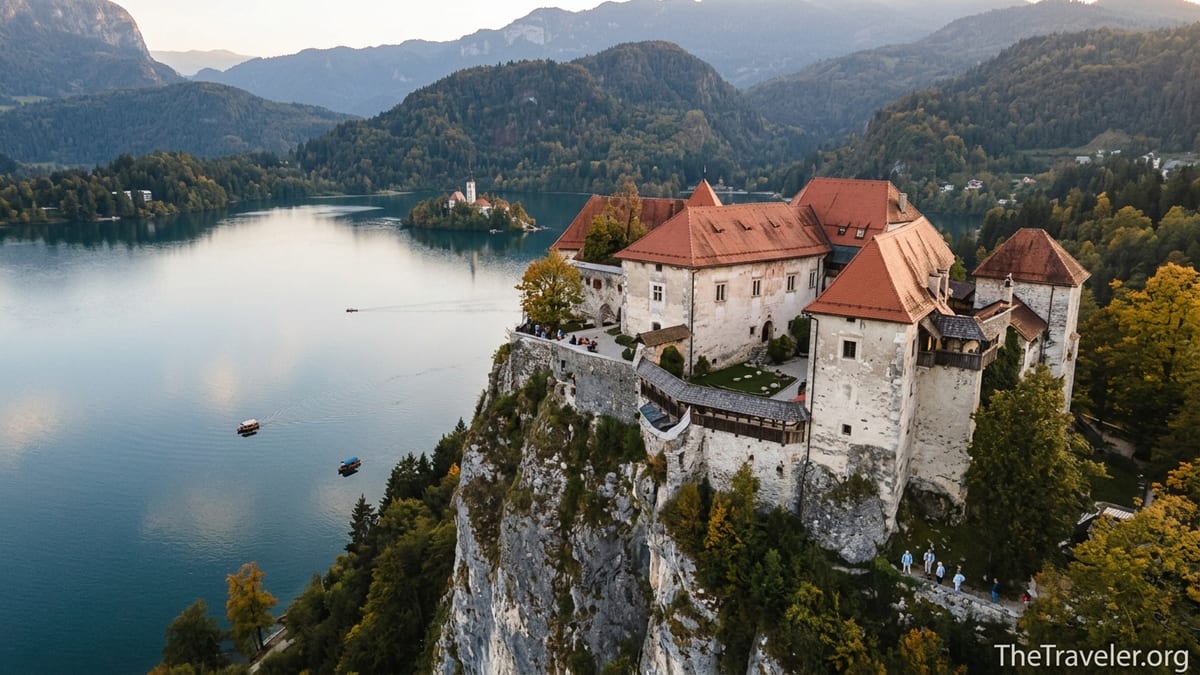
Perched on a sheer cliff high above Lake Bled, Bled Castle is one of Slovenia’s most photographed landmarks. Yet many visitors rush in for a quick terrace snapshot, then leave without discovering the quiet viewpoints, historic rooms and small details that make the castle memorable. With a bit of planning, you can see the headline views, avoid the worst crowds and still have time to appreciate a thousand years of history carved into the rock above the lake.
Get the latest updates straight to your inbox!
Why Bled Castle Deserves More Than a Quick Photo Stop
Bled Castle is widely promoted as a viewpoint, and from a distance it can look like little more than a restaurant and terrace stuck on a cliff. In reality, it is Slovenia’s oldest castle, with documented origins in the early 11th century, and today it houses a substantial historical museum, a Gothic chapel, a traditional printing workshop, a wine cellar and a working blacksmith’s forge. A typical rushed visit of 30 to 45 minutes barely scratches the surface and often misses its most atmospheric corners.
Give yourself at least two to three hours at the top. That extra time means you can follow the full circuit of terraces, pause at the quieter viewpoints that most tour groups skip, duck into the museum exhibitions, and still sit down with a coffee or a slice of Bled cream cake while watching traditional wooden pletna boats slide across the lake far below. Travelers who treat the castle as a half-day experience instead of a box to tick consistently report that it becomes a highlight of their Slovenia trip rather than a crowded detour.
It also helps set the scene for everything else you will see around Lake Bled. Exhibits at the castle museum explain how Bled evolved from a medieval fief held by the Bishops of Brixen into a fashionable Habsburg spa resort, and you can trace that history later as you walk the lakeside promenade or visit Bled Island. In other words, time spent at the castle deepens the rest of your visit instead of competing with it.
Practical Basics: Tickets, Hours and When to Go
Bled Castle operates as a paid attraction with seasonal hours. As of 2026, the official schedule typically runs from around 8 am to 8 pm in the main season between spring and autumn, with shorter hours, often about 10 am to 5 pm, in the winter months. The last admission is usually half an hour before closing. Always check the most recent times at your hotel or a tourist information office in Bled, as hours can shift slightly for events or shoulder seasons.
Adult entry in 2026 is around 18 euros, with reductions for students, children and seniors, and a family ticket option that can reduce costs if you are visiting with up to three children. The ticket price covers access to the castle grounds, museum, chapel, terraces, printing workshop, forge and wine cellar areas. Guided tours, when offered, are normally charged as an extra. You do not need to book far in advance in the low season, but buying a timed ticket online or arriving early is very useful in July and August, when bus tours from Ljubljana and the Adriatic coast push visitor numbers to their peak.
Timing can make the difference between a crowded, hurried visit and a relaxed one. For photography and calmer conditions, aim to be at the gate soon after opening, or plan for the late afternoon, roughly two hours before sunset. Early arrivals avoid the mid-morning influx of coaches, while late afternoon often brings softer light over the lake and fewer day-trippers. Midday in high summer can be hot on the exposed terraces, and many visitors find themselves jostling for space along the main low wall overlooking the island.
Getting Up the Cliff: Walking, Driving and Arriving by Tour
There is no cable car to Bled Castle, so every visit ends with a short but steep climb. The classic approach from Lake Bled is the marked footpath that starts near the lakeside road on the eastern shore. From the lakeside, expect a 15 to 20 minute ascent on paved steps and forest paths. It is well graded but can feel demanding if you are tired or visiting in the heat. Many independent travelers staying in central Bled simply walk from their guesthouse around part of the lake and then take this footpath, stopping at benches on the way up.
If you arrive by car, a narrow road winds up from the town to a small parking area directly below the main entrance. Parking is usually paid by the hour, and spaces are limited, especially in peak summer or on sunny autumn weekends. It is common to find the lot full by late morning; in that case, drivers often park near the lakeshore or in public car parks in town and walk up. Do not be tempted to stop on the roadside near the castle gate, where parking controls are enforced and fines are possible.
Visitors coming on a day trip from Ljubljana or other cities often join organized excursions that combine Lake Bled, the castle and sometimes Lake Bohinj. These tours typically drop you close to the entrance so you only walk the last, steep section. If you prefer public transport, regular buses run between Ljubljana and Bled, and from Bled’s main bus stop you can either walk through town and up the path, or take a short local taxi ride to the castle access road. Trains stop at Lesce-Bled station a few kilometers away; from there, plan on a local bus or taxi connection rather than trying to walk the entire distance along busy roads.
Where the Best Views Really Are
Most visitors step through the gate, follow the obvious path into the lower courtyard, and immediately crowd along the low wall near the main terrace restaurant. The view here, facing roughly southwest over Lake Bled and its island, is deservedly famous, but it is far from the only panorama. To make the most of the scenery, plan a slow circuit that takes in several vantage points at different heights and angles.
Start in the lower courtyard and walk out to the main terrace for the classic composition: the island church centered in the lake, backed by forested hills and, on a clear day, the distant Julian Alps. Spend a few minutes here, but then turn your back to the crowds and explore the corners of the courtyard. On quieter days you can often find space near the edges of the restaurant terrace where the angle shifts and foreground details, like the stone walls and wooden walkways, add depth to your photos.
Next, climb to the upper courtyard and follow the wooden defensive corridor that traces the cliff edge. Small openings between the battlements frame narrow slices of the lake and town below, and you can look back to the lower courtyard from above. Many visitors skip this walkway, yet it is one of the best spots to appreciate how precariously the castle sits on the rock. From certain points you can see all the way across Bled to the green slopes leading toward the Karawanks range.
Finally, seek out the viewpoints facing away from the lake, toward the Radovna and Sava valleys. Here the atmosphere is different: instead of the picture-perfect island, you see farms, forests and the distant ridgelines that define this corner of the Slovenian Alps. On hazy mornings in spring and autumn, low mist often lingers in these valleys while the castle rock stands in sunshine, making for striking, less clichéd images. If you are an early riser, consider hiking up before breakfast to watch the first light catch the castle walls and the island below.
Unmissable Historic Spots Inside the Castle
The museum in the upper courtyard is the key to understanding Bled Castle beyond its viewpoints. Spread through several rooms, it traces the area’s human history from prehistoric settlements through early Slavic culture, medieval feudalism under the Bishops of Brixen, and the Habsburg era when Bled became a fashionable retreat. Simple objects like tools, coins and fragments of pottery tell a story that extends far beyond the castle walls. Taking 30 to 45 minutes to walk the exhibits slowly helps connect what you see in the landscape outside with the centuries of change inside.
Do not miss the Gothic chapel in the upper courtyard, dedicated to bishops St Albuin and St Ingenuin. Its painted interior and small size can make it easy to overlook, especially if you arrive with a crowd, but this is one of the most atmospheric corners of the castle. Step inside, let your eyes adjust to the dim light, and notice how the frescoes and carved details compress a millennium of religious devotion into a few square meters. Even if you are not religious, it is a powerful reminder that Bled Castle was once a working seat of power, not just a scenic balcony.
Elsewhere in the complex, the reconstructed printing workshop demonstrates traditional hand printing techniques. Staff sometimes run short demonstrations using movable type, and for a small fee you can have a personalized document printed as a souvenir with your name and the date of your visit. Nearby, the castle forge showcases blacksmithing tools and, on certain days, a smith at work shaping metal. Together, these spaces bring the practical, craftsman side of castle life into focus, in contrast with the romantic image of nobles gazing across the lake.
The wine cellar is another historically rooted stop, drawing on Slovenia’s long winemaking tradition. You can taste local wines or, in some cases, participate in bottling and corking your own bottle, sealing it with wax under the guidance of staff. Even if you do not drink, stepping into the cool, low-lit cellar gives a sense of how food and drink were stored and served in this exposed, cliff-top environment before modern refrigeration.
Eating, Drinking and Beating the Crowds
The castle restaurant and cafe share prime positions along the terraces, which means the views are exceptional and prices reflect the setting. Expect to pay more for a main course or dessert here than at a cafe down by the lake. That said, lingering over a coffee while the late afternoon light turns the lake silver can be worth the surcharge. If you want the experience without committing to a long meal, plan your visit so your ticketed time coincides with a mid-morning or afternoon drink stop rather than lunch.
A popular ritual is to order a slice of Bled cream cake, a layered custard and cream dessert the town is famous for. Many visitors sample it at lakeside hotels and pastry shops, but having a slice at the castle, with the island church and surrounding peaks as your backdrop, adds a certain theatre to the experience. If you are traveling on a tighter budget, consider bringing a simple snack instead and saving your restaurant splurge for a lakeside terrace later in the day.
Crowd patterns at Bled Castle follow predictable waves. Large groups often arrive mid-morning between 10 am and noon, then again in mid-afternoon. To minimize queuing at the ticket office and waiting for space along the main wall, try to be inside either before 9 am or after 4 pm in summer. In shoulder seasons like late April, May, September and early October, visitor numbers drop noticeably, and you may find periods where key terraces are almost empty even in the middle of the day, especially when the weather is slightly overcast.
Weather itself can work in your favor. Many travelers assume Bled Castle is only worth visiting on clear blue-sky days, but photographers often seek out foggy mornings or changeable conditions. On days when low clouds cling to the mountains, the lake and island can emerge through gaps in the mist, creating dramatic, layered views that feel far from postcard-perfect. Carry a light waterproof jacket and accept that conditions may change quickly; the castle’s museum and indoor spaces give you somewhere interesting to shelter if a shower blows through.
Combining Bled Castle With the Rest of Lake Bled
Because the castle sits high above the lake, it makes logistical sense to pair your visit with a circuit of the shore or a trip out to Bled Island rather than treating it as a completely separate excursion. One classic full-day plan is to start early at the castle, descend late morning for a walk around the lake, then catch a traditional pletna boat to the island in the afternoon. A lakeside stroll at a relaxed pace takes about 90 minutes, not counting photo stops or cafe breaks, and offers many angles back toward the cliff and castle that help you appreciate its position in the wider landscape.
Another satisfying option for active travelers is to link the castle with one of the hills across the lake, such as Ojstrica or Mala Osojnica. These short but steep hikes climb through the forest to lookouts that frame the lake, island and castle together, often seen in classic Slovenia marketing images. Doing the castle first, then hiking in the cooler late afternoon, allows you to catch the changing light from both perspectives. Just remember that trails can be muddy after rain and require decent footwear.
For visitors staying several days in Bled, the castle can serve as a weather-proof anchor on a mixed program that includes swimming in the lake in summer, renting a rowboat, cycling to nearby villages, or taking day trips to places like Vintgar Gorge or Lake Bohinj. Because the castle remains open year-round with shorter winter hours, it is also an appealing target on crisp, cold days when the lakeshore might feel damp and shaded. In winter, occasional snow on the roofs and trees adds a different charm to the views from the ramparts.
Families can especially benefit from splitting their castle time around other activities. For example, one parent might take younger children back down to feed ducks on the lakeshore after an hour or so, while older kids and the other adult stay on to explore the museum and workshops in more depth. Meeting later at a designated lakeside cafe keeps everyone happy without feeling rushed at the top.
The Takeaway
Visiting Bled Castle well is less about squeezing it into a tight schedule and more about slowing down enough to let its different layers unfold. By planning your timing to avoid the worst of the crowds, choosing a route that suits your energy level, and deliberately seeking out the less obvious viewpoints and historic nooks, you transform the experience from a checklist stop into a genuine encounter with Slovenia’s past and landscape.
Think of the castle not simply as a balcony over Lake Bled, but as a small, compressed world: a medieval stronghold, a place of worship, a hub of craft and trade, and now a cultural venue and museum. Pair it thoughtfully with a walk around the lake, a boat ride to the island or a forest hike, and it will sit at the center of your memories of Bled, not just on the cliff above them.
FAQ
Q1. How long do I need to visit Bled Castle without feeling rushed?
Most travelers are comfortable with two to three hours inside the castle grounds, which allows time for the museum, chapel, viewpoints and a short drink or snack break.
Q2. Is the walk up to Bled Castle very difficult?
The main footpath from the lake is steep but short, usually 15 to 20 minutes on steps and paved paths. Anyone with moderate fitness and no major mobility issues can manage it by taking breaks.
Q3. Can I reach Bled Castle by public transport?
Yes. Buses from Ljubljana and other towns stop in Bled. From the Bled bus stop you can walk through town and up the signed path to the castle or take a local taxi to the access road.
Q4. Are the best views of Lake Bled really from the castle?
The castle terraces offer some of the most dramatic close-up views of the island and cliffs. For wider panoramas that include the castle itself, combine your visit with a hike to viewpoints like Ojstrica or Mala Osojnica.
Q5. Do I need to buy Bled Castle tickets in advance?
Advance tickets are helpful in July and August and on sunny weekends, when queues can form at the entrance. Outside peak times, most visitors simply buy tickets on arrival without issues.
Q6. Is Bled Castle suitable for children?
Yes. Kids usually enjoy the battlements, museum displays, printing workshop and forge. The main challenge is supervising them on steep paths and near terrace edges, so close attention is essential.
Q7. What should I wear and bring for a castle visit?
Wear comfortable shoes with good grip for the climb and uneven surfaces. Bring a light jacket, especially in spring and autumn, water in summer, and a small daypack rather than bulky luggage.
Q8. Can I eat at Bled Castle or should I plan to eat in town?
There is a restaurant and cafe at the castle with excellent views and prices that reflect the location. Many visitors enjoy a drink or dessert at the top and have a larger meal at lakeside restaurants later.
Q9. Is Bled Castle open in winter?
Yes, the castle is open year-round with shorter winter hours. Snow and low visitor numbers can make winter visits particularly atmospheric, though some outdoor terraces may feel cold and exposed.
Q10. Are there guided tours inside Bled Castle?
Guided tours are offered at certain times or for groups, often for an additional fee. Independent visitors can explore using on-site information panels, and many find these sufficient for a self-guided visit.