


Alaska’s glaciers are powerful, shifting landscapes of ice, rock, and meltwater. For adventure travelers, the chance to hike or climb on the ice is a highlight of an Alaska trip, but it is also serious terrain with real objective hazards. Unguided glacier travel can involve hidden crevasses, unstable ice towers, and rapidly changing conditions. For most visitors, going with a reputable guiding service, using proper technical equipment, and following professional instruction is essential to exploring these glaciers as safely as possible.
Get the latest updates straight to your inbox!
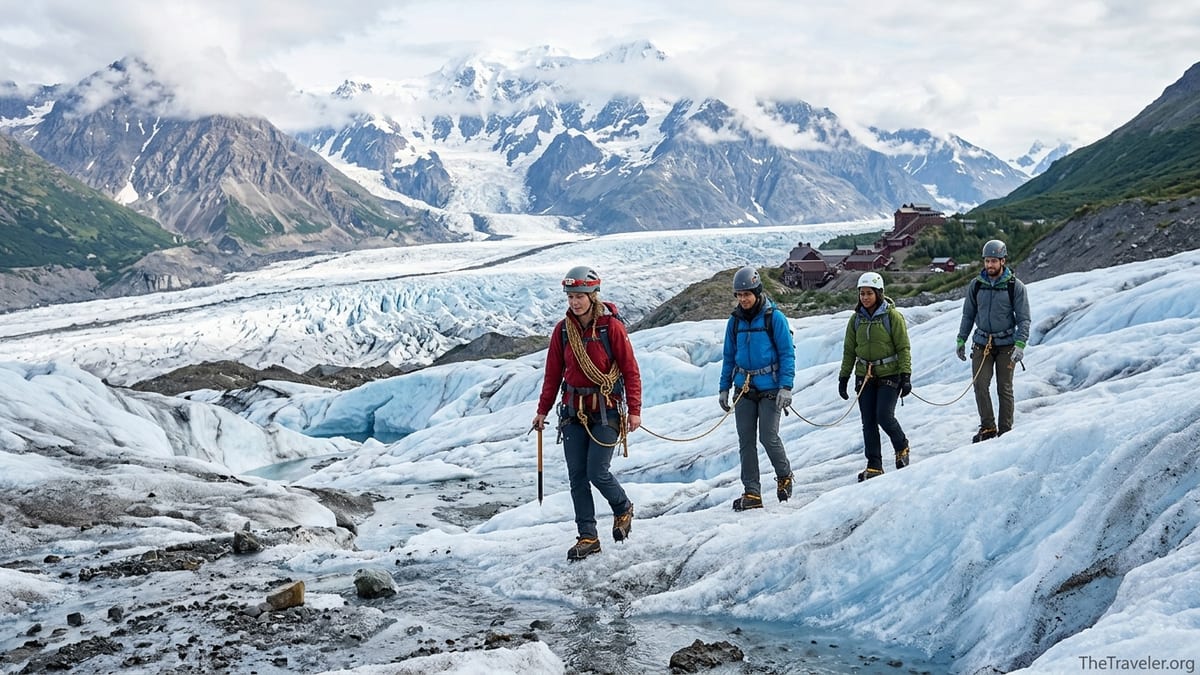
Understanding Guided Glacier Travel in Alaska
Across Alaska, commercial glacier hiking and ice climbing trips are designed to let visitors experience the ice without needing expedition-level skills. Professional guides manage route finding, provide and fit technical gear such as crampons, helmets, and harnesses, and coach guests on safe movement on steep, uneven ice. Many operators run both introductory “walk on the glacier” outings and more technical ice climbing clinics, with options ranging from half-day tours to multi-day skills courses.
Hazards on glaciers are not always obvious. Crevasses can be hidden beneath thin snow bridges, meltwater can undercut ice features, and large blocks of ice known as seracs can collapse with little warning. Even near-roadside glaciers that feel accessible should not be treated like casual hiking terrain. Rescue in glacier country is complex and not always immediately available. This is why land managers and local experts consistently encourage visitors to book with established guide services unless they have advanced glacier travel training, proper gear, and recent, detailed knowledge of local conditions.
Guided operators typically maintain small guide-to-client ratios, often around 1 guide to 4 to 8 guests on entry-level glacier hikes and closer ratios for technical climbing. They carry safety gear such as ropes, rescue kits, and communication devices, and they monitor weather forecasts and daily surface conditions. If conditions deteriorate due to rain, warm temperatures, or poor visibility, guides may modify or cancel a trip in the interest of safety. When you reserve, expect to sign liability waivers and follow detailed pre-trip instructions about clothing, fitness, and timing.
As of November 2026, guided glacier operations remain active in several key regions that are logistically practical for travelers, including road-accessible glaciers off the Glenn Highway, the Root Glacier near McCarthy and Kennecott in Wrangell–St. Elias National Park, and ice accessed from coastal hubs such as Seward and Juneau. In each of these areas, commercial guiding companies work closely with land managers and private landowners to maintain legal access points and to adjust their routes as the ice changes from season to season.
Anchorage Hubs and Road-Accessible Glacier Hikes
Anchorage is the state’s main air gateway and a common base for visitors who want a day trip onto the ice. There are no glaciers directly in the city, but several road-accessible options lie within a few hours’ drive. The best-known is Matanuska Glacier, about 100 miles along the Glenn Highway, where guiding services operate daily in summer and, in some years, shoulder seasons. Access to the active glacier surface is controlled by private landowners, and first-time visitors are now required to visit with a tour or pay a commercial access fee. Reputable operators run guided glacier walks and ice-trekking experiences on the lower glacier.
Typical Matanuska day trips from Anchorage involve a two to two-and-a-half-hour drive each way, several hours on the ice with a professional glacier guide, and return transport, sometimes including lunch at a local lodge that overlooks the glacier. Most tour companies provide technical gear such as crampons, helmets, and harnesses, and many can supply hiking boots if you do not have suitable footwear. Fitness requirements are moderate: you should be comfortable walking a few miles on uneven, sometimes steep terrain, but most entry-level tours are accessible for reasonably active adults and older children who are sure on their feet.
As of prices checked in November 2026, full-day guided Matanuska glacier hikes that include transport from Anchorage often fall in the approximate range of 250 to 400 dollars per person, depending on group size, inclusions, and time of season. Self-drive glacier walks that start at the glacier itself can be somewhat lower per person, often around 125 to 250 dollars. Prices vary among operators and can change year to year, so treat these figures as ballpark guidance rather than exact quotes and confirm directly with your chosen company before booking.
In addition to Matanuska, other glaciers along the broader Anchorage corridor are commonly visited on guided trips. Portage and Spencer Glaciers in the Chugach National Forest, along with scenic helicopter-accessed ice outside Palmer and Girdwood, offer options that range from easy interpretive walks to more adventurous heli-supported treks. These products evolve as access rules and ice conditions change, so travelers should confirm current offerings and any required forest passes or private access fees when planning a trip.
Root Glacier and the Kennecott / McCarthy Area
For travelers willing to go farther off the beaten path, Root Glacier near the historic mining town of Kennecott offers one of Alaska’s classic guided glacier hiking destinations. The glacier sits within Wrangell–St. Elias National Park and Preserve, reached via the McCarthy Road and a footbridge crossing over the Kennicott River. From Kennecott, a well-used trail of about 2.5 to 3 miles leads to the glacier access point. Local guiding companies based in McCarthy and Kennecott operate daily glacier hikes and ice-climbing trips in summer, coordinating with the National Park Service on routes and safety protocols.
Half-day glacier hikes on Root Glacier are popular with first-time visitors and families. These outings typically run about 4 to 5 hours door to door from Kennecott, including trail walking and several hours on the ice. Guides lead guests to relatively low-angle sections of the glacier, where they can explore blue melt pools, small crevasses, and rolling ice features. Technical gear such as crampons, helmets, and ice axes or trekking poles is usually included. Participants should be able to hike several miles with moderate elevation change, but the pace is often steady and family friendly.
For more adventurous travelers, full-day glacier treks and introductory ice climbing on Root Glacier are widely offered. These may involve steeper ice, more sustained walking, and basic climbing instruction using top ropes and ice tools. Multi-day courses in glacier travel and mountaineering techniques sometimes base out of the Kennicott area as well, taking advantage of nearby peaks and icefalls. As of the most recently verified price information, half-day guided glacier hikes on Root Glacier commonly start in the general neighborhood of 100 to 150 dollars per person, with full-day treks and climbing courses priced higher. Actual rates depend on group size, length, and whether technical climbing instruction is included.
Wrangell–St. Elias is a national park, and while there is no per-person entry gate on the McCarthy Road, visitors may encounter parking fees near the river footbridge or shuttle charges into Kennecott. Lodging and logistics in McCarthy and Kennecott require advance planning, particularly in July and August when accommodations can sell out. The park service and local guides both emphasize that conditions on Root Glacier change quickly in warm weather, which can affect which areas are safe to visit on a given day, reinforcing the value of traveling with an experienced guide.
Seward, Exit Glacier, and Harding Icefield Approaches
Seward, on the Kenai Peninsula, is another major hub for glacier adventures. Just outside town, Exit Glacier provides road access to the edge of Kenai Fjords National Park and to the Harding Icefield Trail. The park’s road and visitor area offer front-country views, while commercial guides, operating under permits with the National Park Service, lead more in-depth experiences that include walking or climbing on glacier ice. Trail access is subject to seasonal opening dates, snowpack, and occasional closures due to flooding or wildlife activity, so visitors should always check current conditions before arrival.
Introductory glacier hikes from Seward typically involve shuttling guests to the Exit Glacier area, hiking to the glacier margin or onto a safe section of the ice, and returning via the same trail. Many tours last 6 to 8 hours in total and are considered moderately strenuous, involving several miles of hiking and some steep sections. Guided Harding Icefield hikes do not usually step onto the glacier itself but climb high above it for sweeping views and demand stronger fitness, with 3,000 feet of elevation gain over an 8-mile round trip. Ice climbing days can be more physical still, as guests learn to use crampons, harnesses, and ice tools on vertical or near-vertical walls of ice.
As of late 2026, Seward-based glacier hikes and ice climbing trips generally range from about 150 dollars per person for simpler guided hikes to 300 dollars or more for full-day technical ice-climbing adventures. Some operators group glacier hikes and Harding Icefield outings at similar price levels, while offering different route choices based on conditions and guest ability. Prices are typically higher for very small group or private trips. Kenai Fjords National Park does not charge a traditional entrance fee at Exit Glacier, but parking controls, shuttle fees, or commercial guide permitting requirements may apply; your guiding company can explain the current situation.
Seward’s maritime climate means rapidly changing weather is the norm. Even in July, guests can encounter cold rain, strong wind, and chilly temperatures near the ice. Guided operators usually run trips in light rain but may cancel or shorten outings in cases of lightning, high winds, or unsafe surface conditions on the glacier. Travelers should pack high-quality waterproof shells, insulating layers, hats, and gloves, even if the forecast in town looks benign. Good preparation increases your comfort and reduces the risk of hypothermia, slips, or fatigue on long days.
Juneau, Helicopter Landings, and Remote Icefields
Juneau, Alaska’s capital, is surrounded by the Juneau Icefield and multiple outlet glaciers and has become a leading center for helicopter-supported glacier trekking and ice-climbing experiences. Because road access is limited, many visitors join heli-hiking or heli-trekking trips that combine scenic flightseeing with a landing on an isolated stretch of glacier. Guides then lead small groups on introductory glacier walks or short ice-climbing sessions, often in terrain that sees few other visitors. These trips operate under close coordination with state and federal land managers, with flight routes and landing zones adjusted as conditions and regulations evolve.
Typical helicopter glacier treks out of Juneau run as half-day adventures. Guests check in at a heliport near town, receive a safety briefing, don boots, helmets, and harnesses, then board a helicopter for a 15 to 20 minute flight to the ice. On the glacier, guides lead about 1.5 to 2.5 hours of hiking or beginner-friendly climbing, focusing on basic movement in crampons and interpretation of the glacier’s features. Fitness requirements are generally moderate: you should be comfortable walking on uneven ground and standing for extended periods, but the itineraries are usually not extremely strenuous unless you opt for a more technical climbing emphasis.
Helicopter glacier treks are among the more expensive day adventures in Alaska. As of prices verified in mid to late 2026, standard heli-trekking or heli-assisted glacier walks from Juneau commonly start in the approximate range of 350 to 600 dollars per person, with extended or more technical versions running higher. Cruise ship shore excursions featuring glacier landings and dog sledding can exceed those figures. Because these products are very sensitive to weather, cloud ceilings, and aviation regulations, cancellations and schedule changes are not uncommon; reputable operators outline clear weather and refund policies at the time of booking.
In periods of poor visibility, strong winds, or significant rain, flights may be delayed or grounded entirely. In such cases, guests are usually offered a rebooking window or a refund based on the operator’s policies and the ticket type. Travelers with tight cruise or flight schedules should build flexibility into their plans or avoid scheduling helicopter glacier trips immediately before onward travel. When flights do go, however, heli-supported glacier treks offer some of the most vivid views of Alaska’s ice, with aerial perspectives of crevasse fields and icefalls that are otherwise impossible to see.
Talkeetna, Mountaineering Courses, and Multi-Day Experiences
Talkeetna serves as a staging town for expeditions in the Alaska Range and Denali region and hosts guiding companies that offer more advanced glacier travel and mountaineering courses. While classic Denali expeditions are highly specialized and require significant prior experience, some guide services provide shorter instructional programs on nearby glaciers, accessed by ski plane. These courses focus on skills such as rope team travel, crevasse rescue, ice climbing technique, and high-altitude camp craft, appealing to aspiring alpinists rather than casual sightseers.
Multi-day mountaineering courses usually require strong fitness, comfort in cold environments, and the ability to carry a heavy pack over uneven terrain. Participants sleep on the glacier in tents, cook their own meals under supervision, and train for several hours each day on steep snow and ice. Technical gear like harnesses, helmets, crampons, and group climbing equipment is generally supplied by the guiding company, while students bring personal clothing, sleeping systems, and in some cases mountaineering boots.
Costs for multi-day mountaineering programs and expedition-style glacier trips vary widely with length and objective, but as a broad reference, travelers can expect to pay well into the four-figure range for courses of several days, with prices increasing further for summit-focused expeditions. Permits and park fees may apply for climbing in national parks such as Denali, and these systems change over time, so you should consult the National Park Service and your guide service for the latest requirements. Operators will also brief you on medical screening, rescue expectations, and evacuation insurance, which are particularly important in remote, high-consequence environments.
Because of the complexity and risk profile of serious mountaineering on Alaska’s big peaks and icefields, travelers considering these experiences should thoroughly review a company’s track record. Look for long-standing operations with well-documented guiding histories, formal guide training and certification where available, and transparent incident reporting. In this segment of glacier travel, the quality of instruction and decision-making is as important as the thrill of standing on a remote glacier plateau.
What to Expect on the Ice: Conditions, Gear, and Fitness
Regardless of which Alaska glacier you choose, certain realities are consistent. The surface underfoot is uneven, often laced with small crevasses, melt channels, and patches of rough, wind-sculpted ice. Even in midsummer, temperatures on the glacier can feel significantly colder than in nearby towns, especially when wind and cloud cover increase. Sudden rain showers, sleet, or low-visibility whiteout conditions are all possible, and on some days warm temperatures can soften the snow and ice, making footing more slippery and increasing the risk around crevasses and seracs.
Guided glacier hikes usually provide guests with crampons or cleats that strap onto sturdy hiking boots, helmets for protection from falling ice or slips, and sometimes harnesses and ropes if the route crosses more complex terrain. Clothing and personal gear, however, are typically your responsibility. Most operators recommend waterproof hiking boots with good ankle support, non-cotton base layers, insulating mid-layers such as fleece or light down, a fully waterproof and windproof shell, warm hat, gloves, sunglasses, and sunscreen. Trekking poles can be helpful for balance, especially on longer walks or for those with less experience on snow.
In terms of fitness, easy glacier walks are manageable for many active travelers who can comfortably walk 3 to 5 miles on uneven ground and climb modest hills. Full-day glacier treks, Harding Icefield hikes, and ice-climbing clinics often require greater stamina, leg strength, and comfort with exposure on steeper slopes. Before you book, read the operator’s fitness description carefully and be honest about your abilities. Families with young children, older travelers, or guests with mobility concerns should speak directly with the guiding company to identify shorter or flatter routes, or to determine whether alternatives such as scenic flights or overlook hikes might be more appropriate.
Safety briefings at the trailhead or heliport are a critical part of the experience. Guides will explain how to walk in crampons without tripping, how to follow single-file on narrow paths, and what to do if they call for an immediate stop due to a crack or unstable feature ahead. They will also instruct guests never to approach the edge of crevasses, climb on free-standing ice towers, or wander unaccompanied away from the established route. Adhering closely to these protocols is essential; many glacier accidents stem from a momentary decision to step beyond the safe zone.
Costs, Booking Windows, and Choosing a Guide Service
As of November 2026, popular guided glacier day hikes in Alaska typically start around 100 to 150 dollars per person at the simplest end of the spectrum, and commonly range from 200 to 350 dollars for full-day outings, especially where transport from a hub city and lunch are included. Introductory ice-climbing days often cost more, frequently around 250 to 400 dollars per person, while helicopter-supported glacier treks can run from roughly 350 dollars into the 600 dollar range or beyond. These figures are representative, not definitive. Exact prices differ by operator, group size, inclusions, and seasonal demand, and they are subject to change, so always verify current rates directly.
Peak glacier season in most of coastal and south-central Alaska runs from roughly mid-June through early September, with some operations starting earlier or running later depending on snowpack and access. For popular day tours around Matanuska, Seward, Juneau, and Kennecott, it is wise to reserve at least several weeks in advance for July and August dates, and earlier still if your schedule is inflexible or you are traveling with a larger group. Shoulder season dates in May, early June, or September can offer more availability, but weather and trail conditions may be more variable.
Cancellation policies vary, but many operators allow free or partial cancellation up to a set deadline, such as 48 to 72 hours before departure, and apply stricter penalties closer to the trip. Weather cancellations initiated by the company, especially for flights or hazardous glacier conditions, usually result in a full refund or an offer to rebook, though some third-party booking platforms have their own rules. When comparing providers, review the fine print on weather, minimum group sizes, and what happens if a trip must be shortened once underway due to changing conditions.
When choosing a guide service, look beyond price alone. Consider guide-to-client ratios, typical group sizes, and whether a company employs experienced, year-after-year staff who know the glacier well. Ask about guide training and any relevant certifications, such as professional mountain guiding credentials, avalanche training, or wilderness medicine qualifications. Reputable operators will be transparent about their safety record, emergency procedures, and communication systems. Reviews can provide useful context, but direct communication with the company about your expectations and concerns is often the best indicator of how they operate on the ice.
Matching Glacier Trips to Different Traveler Profiles
Families and travelers seeking an easy, non-technical glacier experience should look for shorter guided walks on gently sloping sections of ice, such as half-day trips on the toe of Matanuska or Root Glacier, or heli-supported glacier strolls that focus on scenery rather than steep climbing. These outings prioritize stable terrain, slower pacing, and engaging natural history interpretation. Age minimums and equipment sizing vary by company, so families should confirm whether young children can be accommodated safely and comfortably.
Fit hikers who want a more strenuous challenge might choose full-day glacier treks that cover several miles on the ice, combined with steep approach hikes like Seward’s Harding Icefield Trail. These experiences reward endurance with far-reaching views and more varied terrain, but they demand good conditioning and surefootedness. Some operators offer routes that involve moving between different zones of a glacier to see moulins, larger crevasses, or icefalls from safe vantage points, which can make for an immersive full-day adventure.
Aspiring climbers interested in learning technical skills can enroll in introductory ice-climbing clinics offered on glaciers near Seward, Matanuska, and Root Glacier, or sign up for multi-day mountaineering courses out of hubs like Talkeetna. Entry-level climbing days focus on basic movement in vertical ice, belaying, and understanding the gear, and they are often accessible to fit beginners with no prior climbing experience. Multi-day programs, by contrast, are best for travelers who already have some outdoor experience and are comfortable camping in cold, remote environments.
In every case, clear communication with your guide service before booking helps align the trip to your goals. Explain your fitness level, previous hiking or climbing experience, and any concerns about exposure, heights, or cold. Ask what the day will look like hour by hour, how breaks and snacks are handled, and how much flexibility there is to adjust pace or difficulty for the group. Companies that respond thoughtfully and realistically are more likely to provide an experience that is both rewarding and safe.
Staying Safe on Rapidly Changing Ice
Alaska’s glaciers are not static backdrops. They are dynamic, retreating landscapes shaped by daily weather and long-term climate trends. Over recent decades, many roadside and low-elevation glaciers have thinned and pulled back noticeably from viewing areas and former access points. This retreat can expose new cliffs, meltwater channels, and unstable slopes, and can alter or eliminate routes that guides have used for years. For travelers, this means that conditions described in guidebooks or past trip reports may no longer apply, even a few seasons later.
Because of these rapid changes, it is essential to check the most up-to-date information from land managers, such as the National Park Service or U.S. Forest Service, and from current guiding companies just before you travel. Official agencies post notices about trail closures, road washouts, bear activity, and other safety issues, while guides maintain daily awareness of ice surface changes, crevasse patterns, and snow stability. Reconfirming your trip in the days leading up to it and reviewing any last-minute advisories is an important part of responsible glacier travel.
Ultimately, the most memorable glacier experiences in Alaska balance adventure with respect for the environment and its hazards. Traveling with a skilled guide, using proper equipment, dressing for harsh and changeable weather, and being willing to adjust plans when conditions demand it are all central to staying safe. While unguided glacier travel may be appropriate for a small number of highly trained, well-equipped visitors, most travelers will enjoy Alaska’s ice far more, and with far less risk, by partnering with professionals who know these frozen landscapes intimately.
If you approach glacier hiking and ice climbing in Alaska with curiosity, humility, and a safety-first mindset, you can stand on the ice, peer into deep blue crevasses, and feel the glacier move beneath your feet, all while knowing that your choices support both your own wellbeing and the long-term stewardship of these remarkable places.