


More news on this day
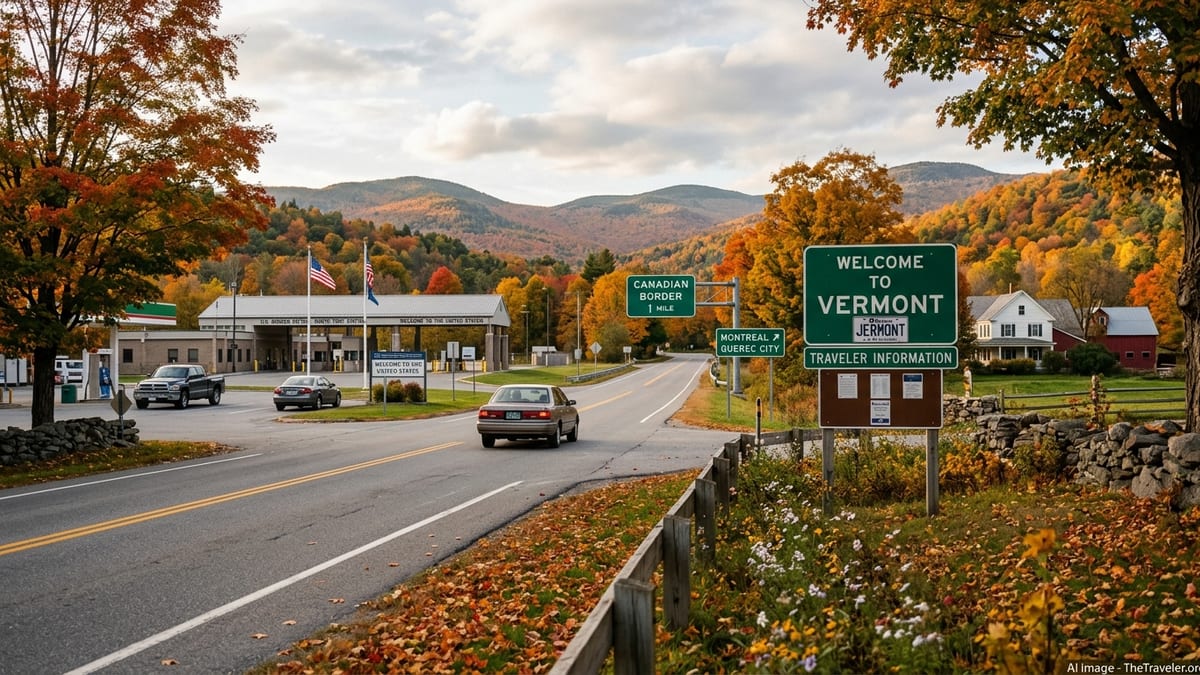
Vermont’s tourism economy softened in 2025, with a newly released state report showing total visits and spending edging down from 2024 and a steep 28% drop in Canadian visitors emerging as a key factor in the decline.
Get the latest news straight to your inbox!
New data shows fewer visitors and slightly lower spending
The Vermont Department of Tourism and Marketing and the Agency of Commerce and Community Development released the 2025 Economic Impact of Visitors to Vermont report in mid November 2026. The study confirms that the state welcomed 15.6 million visitors in calendar year 2025, a 2.9% decline compared with 2024.
Those visitors spent an estimated 4.1 billion dollars in Vermont in 2025, down from about 4.2 billion dollars the year before, according to the report and an accompanying state press release. Although slightly lower than 2024, the report notes that tourism spending remains above pre pandemic levels and continues to be a major economic pillar.
Tourism related activity accounted for about 8.5% of Vermont’s gross domestic product in 2025 and directly supported more than 30,000 jobs, the state says. That means relatively small percentage shifts in visitation can have outsized consequences for businesses in resort towns, along interstate corridors and near the Canadian border.
Canadian visits fall sharply, reshaping border tourism
The standout change in the 2025 data is the pullback from Canada. The state report and officials at ACCD identify a roughly 28% year over year decline in Canadian visitors as a primary driver of the overall downturn. A detailed breakdown released with the report also indicates that spending by Canadian visitors fell by around 80 million dollars compared with 2024.
VTDigger’s coverage of the report cites state officials linking the downturn to a broader cooling in cross border travel, with traffic at Vermont–Canada crossings still well below levels seen before the current U.S. administration’s second term. Local businesses interviewed in ski and border communities describe noticeably fewer Quebec and Ontario license plates in parking lots, particularly outside peak holiday and school break periods.
For travelers, this translates into more empty midweek rooms at hotels and inns that have traditionally relied on short break visitors from Montreal and other Quebec cities, as well as quieter campgrounds and cabin rentals along Interstate 89, Interstate 91 and key border approaches. Some property managers report that they have had to adjust staffing and shoulder season operating hours to reflect the softer Canadian demand.
Vermont as a case study in a wider border state slowdown
Vermont’s experience fits into a broader picture of reduced Canadian travel to the United States. Statistics Canada reported in September 2026 that total Canadian resident return border crossings from the United States in 2025 were about 25% lower than in 2024, with early 2026 figures indicating that cross border travel remained at similarly depressed levels.
A September 2025 analysis from Tourism Economics and the U.S. Travel Association on inbound declines across U.S. states highlighted that several Canadian border states, including Maine, Vermont, Montana and North Dakota, have seen hotel performance weaken more than the national average as international arrivals slipped. Canadian visitation was singled out as one of the areas of particular strain in that report.
More recent regional data point in the same direction. The Maine Office of Tourism’s winter 2025–26 tracking showed the share of visitors from Canada falling from 4.5% to 2.6%. New Hampshire Public Radio has reported reduced Canadian camping reservations and lower inn revenues in that state. Together with Vermont’s latest figures, these snapshots suggest that multiple northern border states are feeling the effects of fewer Canadian trips, even as overall U.S. domestic travel remains comparatively resilient.
What the shift means for travelers and what comes next
For prospective visitors, the pullback in Canadian travel may slightly change the on the ground experience in Vermont and neighboring states. With fewer Canadians filling rooms and campsites, travelers who book midweek or outside peak holiday windows may find more availability and potentially more aggressive discounting or value added packages as properties work to replace lost cross border demand with guests from other U.S. markets.
State tourism agencies are already adjusting. Vermont officials say they are stepping up marketing efforts in core Canadian markets while simultaneously leaning more on domestic outreach, including in the Northeast and mid Atlantic. Similar strategies are emerging elsewhere, with border states seeking to preserve long standing Canadian ties while diversifying their visitor base.
Looking ahead, tourism authorities in Vermont and other border regions are watching upcoming releases from Statistics Canada and U.S. federal travel data closely to see whether 2026 and 2027 bring any rebound in Canadian trips. For travelers planning visits to Vermont, Maine, New Hampshire or other northern states, it will be worth checking for evolving promotions targeted at both domestic and Canadian guests as destinations respond to this period of weaker cross border tourism.