


More news on this day
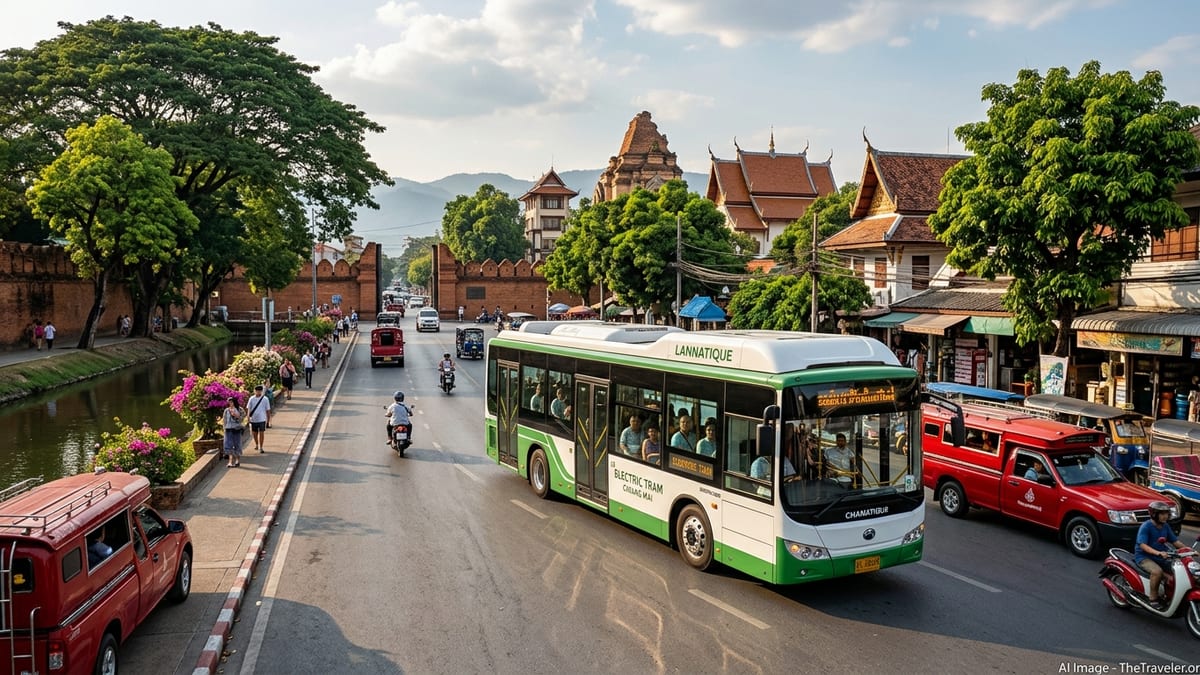
Chiang Mai has introduced “Chiang Mai Tram by Lannatique,” an all‑electric, rubber‑tyred tram‑style sightseeing service that began public operations on 18 November 2026, giving visitors a fixed‑route, low‑fare way to circuit the Old City and nearby cultural districts without relying solely on tuk‑tuks or songthaews.
Get the latest news straight to your inbox!
What the new Chiang Mai tram actually is
The Chiang Mai Tram by Lannatique is described by its backers as Thailand’s first electric rubber‑tyred tram project for tourists, using 100% electric power to run tram‑style buses on tyres rather than rail. The vehicles are guided on normal streets and do not use tracks, positioning the service as a dedicated sightseeing loop rather than a rail‑based streetcar or full urban transit line.
Asset World Corporation (AWC) leads the project in partnership with Chiang Mai Municipality, the Chiang Mai Provincial Administrative Organisation and the Tourism Authority of Thailand. Local reports and AWC‑linked communications also credit EV specialist ARUN+ and Toyota for supplying vehicle and technology support, reflecting the scheme’s framing as a public‑private clean‑mobility initiative rather than a conventional city bus route.
Cabins are equipped with air‑filtration systems designed to reduce exposure to fine particulate matter such as PM2.5, and early coverage highlights on‑board digital information displays and real‑time vehicle tracking. The operator describes the service as drawing on “clean energy,” although details of the underlying electricity mix are not specified.
Route, stops and how the loop works
The tram currently operates a single loop of around 15.8 kilometres, circling Chiang Mai’s Old City moat and linking nearby cultural and commercial areas. Official descriptions and route maps point to 15 designated stops, including major heritage and market areas such as Tha Phae Gate, Warorot Market (Kad Luang), Wat Chedi Luang and Wat Phra Singh, as well as newer hotel developments.
Several stops directly serve large hotels, including the InterContinental Chiang Mai The Mae Ping and other international‑brand properties, along with traditional districts such as the Chang Moi creative area. The design is explicitly hop‑on, hop‑off for sightseeing and short urban movements within central Chiang Mai, rather than a citywide commuting network or an airport or intercity connection.
Local authorities have indicated that the loop and stop list may be adjusted as operations settle, and Sunday services already follow a slightly modified path to account for Old City walking‑street closures. Travellers are therefore advised to confirm the latest map and any day‑specific changes through the official tram website or social channels before planning tight connections.
Fares, passes and operating hours
At launch, a single journey on the Chiang Mai Tram by Lannatique costs 20 Thai baht, consistent with prior statements from city officials that fares would be capped at “not over 30 baht.” In addition to the flat single fare, several outlets and operator information confirm a 99‑baht day pass that allows unlimited boarding and alighting on the loop within the same operating day.
Longer‑term products have also been announced, with monthly and annual passes starting from around 450 baht for frequent users. Children below a stated height threshold and passengers aged 60 or over are reported to qualify for free travel, although visitors should check exact eligibility rules when purchasing tickets because concessions may be updated after the initial rollout.
Current public information indicates that trams are scheduled to run daily from 09.00 to 21.00, completing multiple circuits each day. Frequency details by time of day have not been fully standardized in official English‑language materials, so travellers with time‑sensitive plans should verify first and last departure times and expected headways close to travel.
Practical implications for visitors
For tourists, the new service provides a predictable, low‑emission option to move around central Chiang Mai without negotiating individual fares for each short hop by tuk‑tuk or red songthaew. The loop connects a cluster of the city’s best‑known temples, markets and hotel zones, which makes it a practical orientation circuit on a first day in town and a simple way to transfer between major attractions and accommodations once visitors know the stop locations.
Because coverage is limited to the defined loop, the tram does not replace airport transfers, intercity buses or longer suburban trips. From Chiang Mai International Airport or the Arcade Bus Terminal, travellers will still need to connect by taxi, songthaew or other local transport to the nearest tram stop if they wish to use the new service.
Ticketing uses QR‑code payments and digital validation when boarding, in line with other recent Thai urban‑transport upgrades. There are indications of multilingual information screens and digital guides presenting Chiang Mai’s history and Lanna culture, but the consistency and depth of live English‑language commentary may vary as operations ramp up, so non‑Thai speakers should be prepared to rely on on‑screen or printed information rather than guided narration.
What to check before riding
As with many new transport projects, the Chiang Mai tram’s first months are expected to involve timetable fine‑tuning, possible stop adjustments and refinements to ticketing products. Before relying on the service for tight schedules, travellers should confirm the most recent route map, first and last tram times and any Sunday or holiday deviations using official channels such as the Lannatique Destination Facebook page or the tram’s website.
Visitors who plan intensive sightseeing within the Old City should compare the 20‑baht single fare with the 99‑baht day pass, as the pass can quickly become better value for anyone expecting more than a few rides in one day. Those staying outside the immediate loop will still need to budget for connecting transport and should note that the tram is currently oriented to central tourist zones rather than residential suburbs.
City and project partners have framed the launch as an early step in a broader shift toward lower‑emission urban mobility in Chiang Mai. Any expansion beyond the initial touristic loop, however, has not yet been confirmed in detail, so for now the service functions as a defined, bookable option for moving between Old City landmarks rather than a comprehensive new mass‑transit system.