


More news on this day
Barcelona’s Josep Tarradellas Barcelona–El Prat Airport is running on a single runway from 16 to 26 November 2026 while operator Aena builds a new rapid‑exit taxiway, a planned works window that cuts declared runway capacity by about 15% and forces airlines to temporarily trim or retime flights.
Get the latest news straight to your inbox!
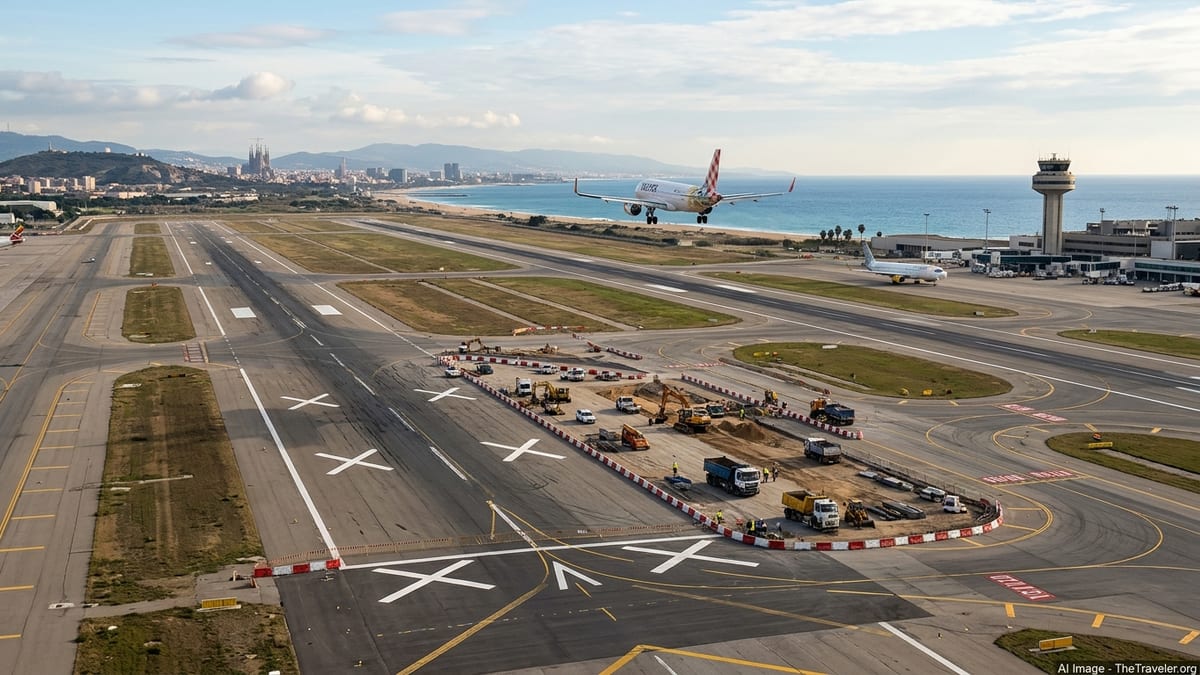
What is changing at Barcelona–El Prat in November 2026
During the works window from Monday 16 November to Thursday 26 November 2026, El Prat is concentrating daytime operations on its seaside runway while the land‑side parallel runway and the crosswind runway are closed for construction of a new rapid‑exit taxiway from runway 02/20. Aena’s planning, reflected in recent air navigation notices and public statements, reduces the airport’s nominal runway capacity by around 15% compared with its usual November capability.
The main impact is on the number of slots available to airlines rather than on the physical number of runways in the long term. Network planning documents and Aena’s own communications indicate that about 1,441 slots have been withdrawn over the 11‑day period, which corresponds to that 15% cut in scheduled operations and lowers the declared movements per hour for the duration of the works.
The single‑runway operation is time‑limited and tied directly to this construction phase. Overnight and off‑peak works began earlier in September and are scheduled to continue into December, but the 16–26 November period is identified as the most restrictive stage, when the combination of closures and peak daytime traffic requires a coordinated capacity reduction.
How the capacity cut affects flights and delays
Because the capacity change is planned and coordinated through the slot system, airlines have been adjusting their programs ahead of time rather than waiting for day‑of disruption. Carriers have surrendered some slots, moved certain flights to off‑peak hours and, in a limited number of cases, cancelled services that no longer fit comfortably into the reduced schedule.
Spanish regional carrier Volotea is among the airlines that have publicly linked schedule changes to the El Prat works. Local reports from Vitoria‑Gasteiz note that Volotea has cancelled several November rotations on its Vitoria–Barcelona route, attributing those cuts in part to the 1,441 slots removed at Barcelona during the taxiway construction window and the need to rebalance its program.
For passengers, the practical consequence is a busier pattern of flights around the peaks that remain, along with a slightly higher risk of delays when weather or knock‑on congestion reduces usable capacity further. However, because the reduction is modest and preplanned, there has been no general call for travelers to avoid Barcelona; instead, airlines and the airport are emphasizing checking flight status and allowing more time at the airport on the busiest days.
Why Aena is building a new rapid‑exit taxiway
The project under way focuses on constructing a rapid‑exit taxiway that will let arriving aircraft clear runway 02/20 more quickly and access the parallel taxiway system with shorter roll‑out distances. Aena’s investment documents describe this as a multi‑million‑euro upgrade intended to cut runway occupancy times, which in turn supports higher sustainable throughput once the works are complete.
This rapid‑exit taxiway sits within a broader program of airfield optimization at Barcelona–El Prat. In recent planning material, Aena and Spain’s transport ministry have framed these works as part of efforts to make El Prat a more capable intercontinental hub by improving how the existing runway system is used, rather than simply by adding new pavement.
Separately from the current taxiway job, Spanish authorities have endorsed a strategic plan that includes extending the sea‑side runway to better accommodate long‑haul operations. That extension remains subject to environmental approvals and detailed design work and has not yet entered physical construction, so it does not affect the November 2026 operating pattern described here.
What travelers should do during the works window
Passengers booked to travel via Barcelona between 16 and 26 November 2026 should plan on a normal journey with a few extra precautions. The most important is to monitor booking records and airline notifications in the days before departure, as some flights may have been retimed or consolidated well in advance to fit the reduced slot pool.
On the day of travel, building in additional time is advisable, especially for early‑morning and late‑afternoon departures when a higher density of flights is expected on the single active runway. Arriving earlier than usual at the airport can help offset any minor knock‑on effects from slower turnarounds or temporary ground‑handling bottlenecks linked to the changed runway use.
The single‑runway phase is scheduled to end on 26 November, after which runway availability and declared capacity are expected to return to their standard winter levels, subject to any weather or routine operational constraints. Because dates and specific airline responses are time‑sensitive, editors should recheck Aena notices, aeronautical information publications and carrier schedules shortly before publication to confirm that the works timetable and any listed cancellations remain accurate.