


More news on this day
Global air travel demand has fallen year on year for the first time since the Covid-19 pandemic, with a 3.4 per cent drop in April prompting airlines across Malaysia, the Middle East and Europe to reassess capacity, pricing and network strategies.
Get the latest news straight to your inbox!
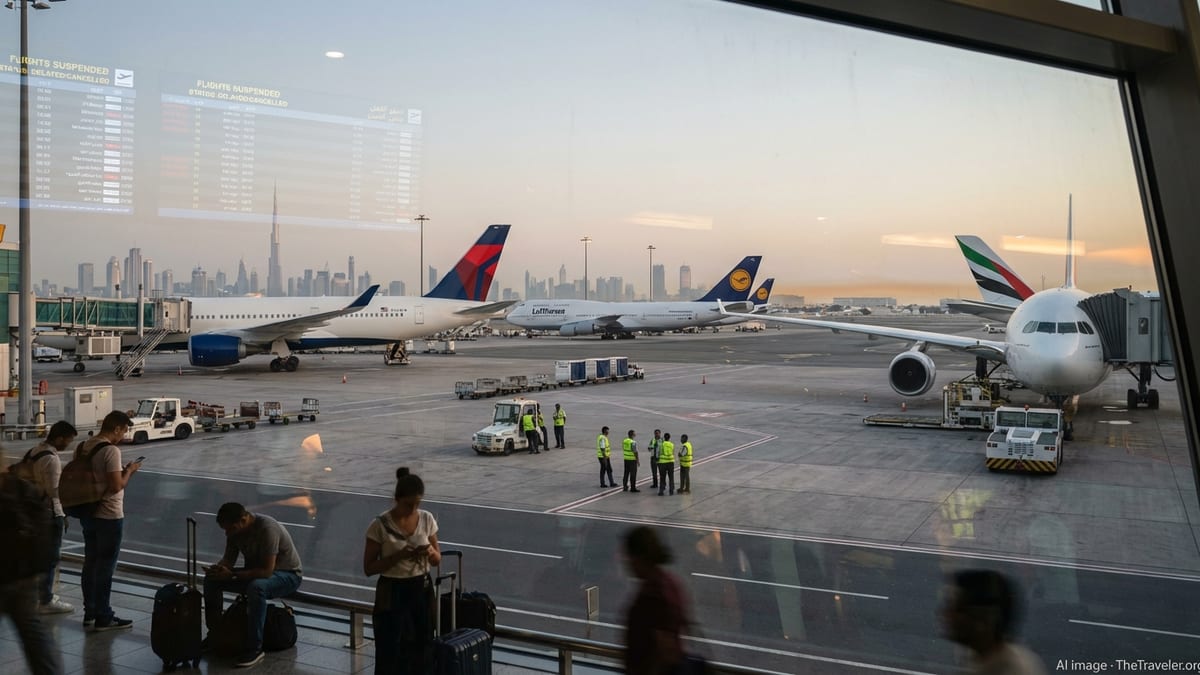
A Post-Pandemic Turning Point for Passenger Demand
International industry data for April indicate that the long post-pandemic upswing in air travel has given way to a clear slowdown, with total global passenger demand declining 3.4 per cent compared with a year earlier. This marks the first year-on-year contraction in demand since borders reopened and travel restrictions eased, ending a multi-year period in which airlines struggled to keep capacity in line with surging traffic.
The reversal follows several months of moderating growth and weakening load factors, as capacity additions began to outpace ticket sales in many markets. Earlier IATA traffic analyses for 2025 had already highlighted single-digit global growth rates and a gradual softening of domestic markets such as the United States and Australia, while international flows remained more resilient. The latest figures suggest that the softness has broadened across regions and travel segments.
Analysts point to a combination of factors behind the shift, including slower economic growth in key markets, persistent geopolitical tensions affecting routing and costs, and consumers becoming more price-sensitive after several years of elevated airfares. The result is a more challenging environment for airlines, which now face pressure to protect profitability without undermining the network connectivity rebuilt since the pandemic.
Malaysia Feels the Chill as Regional Momentum Cools
Malaysia, which had enjoyed a strong rebound in passenger traffic through 2024 and into 2025, is now among the countries seeing demand slip as the regional travel cycle cools. Publicly available traffic indicators show that growth on key Malaysia–Middle East and Malaysia–Europe routes has slowed, while some regional intra-ASEAN flows have softened after an initial surge driven by pent-up leisure demand.
The country’s major carriers are reacting by refining their schedules, focusing on routes that continue to show healthy yields and trimming underperforming frequencies. Network planners are reported to be placing greater emphasis on point-to-point services and high-demand trunk routes, particularly to major hubs in the Gulf and Europe, while exercising more caution on secondary city pairs that were aggressively rebuilt during the post-pandemic recovery.
Malaysia’s position as both an origin-and-destination market and a modest connecting hub means it is exposed to shifts in regional flows. As travellers gain more choice from competing hubs such as Singapore, Bangkok and the Gulf, local airlines are under pressure to differentiate through pricing, schedules and product offerings. The current global slowdown is therefore accelerating a strategic reset that was already under way as carriers sought to move from recovery mode to longer-term, sustainable growth.
Gulf and European Heavyweights Recalibrate Capacity
In the Gulf, airlines in Saudi Arabia and the United Arab Emirates are confronting a more complex landscape after several years of rapid expansion. According to recent industry coverage, demand to and from the broader Middle East has been hit by regional disruptions and changes in long-haul travel patterns, with some Middle Eastern carriers experiencing steep declines in international traffic even as global demand until recently remained broadly positive.
Flagship carriers in the UAE and Saudi Arabia had been investing heavily in fleet growth and new long-haul markets as they sought to capture connecting traffic between Asia, Europe and the Americas. With global demand now easing and certain corridors affected by geopolitical risk, these airlines are reassessing the pace of capacity deployment, adjusting frequencies and, in some cases, redeploying widebody aircraft to more resilient markets.
Across Europe, major markets including Germany, France and the United Kingdom are also seeing the effects of the slowdown. Industry data for late 2025 already showed demand growth returning to more typical historical levels after the sharp post-pandemic rebound, and recent reporting indicates that short-haul corporate travel within Europe remains weaker than before Covid. The latest drop in global demand is reinforcing a cautious approach from European network carriers, which have become more selective about reinstating marginal routes and seasonal services.
Low-cost carriers in Europe, long a driver of capacity and price competition, are likewise tempering their growth plans. While leisure demand to Southern Europe and popular city-break destinations remains relatively robust, softer bookings on secondary routes and off-peak days are encouraging airlines to fine-tune schedules, focusing on higher load factors rather than sheer volume.
United Kingdom, France and Germany Face Softening Premium Demand
The United Kingdom, France and Germany, which together anchor much of Europe’s long-haul connectivity, are confronting an environment in which premium and corporate travel has not fully normalised, just as broader leisure demand begins to soften. Travel industry commentary throughout 2025 and early 2026 highlighted that business travel budgets remained under scrutiny, with many companies continuing to rely more on virtual meetings and tighter travel policies.
With the new decline in global demand, carriers based in London, Paris and major German hubs are increasingly focused on optimising their premium cabins and high-yield routes. This includes rebalancing capacity between business- and leisure-heavy markets, targeting North American and trans-Mediterranean flows that continue to show resilience, and trimming frequencies on routes where premium cabins have underperformed.
Airlines are also reassessing their pricing strategies in these markets. After several years in which limited capacity and strong demand pushed up fares, particularly in premium cabins, some carriers are turning to targeted promotions and more dynamic pricing to stimulate demand without triggering a broad fare war. For travellers, the shift may translate into more competitive offers outside peak holiday periods, especially on routes where multiple full-service and low-cost operators compete.
Airlines Pivot Strategies as Growth Narrative Ends
The first year-on-year fall in global air travel demand since the pandemic is prompting airlines worldwide to pivot from a focus on rapid restoration of capacity to a more nuanced emphasis on profitability, resilience and fleet flexibility. Across regions, carriers are placing greater weight on aircraft utilisation, route profitability and the ability to quickly adjust schedules in response to changing demand and geopolitical developments.
Fleet planning is central to this recalibration. Airlines that expanded aggressively with new-generation narrowbodies and long-range widebodies now face decisions about deferring deliveries, accelerating retirements of older aircraft, or redeploying capacity to markets with more stable demand profiles. Leasing strategies are also under review, as carriers seek to maintain optionality in the face of uncertain macroeconomic conditions.
At the same time, the industry is intensifying its focus on cost control and ancillary revenues. From seat selection and baggage fees to premium cabin upsells and loyalty programme partnerships, airlines are working to extract more value from each passenger while containing operating expenses such as fuel, labour and airport charges. Digital tools that allow more granular demand forecasting and real-time revenue management are becoming even more critical as growth slows.
For travellers in Malaysia, the Gulf and Europe, the new phase in the air travel cycle is likely to bring a mixed picture: potentially sharper competition and deals on some routes, alongside reduced frequencies or smaller aircraft on others. For airlines, the message from the latest demand figures is clear. The post-pandemic boom is over, and the next chapter will be defined by careful capacity management, disciplined investment and a sharper focus on sustainable returns.