


More news on this day
Lebanon is moving rapidly toward opening René Mouawad Airport in the northern district of Akkar as its second international gateway, a long-sought step aimed at easing pressure on Beirut’s overcrowded Rafic Hariri International Airport, diversifying travel options for visitors, and reinforcing the country’s resilience in a volatile regional environment.
Get the latest news straight to your inbox!
From Military Air Base to Civilian Gateway
René Mouawad Airport, also known as Qlayaat or Kleiat, has spent decades as a largely dormant military facility near Lebanon’s border with Syria. Recent government decisions and public announcements indicate that the site is now being formally repositioned as a dual-use platform, with an expanded civilian role alongside a continued military presence. Rehabilitation plans focus on modernizing runways, upgrading navigation systems and constructing new passenger handling areas so that the airport can receive commercial flights within months.
Reports indicate that the project is conceived as part of a wider effort to rebalance development across Lebanon. Akkar is one of the country’s poorest regions, and officials have long debated whether transforming the air base into a civilian airport could draw investment and jobs to the north. The latest steps, including the award of an operating contract and the ceremonial launch of construction and rehabilitation works, suggest that momentum has shifted from discussion to implementation.
The airport’s history as a strategic air base built in the mid-twentieth century gives planners a significant starting point. The main runway is already capable of handling medium and large aircraft, and the site spans several million square meters close to the Mediterranean coast. The challenge now lies in adapting a security-focused facility to commercial standards, from fire and safety protocols to terminal design, baggage systems and passenger services.
Publicly available information shows that aviation regulators and the operator are coordinating phased activation. Initial activity is expected to focus on charter and point-to-point regional services, with a gradual increase in routes as infrastructure is certified and demand from airlines becomes clearer.
Boosting Tourism and Relieving Pressure on Beirut
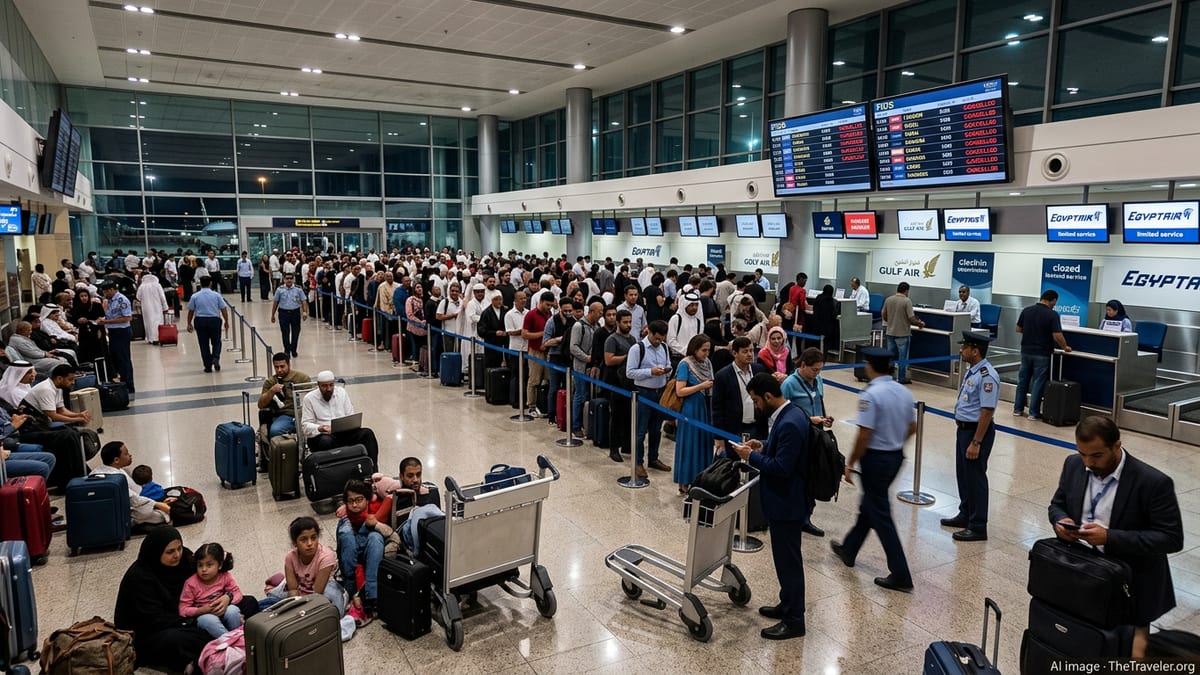
For the tourism sector, the emergence of a second international airport is seen as a potential turning point. Beirut’s Rafic Hariri International Airport has been operating near capacity for years, especially during peak holiday seasons and major regional travel periods. Travel industry analyses frequently highlight congestion, limited expansion space and susceptibility to security disruptions as key risks for inbound tourism to Lebanon.
By opening a second gateway in the north, Lebanon aims to provide tour operators and airlines with additional scheduling flexibility and alternative entry points. Early route planning around Qlayaat reportedly focuses on regional destinations such as Istanbul, Mersin and Dubai, as well as possible later connections to cities including Athens, Cairo and Medina. This mix of leisure, religious and business travel markets could help diversify visitor flows beyond Beirut-centric itineraries.
Tourism planners also see an opportunity to promote lesser-known destinations. Akkar, the nearby city of Tripoli, and the mountainous interior of northern Lebanon have historically attracted fewer international visitors than the capital and central coastal strip. An operational airport within driving distance could encourage new products such as nature tourism, cultural circuits and short-break packages built around Tripoli’s historic center and the region’s coastal villages.
Industry observers note that low-cost carriers are likely to play an important role in the airport’s traffic profile. Public statements and local reporting reference outreach to budget airlines from Turkey, the Gulf and Europe, with the aim of positioning Qlayaat as a cost-competitive alternative for inbound travelers, diaspora visitors and transit passengers combining air and sea or land journeys.
Strengthening National Transport Resilience and Connectivity
The renewed focus on Qlayaat is closely linked to concerns over national transport resilience. Lebanon has long relied on a single international airport in Beirut, located in a densely populated urban area and exposed to regional tensions. Episodes of political instability and nearby conflicts have periodically raised questions about continuity of air links if Beirut’s airport were to be disrupted.
Policy documents and expert commentary describe the Akkar project as a key redundancy measure. In the event of a security incident or infrastructural issue affecting Beirut, Qlayaat could provide an alternative exit and entry point for citizens, expatriates and foreign nationals. The airport’s position in the far north, a short distance from the Syrian border and relatively close to the port of Tripoli, offers additional options for combined air, sea and land evacuation or logistics scenarios.
At the same time, the new airport fits into Lebanon’s broader ambition to reassert itself as a regional connector between the eastern Mediterranean, the Levant and the Gulf. Even at modest initial volumes, additional air capacity in the north could facilitate cargo movements, medical transfers, humanitarian operations and seasonal charter services that might be harder to schedule through the already crowded Beirut hub.
Transport planners are also revisiting older concepts for integrating aviation with land transport in northern Lebanon. While the country’s rail network remains inactive, long-term national master plans contemplate the revival of rail or rapid bus links that could eventually connect Akkar and Tripoli with Beirut and the Beqaa Valley, turning Qlayaat into a potential node in a multimodal corridor rather than an isolated outpost.
Economic Stakes for Akkar and the Wider Region
The economic implications for Akkar are considerable. Public information on the project underscores expectations that construction, rehabilitation and airport operations will generate direct employment in areas such as engineering, security, ground handling, retail and hospitality. Indirect jobs are anticipated in sectors including taxis and transport services, local food suppliers, tourism agencies and small-scale accommodation.
Akkar has historically suffered from underinvestment and limited formal job opportunities, driving high levels of internal migration and emigration. A functioning international airport could incentivize new hotels, logistics centers, agro-export businesses and light manufacturing clusters in the surrounding area. Analysts caution, however, that these benefits will materialize only if local authorities and national institutions coordinate land use planning, infrastructure provision and community engagement.
The airport also intersects with broader debates about decentralization and balanced development. Advocates argue that distributing major infrastructure beyond Beirut can help reduce socio-economic disparities and tension between regions. Critics, however, warn that Lebanon’s fiscal constraints and governance challenges risk turning large projects into burdens if transparency, accountability and long-term maintenance are not ensured.
Regional dynamics add another layer of complexity. Akkar borders Syria and lies within a wider corridor shaped by migration, humanitarian needs and cross-border trade. The presence of a modern, internationally certified airport could have implications for aid logistics, seasonal labor flows and security coordination, making rigorous oversight and cooperation with international aviation bodies essential.
Timelines, Routes and Outstanding Questions
Recent coverage indicates that rehabilitation work at René Mouawad Airport is scheduled to advance in phases over the coming months, with a pilot operating period preceding full commercial service. Projections mentioned in local media point to initial flights commencing within weeks from the ceremonial launch, followed by a broader rollout that could see more regular services enter the schedule later in 2026.
Early route plans focus on a handful of regional destinations, with flights to Istanbul, Mersin and Dubai frequently cited as priorities for the first operational phase. Negotiations with additional carriers are reported to be under way, particularly with low-cost operators interested in serving northern Lebanon, the wider Levant and niche leisure markets connecting to European secondary cities via regional hubs.
Despite the optimistic timelines, a number of practical questions remain open. These include the pace of construction and certification, the final configuration of passenger terminals, and the division of responsibilities between state entities and the private operator. Aviation specialists also point to the need for clear protocols governing dual military and civilian use, as well as robust contingency planning for air traffic control, emergency response and cybersecurity.
For travelers, the key issue will be how quickly Qlayaat can offer a reliable alternative to Beirut, both in terms of flight choice and ground access. Travel industry observers are watching for concrete announcements on airline schedules, transport links to Tripoli and other northern cities, parking and car rental facilities, and the availability of services that international passengers now consider standard. As those details emerge, Lebanon’s long-anticipated second international airport will move from planning documents and ceremonial events into the day-to-day realities of tourism and travel across the country.