


More news on this day
A fresh round of regional airspace closures and traffic restrictions is rippling across global flight networks in June 2026, leaving travelers facing sudden cancellations, lengthy delays and complex rerouting just as regulators in several markets move to clarify refund rules, rebooking options and passenger rights.
Get the latest news straight to your inbox!
Middle East Restrictions Continue to Disrupt Long Haul Corridors
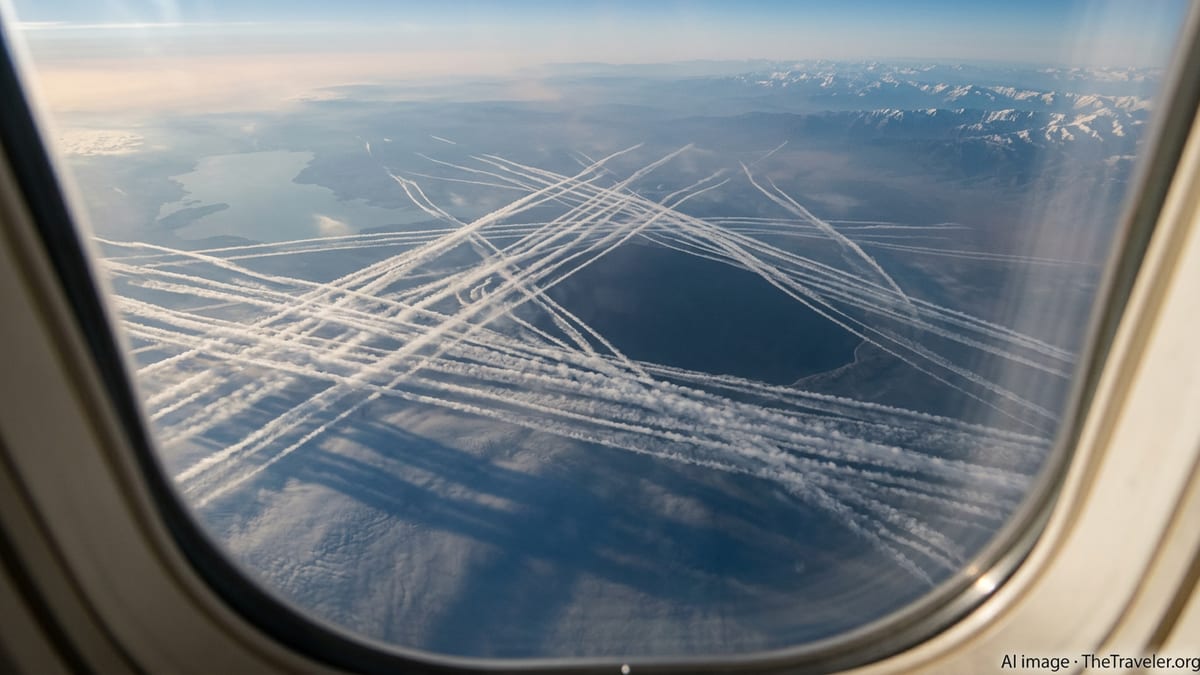
Long haul itineraries connecting Europe and Asia remain among the hardest hit as carriers navigate shifting no fly zones and restricted airspace over parts of the Middle East. According to recent international coverage, some airlines have resumed limited services on select routes while keeping the majority of suspensions in place, forcing passengers onto longer routings or onto entirely different carriers.
Reports on recent schedules indicate that flights touching conflict affected airspace are being rerouted along southern or northern corridors, adding hours to journey times and putting pressure on already busy hubs. Travelers connecting through the Gulf and key European gateways have encountered missed onward connections, last minute overnight stays and unplanned transits through alternative airports when aircraft are unable to follow their usual paths.
Operational updates published by several Middle Eastern and Asian carriers show continuing use of special waivers for tickets issued on routes affected by regional unrest. These waivers typically permit at least one free date change, rerouting via alternative gateways on the same airline and, in some cases, refunds for unused tickets where flights are canceled outright or diverted away from the original destination.
Travel industry advisors note that these measures can vary significantly by airline, even on the same route. Passengers booked through online travel agencies or consolidators are often required to work through their original booking channel, which can slow access to free changes when call centers and digital chat systems are overwhelmed during mass disruption events.
European Skies See Closures, Strikes and New Rules on Compensation
Across Europe, travelers are dealing with a different mix of challenges as airspace closures, staffing disputes and regulatory changes converge at the start of the summer season. A recent unannounced work stoppage by air traffic control staff in Belgium led to several hours without traffic in the country’s airspace, resulting in the cancellation of hundreds of flights and forcing aircraft to divert around the affected zone.
At the same time, European institutions have reached a political agreement on updated rules governing air passenger rights. According to recent reports from European media and travel outlets, the deal preserves core protections such as compensation for long delays and cancellations caused by airlines, while underlining that extraordinary circumstances, including airspace closures for security reasons, do not trigger additional cash compensation beyond rebooking or refunds.
The agreement reinforces that passengers must receive clear information about disruptions and their options, and confirms that carry on baggage will remain included in the advertised ticket price rather than treated as a mandatory extra charged separately at the end of the booking process. Advocacy groups in the region have characterized the outcome as a partial tightening of existing protections, particularly around transparency and the handling of complaints.
National regulators within the bloc are expected to update their own guidance in line with the new framework over the coming months. Until those changes are fully in force, the current European regime continues to apply, under which travelers may be entitled to care, rebooking and, in some cases, fixed compensation when delays or cancellations are within an airline’s control.
Airlines Issue Fresh Guidance on Refunds, Rebooking and Vouchers
Global carriers have responded to the latest wave of airspace restrictions by publishing updated travel advisories that spell out what customers can expect when flights are scrubbed or severely delayed. These advisories, typically posted on airline travel update pages, outline who qualifies for a fee free date change, under what conditions a full cash refund is available, and when only a travel credit or voucher will be offered.
Recent examples from major network airlines show a common pattern. Where a flight is canceled as a direct result of airspace closure or government directive, ticket holders are normally eligible for either a full refund of the unused portion of their ticket or a free rebooking on the next available service, sometimes including rerouting via a different hub. When services continue to operate but on longer routings or with schedule changes, airlines may limit flexibility to one free change within a specified travel window.
Some carriers have introduced end dates for disruption waivers, specifying that travel must be completed by a given deadline to benefit from flexible rebooking at no extra cost. Passengers who wish to postpone travel beyond those dates may be asked to pay any fare difference, even if change fees are waived. In multi airline itineraries, each carrier’s rules can apply only to the segments it operates, which complicates refund processing when one part of a journey is canceled and another remains intact.
Travel management companies report that business travelers are increasingly requesting written confirmation of waiver terms before agreeing to accept vouchers or alternative routings. Consumer advocates advise keeping screenshots of airline advisories and saving any communication from carriers about disruption policies, as these can be useful if disputes arise later over what was promised at the time of cancellation.
Passenger Rights: What Travelers Can Claim in 2026
For passengers caught in the middle of these evolving disruptions, understanding basic rights remains critical. In the European Union, long standing regulations give travelers a choice between rebooking at the earliest opportunity, rebooking at a later date subject to availability, or receiving a refund when a flight is canceled. Separate rules govern fixed compensation for long delays and cancellations that are attributable to the airline rather than to extraordinary circumstances such as sudden airspace closures or severe weather.
Legal summaries of these frameworks stress that when airspace is formally closed by state authorities for security reasons, airlines are typically not required to pay additional cash compensation, even if passengers face substantial delays or must be rerouted. They are, however, generally expected to provide care, such as meals and accommodation, when disruptions leave passengers stranded overnight, provided that doing so is reasonable in light of the scale of the event.
Outside Europe, regulations are more fragmented. Some jurisdictions, including the United States and parts of Asia, focus on ensuring that passengers receive refunds when flights are canceled or significantly changed by an airline, while leaving compensation for delays largely to carrier policies. Governments in several markets have recently updated or proposed new rules detailing when airlines must rebook travelers on rival carriers, how quickly refunds must be processed and what information must be provided at the time of disruption.
Because rights can differ sharply from one route to another, specialists recommend that travelers check which country’s laws apply to their ticket, particularly for journeys that start or end in the European Union, involve a European carrier, or are purely domestic in another jurisdiction with its own passenger rights regime.
Travel Insurance and Planning Strategies in an Era of Volatile Skies
The current cycle of airspace closures and rapidly changing advisories has renewed attention on travel insurance and trip planning. Insurance industry briefings note a rise in interest for policies that explicitly cover trip cancellation or interruption due to airspace closure, government travel warnings or security incidents, on top of more traditional protections such as medical and baggage coverage.
However, the fine print remains critical. Many standard policies exclude known events or ongoing conflicts, meaning that travelers booking into regions already subject to advisories may not be covered if airspace restrictions tighten after purchase. Some higher tier products now offer “cancel for any reason” options, but these often reimburse only a percentage of the trip cost and require cancellation several days before departure.
Travel planners suggest building more slack into itineraries that traverse potentially affected regions, including longer connection times and, where possible, overnight stops at major hubs that offer multiple daily departures. Reserving flexible or refundable accommodation near key transit points can also reduce out of pocket costs if itineraries need to be reworked at short notice.
With the northern summer peak approaching, airlines, regulators and consumer groups alike are urging passengers to monitor booking portals and official announcements closely. As airspace closures, regulatory reforms and operational pressures intersect, informed decision making before departure has become as important as the ticket itself for anyone hoping to navigate global air travel in 2026.