


More news on this day
WestJet’s flight attendants have launched a strike during one of Canada’s busiest summer travel periods, triggering widespread flight cancellations, airport bottlenecks, and mounting frustration among stranded passengers across the country.
Get the latest news straight to your inbox!
Strike Hits at Peak Summer Travel Period
The walkout by thousands of WestJet cabin crew began on August 2, 2026, after months of tense contract negotiations between the airline and the union representing flight attendants. Publicly available information indicates that the dispute centers on wages, unpaid work involved in preflight and postflight duties, and scheduling concerns affecting work-life balance.
The timing has magnified the disruption. The strike began just as the August long weekend travel rush reached its peak, a period when flights across Canada typically operate close to full capacity. Reports indicate that the airline had already begun scaling back operations in the days leading up to the strike, anticipating reduced staffing levels and the possibility of a full work stoppage.
According to published coverage and airport operations updates, WestJet has cancelled large portions of its schedule, focusing remaining resources on a limited core network. This has left many regional and leisure routes particularly exposed, with some cities seeing all WestJet departures and arrivals scrubbed for parts of Sunday and Monday.
The disruption comes on the heels of previous labour-related turmoil at the airline in recent years, including a mechanics’ strike in 2024 that led to mass cancellations. Travel industry observers note that this latest dispute has once again highlighted the vulnerability of Canada’s concentrated airline market to labour unrest.
Mass Cancellations and Airport Chaos
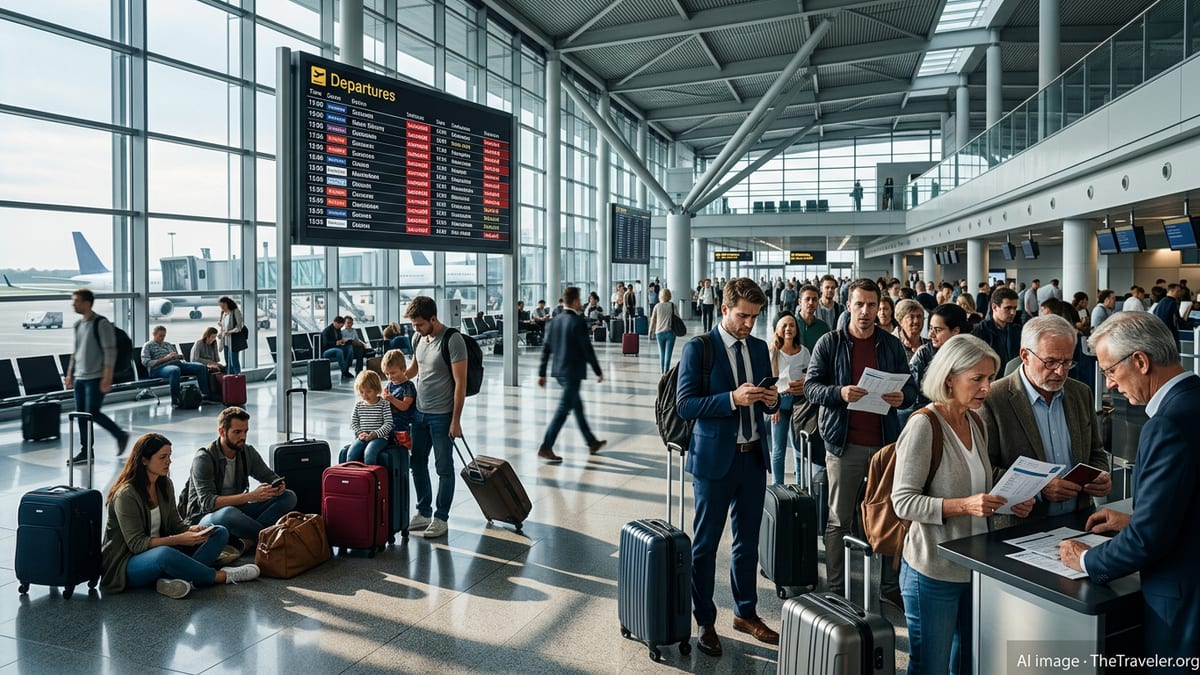
From Vancouver and Calgary to Toronto and Halifax, airports reported clusters of stranded WestJet passengers facing hours-long lines at customer service desks. Social media posts and local news reports describe concourses filled with travellers sleeping on the floor, families trying to rebook complex itineraries, and confusion over which flights were still operating.
At some airports, such as Halifax Stanfield, local media coverage and passenger accounts indicate that all WestJet flights on Sunday were cancelled amid the contract dispute. Similar reports from other mid-sized Canadian airports suggest that the carrier’s regional schedules have been heavily curtailed, with knock-on effects for connecting flights to the United States, Mexico, and Europe.
With limited spare capacity on rival airlines during the holiday weekend, many passengers have had few immediate alternatives. Travellers have described driving long distances to other airports, purchasing last-minute tickets on competing carriers at high prices, or abandoning trips altogether. For some, particularly those heading to weddings, cruises, or once-a-year family gatherings, the cancellations have meant missing major life events.
Operationally, analysts say WestJet faces a complex challenge even beyond the strike itself. Aircraft and crew are out of position after successive waves of cancellations, complicating any restart plan once a settlement is reached. The backlog of disrupted passengers will likely take days to clear, even if a deal is struck quickly.
Passenger Rights, Refund Confusion and Rebooking Frustrations
The strike has also thrust Canada’s air passenger protection rules back into the spotlight. Under the federal framework, airlines have different obligations to compensate travellers depending on whether a cancellation is within the carrier’s control, related to safety, or caused by a labour dispute.
Passenger advocacy groups and legal filings from earlier labour disputes involving WestJet indicate that there has been ongoing debate over how to classify strike-related cancellations and what financial remedies are owed. Some publicly available court documents and regulatory guidance show that airlines have previously argued that strikes fall outside their control, while consumer advocates have pushed for broader compensation.
In this latest disruption, reports from travellers suggest a patchwork of outcomes. Some passengers say they have received full refunds after WestJet cancelled their flights, while others report being offered travel credits or rebooked travel days later instead of immediate monetary reimbursement. Several accounts indicate confusion among customers about whether they can be moved to other airlines, particularly when WestJet has not formally cancelled flights until only hours before departure.
Travel advisers are urging passengers to document all communications with the airline, keep receipts for hotels and meals, and review their travel insurance policies. Industry experts note that credit card travel protections may offer an additional layer of recourse for some customers whose trips have been significantly disrupted.
Union Demands and WestJet’s Position
The strike comes after months of bargaining between WestJet and the union that represents approximately 4,400 flight attendants. Union communications and labour newsletters published earlier this year highlight long-running concerns about unpaid duties at the start and end of shifts, compensation levels lagging behind other Canadian carriers, and scheduling rules that staff say leave little control over rest and personal time.
According to publicly available information from both sides, the union has rejected what WestJet has described as a “transformational” offer, arguing that it does not adequately address wage progression, pay for ground duties, and protections against fatigue. The airline, for its part, has emphasized the financial strain of recent years and has framed its offer as competitive and sustainable in a challenging market.
Analysts note that WestJet’s labour relations have grown more complex as more workgroups unionize and seek to align their contracts with industry standards. Pay and conditions for cabin crew have become a prominent issue across airlines globally, particularly following the pandemic, as workers have pushed for recognition of the intense schedules and customer-facing pressures associated with a sharp rebound in travel demand.
Public commentary suggests considerable sympathy for flight attendants among some travellers, especially those who point to earlier legal disputes involving unpaid labour. Others, however, have expressed anger at both sides for allowing negotiations to reach the point of a strike during a peak holiday period, effectively using passengers’ plans as leverage.
What Travellers Can Expect in the Coming Days
With the strike now underway, travel experts say passengers booked on WestJet over the next several days should prepare for continued uncertainty. Schedules are likely to change frequently, with flights cancelled or consolidated as the airline adapts to reduced staffing levels and ongoing talks with the union.
Publicly posted advisories suggest that WestJet is prioritizing certain key domestic and transborder routes while suspending or thinning out others. Travellers are being urged by consumer advocates to monitor their reservations closely, check flight status repeatedly on the day of travel, and consider alternative arrangements if their journeys are time-sensitive.
For those yet to fly, rebooking on other carriers may remain difficult as rival airlines juggle their own high summer loads. Some industry observers expect that limited additional capacity could be added on select routes if the strike persists, but note that aircraft and crews are already tightly scheduled across North America.
Observers also point to the possibility of government attention if the disruption becomes prolonged, as occurred in some previous Canadian aviation labour disputes. For now, however, the immediate reality for many travellers is long lines, disrupted plans, and a nervous wait for news about whether their flights will depart at all.