


More news on this day
Australia’s decision to lift its Passenger Movement Charge again, taking it to one of the highest departure taxes in the world, is the latest sign of a global surge in passenger-related levies that is pushing up travel costs and testing the resilience of international tourism.
Get the latest news straight to your inbox!
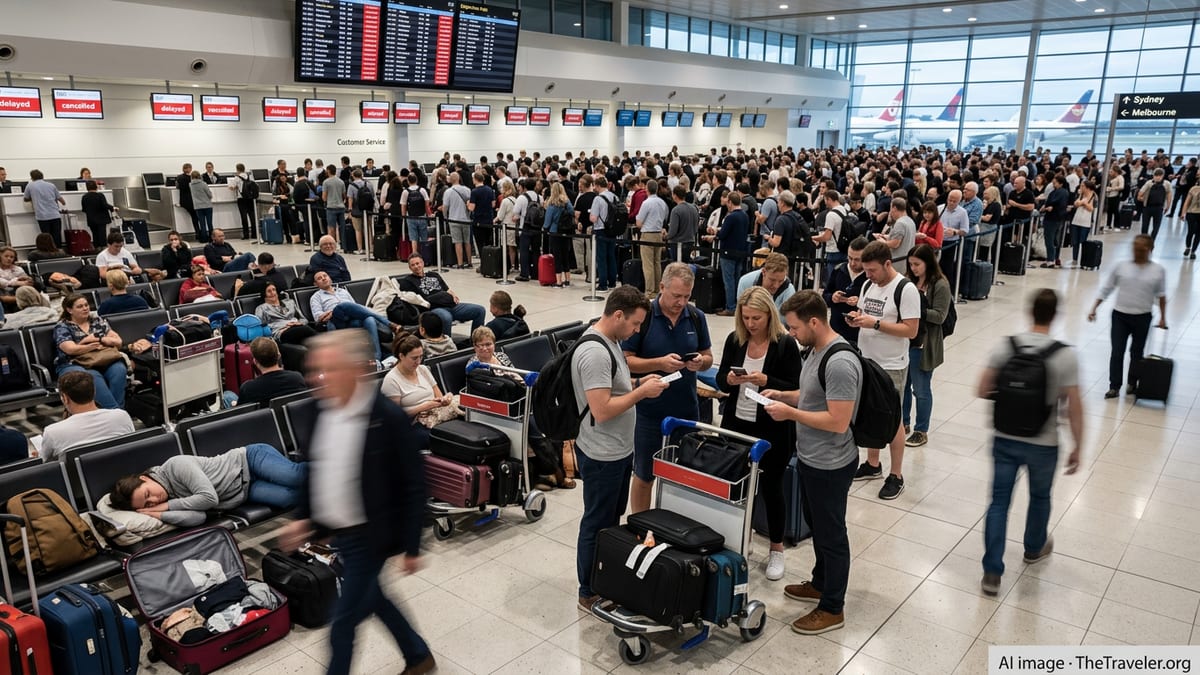
Australia’s Passenger Movement Charge Heads Higher
Australia’s Passenger Movement Charge, a long-standing tax on outbound international passengers, has been steadily rising since it was introduced in the mid-1990s. Legislative changes brought the charge from 60 Australian dollars to 70 dollars from 1 July 2024, following measures signalled in the 2023 to 2024 federal budget and implemented through amendments to the Passenger Movement Charge Act. More recently, the government’s 2026 budget confirmed a further increase to 80 dollars from 1 January 2027, according to budget documents and industry summaries.
The charge is embedded in the price of international air and sea tickets rather than collected at the border, meaning many travellers are unaware of the line item itself. Budget papers and explanatory materials describe it as a flat amount applied to most outbound passengers, with exemptions for categories such as transit passengers and young children. Revenue from the charge has grown into the billions of dollars annually as travel has recovered, with government budget papers and local media coverage indicating it now represents a significant and rising revenue stream.
Tourism and aviation groups in Australia have argued in public submissions and commentary that successive increases are placing additional pressure on price-sensitive travellers at a time of high airfares and constrained capacity. Industry bodies have called for a clearer link between what passengers pay and investment in border processing, security and tourism infrastructure, while analysts note that the cumulative effect of ticket taxes and charges is increasingly visible in final fares.
Academic commentary cited in Australian coverage suggests that a 10 dollar increase is unlikely on its own to dramatically suppress demand for outbound travel, given the overall cost of long haul flights from Australia. However, observers also point out that the Passenger Movement Charge adds to a stack of airport fees, fuel surcharges and higher base fares driven by operating costs, making it part of a broader affordability challenge that can particularly affect families, students and budget travellers.
United Kingdom and Germany Tighten Aviation Taxation
Australia’s latest move mirrors developments across Europe, where governments have leaned more heavily on aviation levies to raise revenue and, in some cases, signal environmental priorities. In the United Kingdom, Air Passenger Duty, a banded tax applied to departures from UK airports, has undergone a series of increases in recent years. Government guidance shows that rates are being uprated again from 1 April 2025, with most bands rising in line with the retail price index, on top of earlier adjustments designed to reflect longer distance flying and higher cabin classes.
British Treasury documents frame Air Passenger Duty as both a revenue measure and a way to reflect the environmental impact of aviation. Industry groups and consumer advocates, however, have warned that repeated increases contribute to already high ticket prices, particularly on long haul routes where the tax is highest for premium cabins. For regional airports that rely on price sensitive leisure traffic, the upward trend is seen as a potential drag on efforts to rebuild international connectivity.
Germany has moved in a similar direction. Official notices from German customs authorities and summaries from research and advocacy groups report that the country’s Luftverkehrsteuer, or air traffic tax, was raised from 1 May 2024. The increase, part of a wider climate and budget package, aimed to generate hundreds of millions of euros in additional revenue annually. A recent fact sheet from a German environmental organisation notes that aviation taxes there have been positioned as one tool among many to address emissions from air travel, even as airlines argue the higher rates erode competitiveness against hubs in neighbouring countries with lower levies.
Industry associations representing airlines in Germany have continued to campaign for relief, stating in public releases that even with a planned partial reduction from mid 2026, the tax burden on passengers will remain higher than before the 2024 increase. This dynamic illustrates how short term fiscal decisions can become entrenched, with only limited rollback even when governments respond to concerns about ticket prices and market share.
Canada, Costa Rica and the Americas Raise Ticket-Based Charges
In North America and Central America, a number of governments have also moved to adjust passenger charges that are integrated into ticket prices. In Canada, the Air Travellers Security Charge, which funds aviation security screening, rose sharply from 1 May 2024. A technical notice from the Canada Revenue Agency outlined increases of roughly one third across most itineraries, lifting the levy into a range that tourism and airline groups describe as comparatively high by global standards.
Canadian tourism industry submissions to government, published in late 2024, highlighted what they described as a “stacking” of costs on air tickets that include airport improvement fees, security charges, navigation fees and federal taxes. These organisations argue that higher security charges can undermine efforts to attract international visitors and make it harder for Canadians to afford domestic and outbound travel, particularly from smaller markets where competition is limited.
In Costa Rica, foreign visitors have long been familiar with a departure tax collected at Juan Santamaría International Airport and other gateways. While the mechanism has evolved over time, with the fee increasingly built into air tickets rather than paid separately at the airport, local reporting and airport information indicate that the charge has risen in line with airport development and tourism infrastructure needs. As passenger numbers reach record highs, discussions in Costa Rica have focused on how to balance revenue for environmental conservation and infrastructure with the need to keep the destination competitively priced against regional rivals.
Across the Americas, these measures collectively contribute to what airlines and tourism boards describe in public statements as a challenging environment for price sensitive travellers. For long haul itineraries that connect through multiple hubs, the cumulative effect of security fees, airport improvement charges and departure taxes in more than one jurisdiction can add a substantial amount to the final cost of a ticket.
Thailand, the Philippines and Asia’s Complex Mix of Travel Levies
In the Asia Pacific region, governments are experimenting with a mix of traditional departure taxes and new tourism focused levies. Thailand has for years embedded a departure charge into international air tickets, and in 2023 and 2024 authorities advanced plans for an additional 300 baht tourism fee for most foreign arrivals. Cabinet decisions and official announcements described the proposed fee as a way to fund tourism promotion and cover the cost of services such as insurance and infrastructure, although implementation has faced repeated delays and controversy over how the charge would be collected.
Recent Thai media coverage suggests that the tourism fee remains on the policy agenda, with the tourism ministry indicating it is unlikely to be scrapped despite concerns about administration and timing. Sector representatives have argued in interviews and opinion pieces that the fee is modest compared with total trip costs and similar to levies in other popular destinations, while some travellers and businesses question whether the proceeds will be transparently reinvested in tourism facilities, waste management and environmental protection.
The Philippines, meanwhile, continues to apply a travel tax to outbound passengers, a charge that predates the pandemic and is layered on top of airline ticket prices and terminal fees. Public information from the national tourism and revenue agencies shows that the tax generated several billion pesos in 2024, with a complex system of exemptions and reduced rates for certain categories such as overseas workers and students. Debates in Manila, reflected in parliamentary hearings and media reports, have centred on calls to reduce or remove the tax for economy class passengers to support outbound leisure travel and improve perceived fairness.
These Asian examples underline how travel levies can serve multiple and sometimes competing objectives, from funding tourism marketing to addressing over tourism and environmental strain. As governments look for stable revenue sources, passenger based charges offer predictable inflows but also risk dampening demand if total trip costs climb too quickly relative to incomes and competing destinations.
Tourism Under Strain as Costs Climb Worldwide
The wave of adjustments to passenger movement charges, air passenger duties and tourism fees arrives at a time when global tourism is still recalibrating after the pandemic. International arrival figures from organisations such as the UN tourism agency show that many regions have surpassed or are nearing pre 2019 volumes, yet capacity constraints, high fuel prices and supply chain issues have kept airfares elevated. Additional government imposed charges, even when relatively small in isolation, can tip the balance for travellers weighing discretionary trips.
For destination countries, higher per passenger charges promise valuable revenue for cash strapped governments and can be politically easier to defend than broader tax rises. Policy papers and think tank analyses note that taxes on non resident visitors are often perceived as less sensitive domestically, particularly when framed as contributing to infrastructure, environmental protection or security. At the same time, destinations that rely heavily on long haul markets, such as Australia, Thailand and parts of Europe, must consider the risk that travellers will switch to cheaper alternatives if total costs become too steep.
Airlines and tourism operators warn in public statements that the proliferation of country specific taxes also complicates pricing and distribution, as carriers need to manage different exemptions, collection rules and settlement processes. Smaller tourism businesses, especially in developing markets, may have limited influence over how these policies are designed yet bear the impact if visitors cut back on spending or shorten their stays to offset higher travel costs.
Analysts tracking the trend suggest that the question is less whether passenger charges will exist and more how transparently they are set and how effectively the revenue is used. As Australia joins the United Kingdom, Canada, Thailand, Germany, Costa Rica, the Philippines and others in relying more heavily on passenger movement charges and related levies, the debate within the travel industry is shifting toward calls for clearer earmarking of funds, international coordination and impact assessments that weigh short term fiscal gains against the long term health of global tourism.