


More news on this day
Air India’s decision to pare back about 100 daily flights over the June to August period, as the West Asia conflict drives up fuel costs and disrupts airspace, is rippling across global travel corridors and offering fresh openings for rival carriers.
Get the latest news straight to your inbox!
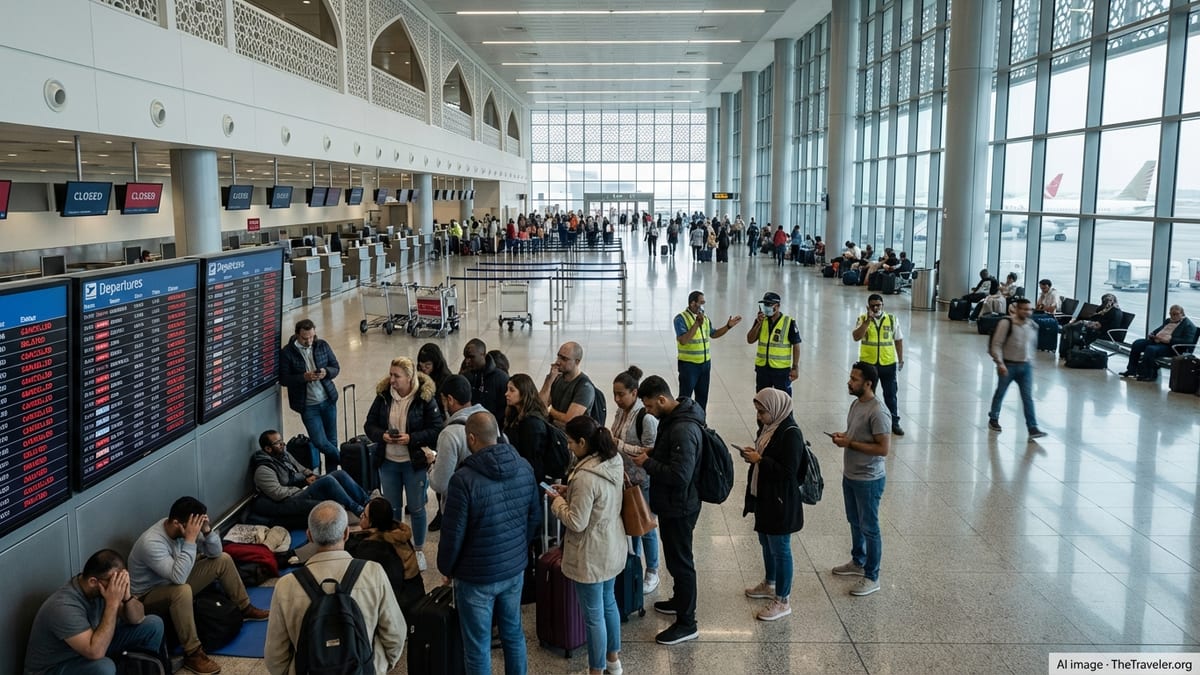
West Asia conflict pushes Air India into deeper cuts
The latest schedule adjustment, flagged in recent Indian media coverage, builds on weeks of disruption across India’s westbound network. Restricted airspace over parts of West Asia has forced longer routings for services to the Gulf, Europe and North America, multiplying fuel burn and crew costs just as international jet fuel prices surge. Publicly available financial data suggests aviation turbine fuel now accounts for a far higher share of Air India’s operating costs than in previous years, putting pressure on already thin long-haul margins.
Reports indicate that since late February, Indian carriers have cancelled more than 10,000 flights touching West Asia, with Air India alone scrapping around 2,500 services to the region and operating at roughly 30 percent of its normal schedule there. These cuts include a full suspension of flights to some conflict-adjacent destinations and severely reduced frequencies to key Gulf hubs that once served as vital links for onward travel.
The announcement that roughly 100 daily flights across the network would be trimmed through the peak summer window appears to be a move to stem mounting losses. Coverage in Indian business publications points to a loss figure above 20,000 crore rupees in the last fiscal year for the Tata-owned carrier, underscoring how quickly the war-driven spike in costs has eroded the gains of its high-profile turnaround plan.
While the headline number has sparked social media claims that Air India is shuttering its international operation, recent explainers in national newspapers stress that the reductions represent a targeted pullback focused on low-yield or fuel-intensive long-haul routes, rather than a blanket shutdown.
Long-haul squeeze reshapes India’s global connectivity
The summer flight cuts are falling most heavily on long-haul sectors linking India with Europe, North America and Australia. Analysis published by aviation-focused outlets shows that many of these flights must now detour around both West Asian and Pakistani airspace, adding as much as two extra hours on some Europe-bound journeys. That detour erodes the time-saving advantage of nonstop flights and forces airlines to carry more fuel, further lifting costs.
Travel industry trackers have flagged reduced frequencies on routes such as Delhi to New York, Chicago, London and key Australian cities, alongside selective capacity trimming on secondary European destinations. Some services are being downgauged to smaller aircraft, while others are temporarily suspended for the June to August window as the airline recalibrates its deployment.
For Indian travelers, the effect is a tightening of nonstop options at precisely the moment when school holidays and family visits usually drive peak demand. Passengers are reporting last-minute rebookings, longer connection times and sharply higher fares on remaining seats, particularly in premium cabins. Social media posts and forum discussions suggest that many are being shifted from nonstop itineraries to one-stop journeys via other hubs, sometimes on partner airlines and sometimes with entirely different carriers.
This squeeze on long-haul capacity is also complicating India’s ambitions to position itself as a competitive nonstop gateway between South Asia and the wider world. Air India’s widebody expansion and cabin upgrades were intended to draw traffic away from one-stop competitors in the Gulf and Europe; instead, the conflict and cost surge are forcing a partial retreat just as the strategy was beginning to take hold.
Gulf and global rivals move to capture displaced demand
Even as Air India and other Indian carriers pull back, a number of global airlines appear to be moving to capture stranded demand. Middle Eastern, European and Southeast Asian carriers have a structural advantage as so-called sixth-freedom operators, funnelling India-origin traffic through their hubs to destinations in Europe, North America and beyond. When a large player like Air India trims its long-haul schedule, these carriers can often redeploy widebody aircraft from other markets or swap in higher-capacity jets on India routes.
Industry commentary from Gulf business outlets points to a gradual but noticeable capacity rebuild by some major Gulf carriers, particularly on India–Europe and India–US city pairs that can be served with alternative routings staying clear of the most sensitive airspace. While many of these airlines also face higher fuel costs and complex overflight restrictions, their large fleets and diversified networks give them more flexibility to shift aircraft where yields look strongest.
European network airlines, already beneficiaries of earlier disruptions tied to other regional conflicts, are likewise positioned to gain. With nonstop India–Europe flights reduced or re-timed, travelers often turn to one-stop options via major European hubs, then connect onward to North America. Published fare data and booking analyses suggest that yields on these flows have strengthened since March, reflecting both constrained capacity and sustained demand from India’s sizable diaspora.
Southeast Asian carriers are also emerging as significant beneficiaries. Travel analytics firms tracking search and booking patterns report an uptick in itineraries that route Indian passengers through Singapore, Bangkok and Kuala Lumpur to reach Australia, Japan and the west coast of North America. For these airlines, the West Asia disruption is accelerating a shift in long-haul traffic that had already been nudging towards Asia-Pacific hubs even before the current crisis.
Indian travelers face higher fares and longer journeys
For individual travelers, the immediate impact is felt in the pocket and in total journey time. Publicly available fare snapshots show economy-class prices on popular India–Gulf and India–Europe routes climbing sharply since early March, with business-class fares in some markets rising even faster. With Air India cutting capacity and rivals carefully managing their own exposure to volatile fuel prices, fewer seats are chasing similar or even higher demand.
Queues for rebooking have become a recurring theme in passenger accounts shared on forums and social platforms. Travelers describe receiving cancellation notices weeks or days before departure, followed by offers to shift to alternative dates, accept one-stop routings, or take partial refunds. Some have reported that more convenient options on competing airlines are already sold out or priced well above their original tickets.
There are also knock-on effects for Indian workers based in the Gulf and other West Asian countries. News reports and consumer advisories note that many short-haul links between smaller Indian cities and Gulf labour hubs have seen multiple rounds of cancellations, forcing workers to connect through major metros and often pay significantly higher fares. For those remitting a large share of their income home, the combined impact of higher ticket prices and weaker currency values can be acute.
Tourism flows are adjusting as well. Travel trade associations in India have reported a noticeable cooling in outbound leisure demand to parts of West Asia, with some travelers diverting plans to Southeast Asia or domestic destinations instead. Inbound tourism to India from the region has also softened, as higher fares and longer routings dampen appetite for discretionary trips.
Strategic crossroads for Air India and India’s aviation ambitions
The current crisis arrives at a pivotal moment for Air India’s multi-year transformation. The Tata-owned carrier has placed large aircraft orders, invested in new cabins and technology, and articulated a goal of turning India into a major global aviation hub. The West Asia conflict and resulting flight reductions do not erase that vision, but they complicate its near-term execution and may force a re-sequencing of priorities.
Analysts quoted across Indian and Gulf media suggest that Air India is now weighing trade-offs between preserving market presence on marquee long-haul routes and protecting its financial health. Cutting around 100 daily flights reduces cash burn and shields the balance sheet from the worst of the fuel shock, yet every trimmed frequency risks ceding mindshare and market share to competitors that remain visible in schedules and search results.
Some commentary points to a potential pivot towards strengthening regional and domestic connectivity while maintaining a slimmer long-haul footprint until conditions normalize. That could mean leaning more heavily on partnerships and codeshares to keep India linked with distant markets, while reserving the airline’s own metal for the highest-yield and most strategically important routes.
For India’s wider aviation ecosystem, the episode underlines how vulnerable hub aspirations are to geopolitical shocks along critical corridors. With two major overflight regions constrained in quick succession, the country’s airlines have been forced into costly detours that their global rivals, operating from different geographic positions, can sometimes avoid. How Air India navigates the months ahead will shape not only its own recovery but also the balance of power on some of the world’s busiest long-haul markets.