


More news on this day
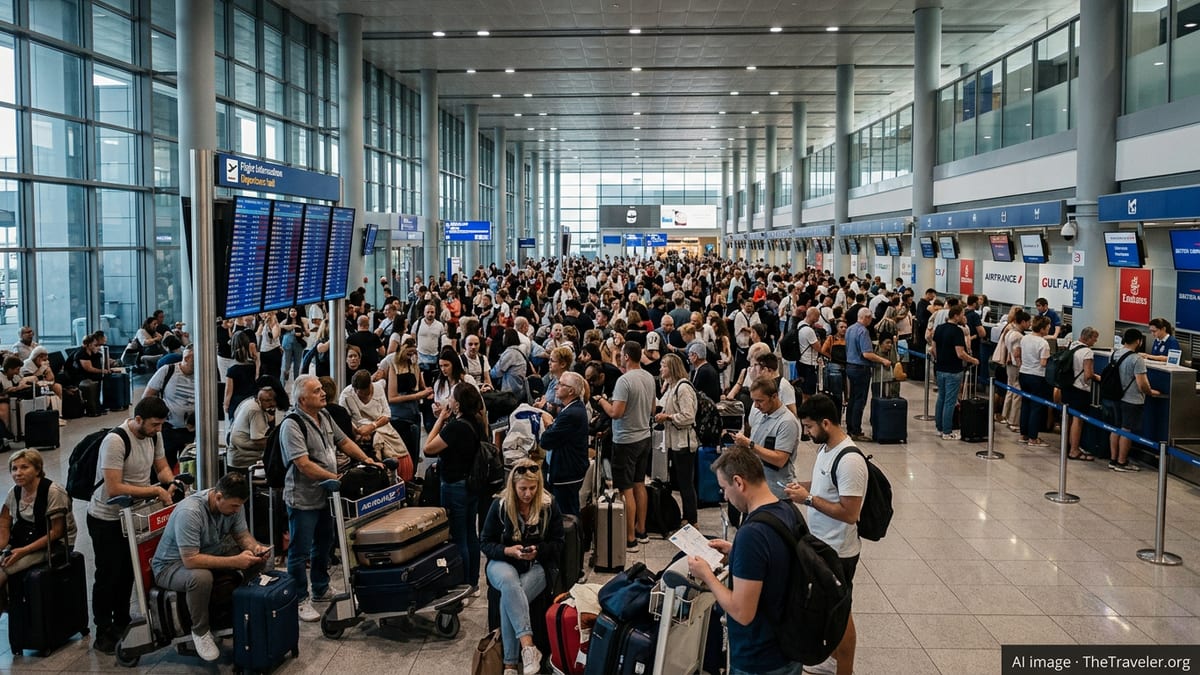
Athens International Airport is experiencing widespread disruption after a radar system failure and follow-on flow restrictions, with publicly available operational data indicating that 327 flights have been delayed and three cancelled on one of the busiest travel weekends of the European summer.
Get the latest news straight to your inbox!
Delays Ripple Across Europe’s Key Hubs
The disruption at Athens, Europe’s major gateway to the Greek islands, has quickly spread across the continent’s air network. Flight-tracking dashboards and aviation data providers show delays affecting services linking Athens with London, Paris, Rome, Berlin and other major cities, as schedules come under strain during the peak holiday period.
Airlines including Aegean Airlines, Ryanair, Lufthansa and Air France are among the most exposed, given their dense networks to and from the Greek capital. Many of their departures from Athens are operating with extended ground holds and revised departure slots, while inbound services are facing stacking and speed restrictions as aircraft wait for clearance to land.
The knock-on impact is being felt at connecting hubs as delayed aircraft and crews arrive late for onward rotations. Reports indicate that rolling delays of between 45 and 120 minutes are common on affected routes, with some short-haul flights operating close to the legal duty-time limits for flight and cabin crews.
Although only three outright cancellations have been recorded so far, aviation analysts note that sustained delays of this magnitude can have a similar effect for some passengers, as missed connections and curfew limits at destination airports force rebooking or overnight stays.
Radar Failure and System Checks Behind the Disruption
The immediate trigger for the disruption traces back to a radar and navigation system failure affecting Athens International Airport’s air traffic management, followed by detailed technical inspections. Local media and specialist aviation outlets describe a sequence in which a malfunction in key surveillance or guidance systems led to strict capacity reductions while safety checks and system resets were carried out.
In practice, this has meant that air traffic controllers have been required to increase the separation between aircraft arriving and departing Athens. Even modest reductions in movements per hour have a rapid cumulative effect at a hub that regularly handles hundreds of flights per day in summer, particularly when the incident coincides with peak afternoon and evening traffic.
Recent reports on earlier inspections of landing guidance systems at Athens suggested that the airport was already operating under tighter windows for certain procedures on specific days. The latest radar-related disruption has therefore hit an operation that was managing a series of planned technical checks, magnifying the effect on punctuality.
Travel-industry monitoring services highlight that, while safety systems are designed with redundancy in mind, any failure affecting core navigation or radar functions tends to result in conservative operating procedures and lengthy recovery times for the schedule.
Airlines Respond With Rebooking and Schedule Adjustments
Faced with constrained capacity at Athens, airlines have been adjusting their schedules, implementing rolling delays and, in limited cases, cancelling rotations to stabilise their operations. Aegean Airlines, the largest operator at the airport, has focused on maintaining core domestic and European trunk routes while trimming turnaround times where possible to recover punctuality on shorter legs.
Low-cost carrier Ryanair, which operates multiple daily services from Athens to cities such as London and other European destinations, has been reassigning aircraft and crews to protect high-demand departures. Nevertheless, passengers on some routes report extended waits at the gate or on board as aircraft hold for updated slots.
Network carriers Lufthansa and Air France, which feed passengers into their respective hubs in Germany and France, have been working within constrained connection windows as late arrivals from Athens compress transfer times. Some passengers bound for long-haul destinations via these hubs have been rebooked onto later departures or given alternative routings to avoid missed connections.
Operational updates issued through airline websites, travel alerts and airport information screens stress that schedules remain fluid, with exact departure times often confirmed only shortly before boarding. Aviation observers note that this type of rolling recovery can persist for many hours after the initial technical issue is resolved, especially under heavy summer demand.
Impact on Passengers and Popular Holiday Routes
The timing of the disruption coincides with a surge in leisure travel to Greece, as visitors from across Europe head to the islands and coastal resorts. Routes linking Athens with London, Paris, Rome and Berlin are key feeders for onward domestic connections to destinations such as Crete, Rhodes, Santorini and Mykonos, magnifying the downstream impact when flights run late.
According to publicly available information from travel-insurance and aviation-assistance providers, missed domestic connections and heavily delayed departures can entitle passengers departing from or arriving into the European Union to seek compensation or reimbursement in some circumstances, depending on the cause of the disruption and the length of the delay. However, complex cases involving technical failures in navigation systems and air-traffic management may require detailed assessment of operational responsibility.
Travel-risk briefings published in recent days have advised passengers transiting Athens to allow additional time between flights, to remain attentive to gate changes and to keep boarding passes and receipts in case claims need to be filed later. Industry commentators also suggest that passengers traveling on separate tickets, particularly on low-cost carriers, are more exposed to missed onward flights because they may not be protected under a single itinerary.
Despite the disruption, domestic tourism bodies point out that most flights are operating, albeit with delays, and that accommodation providers and tour operators are accustomed to adjusting transfer times when schedules are disrupted. Travelers arriving late into island destinations may find transfers rescheduled to the following morning, particularly where ferry services or local curfews limit overnight options.
Outlook for Recovery and What Travelers Should Do
Aviation data specialists tracking the Athens situation suggest that, provided there are no further technical setbacks, the airport’s operation could gradually return toward normal throughput as air traffic managers increase flow rates and clear the backlog. However, the volume of weekend holiday traffic means that minor delays are likely to persist into subsequent days as aircraft and crews are repositioned.
Travel-advice platforms recommend that passengers due to travel through Athens in the coming 24 to 48 hours continue to monitor their flight status through airline channels and airport information, rather than relying solely on original ticketed times. Early check in and prompt arrival at the airport, particularly for flights to destinations outside the Schengen area, can help reduce the risk of additional delay at security and border control.
Consumer groups and passenger-rights organisations continue to underline the importance of documenting disruption. Passengers are being encouraged to keep records of delay durations, meal or hotel expenses and any written communications from airlines regarding the cause of operational issues, as these can be relevant to compensation assessments under applicable regulations.
For now, Athens International Airport remains open and operating, but with a constrained schedule. With hundreds of flights still due to pass through one of Europe’s most important summer gateways, the coming days will be critical in determining how quickly the system can absorb the shock and restore a more stable level of punctuality.