


Thailand’s visa framework is in a period of rapid transition, combining more generous entry options with noticeably tougher enforcement. For prospective expats and long-stay visitors, the opportunity to enter visa-free for longer periods coexists with rising scrutiny of those who appear to be using tourist channels for de facto residence or work. Understanding how these shifts translate into concrete relocation risks is now critical for anyone considering Thailand as a medium- or long-term base.
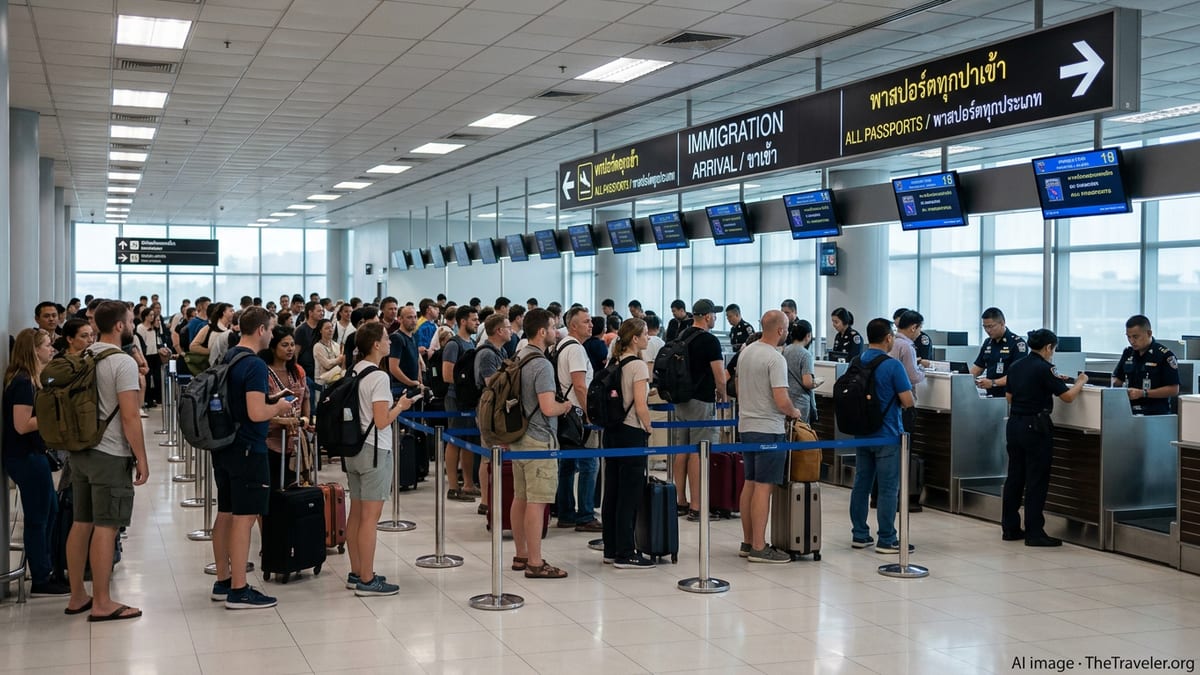
Overview of Thailand’s Recent Visa Policy Shifts
Since mid-2024 Thailand has moved from a relatively predictable mix of short visa exemptions and classic tourist visas to a more complex regime. The headline change was the expansion of visa exemption stays for eligible nationalities from 30 to 60 days, rolled out from July 2024 onward and ultimately covering around 90-plus countries. This significantly improved ease of entry for short- to medium-term stays by eliminating the need for many tourists to apply for a separate visa in advance.
In parallel, government policy has increasingly focused on immigration risk management. Authorities have signaled concern about individuals using visa exemptions or tourist visas for informal long-term residence, remote work, or activities connected to fraud and transnational crime. By late 2025 and into early 2026, this concern translated into measures that tighten visa exemption use and strengthen screening at both entry and extension stages, especially for repeat entrants and certain national groups.
The result is a dual track: on paper, rules are more welcoming for genuine short-term visitors, but operationally they are stricter for anyone who appears to be living in Thailand on temporary permissions. For expats evaluating relocation, the primary risk is that strategies that previously relied on repeated visa-exempt entries, quick “border runs,” or loosely structured study or volunteer visas are now far more exposed to refusal, cancellation, or blacklisting.
Relocation planning therefore needs to be anchored in how policy is trending rather than how previous visitors managed stays. The system is moving toward longer visa-free allowances for clear tourists and more robust controls on those whose stay patterns resemble de facto residence without the corresponding long-stay visa category.
Visa Exemption Evolution and Associated Risk Patterns
The expanded 60-day visa exemption became one of the most visible changes in Thailand’s visa landscape. Eligible passport holders can typically receive 60 days on arrival, with a possible in-country extension of around 30 days, creating a de facto 90-day window without a pre-arranged visa. Authorities have also experimented with differentiated lengths for certain nationalities, reflecting bilateral arrangements and regional political dynamics.
However, from late 2025 new rules began to limit how visa exemption could be used repeatedly. Policy documents and immigration briefings indicate a deliberate shift away from tolerating serial re-entries under visa exemption as a long-term living strategy. For many expats who previously relied on back-to-back visa-exempt entries interspersed with quick trips to neighboring countries, this creates a heightened risk that future entries will be questioned or refused.
In practice, immigration officers now have wider discretion to interpret “genuine tourism.” Travelers who cannot convincingly explain their itinerary, demonstrate sufficient funds, or show plausible onward travel risk being denied entry, even if they technically qualify on nationality grounds. Repeated entries in a short period, one-way tickets, or a history of multiple extensions within a year can all be interpreted as red flags that the visa exemption is being used as a proxy for residence or undeclared work.
For relocation planning, the key risk is predictability. A move strategy that depends on immigration officer discretion at each entry is inherently fragile. Expatriates intending to spend large parts of the year in Thailand without obtaining a residence-appropriate visa now face significantly higher uncertainty that their pattern of stay will remain acceptable over time.
Crackdown on Overstays, “Visa Runs,” and Serial Tourism
Thailand has historically been firm on overstay penalties, with daily fines that accumulate to an upper threshold, and long overstays leading to entry bans of several years. Recent enforcement campaigns show a renewed focus on locating and deporting overstayers, particularly where individuals have no stable documentation or are suspected of working illegally or engaging in criminal activity. Reports since 2024 describe coordinated sweeps targeting foreign nationals without valid status, especially in border provinces and major urban centers.
Closely connected is a policy tightening around the traditional “visa run” model. While leaving the country before a permission expires and re-entering is not illegal, Thai authorities have become more explicit that repeated short stays with minimal time abroad can constitute visa abuse. Border posts and airports have been instructed to scrutinize travel histories, and multiple rapid re-entries via land borders now carry a material risk of refusal or shortened stay grants.
Expats who previously combined overstays, informal fines, and quick exits to reset their permission are now especially vulnerable. Immigration data-sharing, improved tracking through arrival cards, and more systematic risk profiling mean that informal workarounds that once seemed low risk can now lead to detention, blacklisting, and forced departure. Even those who technically avoid overstay by leaving on time can find that a pattern of serial tourist stays is deemed inconsistent with declared tourism purposes.
From a relocation perspective, any strategy that assumes tolerance of minor overstays or repeated border runs should be treated as obsolete. The risk profile includes not only financial penalties but also sudden loss of ability to remain in, or re-enter, Thailand, which can be highly disruptive for those who have established social ties or remote work routines in-country.
Targeted Tightening: Student, Volunteer, and Niche Visas
Authorities have also signaled particular concern about long-stay categories traditionally seen as easier to obtain, such as education visas. Law enforcement briefings in early 2026 highlight stricter review of student visa extensions, with specific reference to “fake student visas” used primarily as a stay vehicle rather than for genuine study. Language schools and small institutions are under closer inspection to verify that enrolled foreigners actually attend classes and that curricula meet regulatory standards.
This creates a second-order risk for expats who rely on borderline programs that exist primarily to issue visa sponsorship. If an institution loses its accreditation or is investigated, students may find their visa extensions refused, shortened, or not transferable. In extreme cases, immigration authorities can cancel existing permissions and require immediate departure or a change of status under tight deadlines.
Similar concerns extend to volunteer and miscellaneous non-immigrant categories where documentation is lighter and oversight has historically been uneven. Organizations that sponsor large numbers of foreigners for loosely defined roles, or with unclear financial support structures, are more likely to attract attention. For the individual expat, the risk is less about initial visa issuance and more about mid-stay policy shifts, audits, or rule clarifications that suddenly tighten interpretation.
For relocation planning, education or volunteer visas should no longer be viewed as straightforward long-stay backdoors. Due diligence on the sponsoring institution, including its compliance history and the realism of the underlying activity, becomes a critical risk-mitigation step for those considering these categories as part of a multi-year stay in Thailand.
Enhanced Screening, Digital Arrival Cards, and Data-Driven Controls
Thailand has been incrementally expanding its use of data and digital tools in immigration management. The introduction and subsequent expansion of digital arrival card systems, together with electronic data capture at border checkpoints, enable more sophisticated tracking of individual movement patterns. Authorities can now more easily identify frequent entries, short exits, or unusual travel sequences that may signal visa misuse.
Alongside digital tools, new screening protocols at international airports and key land borders emphasize interviews, inspection of supporting documents, and cross-checking declared travel purposes with observed patterns. Officers are encouraged to ask more detailed questions about accommodation, sources of income, intended activities in Thailand, and connections with local entities. While these measures are framed as targeting transnational crime and scam operations, they also increase friction for law-abiding expats whose situation does not fit a simple tourist profile.
For example, a remote worker who repeatedly enters under visa exemption, rents long-term accommodation, and has no clear local employer may face probing questions about work activities and tax status. Even if such work is conducted for foreign clients, immigration officers can take the view that tourist or exemption categories are not appropriate for de facto economic activity based in Thailand. This does not necessarily lead to immediate sanctions, but it raises the probability of shortened permissions or advice to switch to a different visa type.
In relocation decision-making, this heightened screening environment means that transparency and documentation become more important. Expats should assume that their entry and exit history is visible and that officers will use discretion to assess whether their behavior aligns with the stated visa category, especially when policies are in flux or under political scrutiny.
Differentiated Treatment by Nationality and Regional Security Context
Thailand’s visa policy has always included elements of reciprocity and regional politics, but recent developments underscore how quickly conditions can shift for specific nationalities. In response to border tensions or perceived migration risks, authorities have adjusted permitted stay lengths or tightened controls on particular neighboring countries. Examples include shortened visa-exempt stay durations and targeted crackdowns on overstayers from specific states linked to security concerns or labor market sensitivities.
For expats, this means that risk exposure is partly nationality-specific. A policy that remains generous for one group can tighten abruptly for another in response to diplomatic developments, security incidents, or domestic political pressures. Those from countries that supply large numbers of low-wage workers or are geographically proximate to conflict-affected areas may encounter more rigorous questioning, document checks, and enforcement sweeps.
Even for nationals of countries with broadly favorable arrangements, there is no long-term guarantee that current 60-day exemptions or easy re-entry patterns will persist unchanged. Official commentary has already discussed revisiting the 60-day visa-free scheme because of misuse, suggesting that stay lengths, eligibility lists, or cumulative-stay caps could be adjusted as authorities evaluate impact.
Relocation strategies that assume a static policy environment over several years are therefore risky. Internationally mobile professionals should treat Thai visa conditions as a variable input, subject to periodic recalibration, rather than a fixed asset that can be relied on indefinitely without contingency planning.
Compliance, Documentation, and Scenario Planning for Prospective Expats
The core risk emerging from Thailand’s evolving visa policy is not that expats are unwelcome, but that informal and semi-compliant stay patterns are becoming less viable. For those evaluating a move, this requires a shift from opportunistic approaches to structured compliance and scenario planning. The key operational question is whether the chosen visa pathway is clearly aligned with the intended duration and nature of stay and can withstand policy tightening or more intensive scrutiny.
Critical risk-mitigation steps include maintaining meticulous records of entries and exits, keeping copies of all immigration stamps and extension receipts, and retaining proof of accommodation and financial means. When entering under visa exemption or tourist status, travelers should be prepared to show plausible onward travel within the permitted period and evidence that their primary activities match tourism or short-term visits, not ongoing residence.
Expats who anticipate spending many months per year in Thailand, operating businesses, or working remotely should explicitly factor in the possibility that visa-free strategies may be curtailed. Contingency plans might involve being able to shift temporarily to another regional hub, accelerate transition to a more appropriate long-stay visa if eligible, or restructure working patterns to remain clearly outside the definition of local economic activity.
From a relocation intelligence standpoint, Thailand remains accessible, but the margin for error is narrowing. The system rewards those who invest in understanding current policy directions and penalizes those who rely on outdated or anecdotal information about what “used to be possible.”
The Takeaway
Thailand’s visa policy environment is characterized by a combination of expanded headline access and intensified scrutiny of underlying behavior. The extension of visa exemption periods and the promotion of new long-stay categories have been accompanied by more assertive enforcement against overstays, serial tourism, and perceived misuse of education or volunteer visas. For expats, the major risk is not sudden closure but gradual tightening that transforms once-tolerated practices into high-liability strategies.
Prospective long-stay residents should therefore evaluate Thailand with a focus on policy trajectory rather than current convenience. Any relocation model that depends on repeated visa exemptions, quick border runs, casual overstay fines, or loosely structured study arrangements is increasingly fragile. Decision-grade planning requires an alignment between visa category and real-life intentions, awareness of how nationality-specific rules can change, and readiness to adapt if authorities recalibrate stay lengths or enforcement priorities.
In summary, Thailand continues to offer substantial opportunities for internationally mobile individuals, yet the risk profile attached to its evolving visa policies has risen. Those who approach relocation with structured compliance, robust documentation, and realistic assumptions about future tightening are better positioned to enjoy the benefits of living in Thailand while minimizing exposure to disruptive immigration surprises.
FAQ
Q1. Can I still live in Thailand long term using only visa exemption entries?
Increasingly this is risky. Authorities are tightening rules on serial visa-exempt entries and may question or refuse travelers whose patterns suggest de facto residence rather than short visits.
Q2. How serious is Thailand’s current crackdown on overstays?
Enforcement campaigns have intensified, with fines, detention, and multi-year bans applied more consistently, especially where individuals have long overstays or links to informal work or crime.
Q3. Are border runs still a viable strategy to extend my time in Thailand?
Border runs are now significantly less reliable. Multiple rapid exits and re-entries can trigger extra questioning, shortened permissions, or outright refusal at the discretion of immigration officers.
Q4. Do education visas remain a low-risk long-stay option?
Not necessarily. Authorities are scrutinizing “fake” student arrangements and institutions. If a school loses accreditation or is investigated, visa holders may face refused extensions or enforced status change.
Q5. How are digital arrival cards affecting expats?
Digital systems allow authorities to track stay patterns more accurately, making it easier to identify frequent entries, short exits, and other indicators of visa misuse, which can increase questioning or refusals.
Q6. Could the 60-day visa exemption be reduced again?
Officials have publicly debated revising the 60-day scheme due to misuse. While no change is guaranteed, expats should plan for the possibility of shorter stays or tighter cumulative limits.
Q7. Does my nationality affect how strictly rules are applied?
Yes. Thailand applies differentiated policies by nationality and may tighten conditions or enforcement for specific groups based on regional security, migration patterns, or diplomatic considerations.
Q8. What is the main relocation risk if I rely on tourist status while working remotely?
The main risk is that immigration officers judge your activities as inconsistent with tourist or exemption status, leading to shortened stays, advice to change visa type, or future entry difficulties.
Q9. How can I reduce my exposure to sudden visa policy changes?
Align your visa type with your real intentions, maintain clear documentation of lawful status, and develop contingency plans, such as alternative regional bases, in case rules tighten further.
Q10. Is Thailand becoming hostile to expats overall?
The trend is not hostility but greater insistence on category-appropriate visas and compliance. Genuine visitors and properly documented long-stay residents remain welcome, while informal stay strategies face rising risk.