


More news on this day
A GOL Cargo Boeing 737-800 freighter overran the runway at Salvador International Airport in northeastern Brazil during rainy conditions, coming to a halt beyond the paved surface but causing no injuries among the crew, according to early reports from Brazilian media and aviation incident trackers.
Get the latest news straight to your inbox!
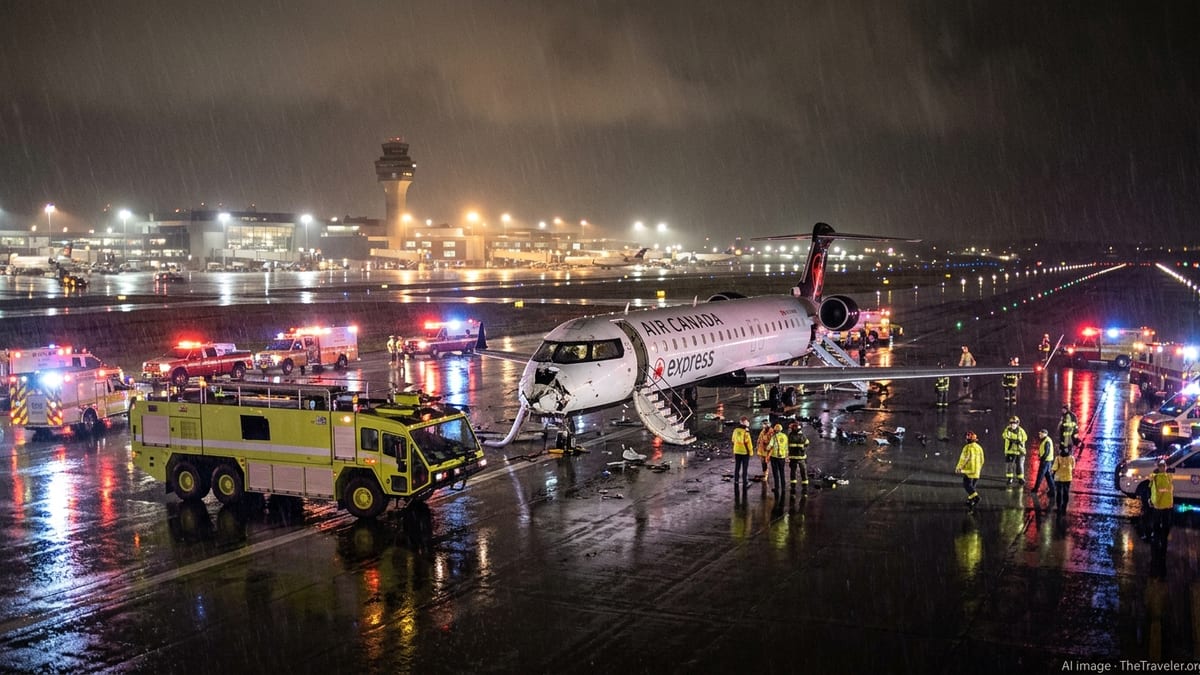
Overrun in Adverse Weather at a Key Brazilian Gateway
Initial information indicates the freighter, operating a domestic cargo service under the GOL Cargo brand, exited the end of the runway after landing at Deputado Luís Eduardo Magalhães International Airport, which serves Salvador, capital of the state of Bahia. The incident occurred amid persistent rainfall in the region, with reduced braking action reported on the runway at the time of the landing.
Publicly available tracking data suggests the Boeing 737-800 freighter crossed the runway threshold normally but was unable to decelerate within the available distance, ultimately coming to rest in the runway end safety area. Local coverage notes that the aircraft remained upright, with no signs of fire, and that airport emergency responders moved quickly to secure the site and assess the condition of the crew.
While the aircraft sustained visible damage consistent with a runway excursion, early images shared on social media and by aviation enthusiasts show an intact fuselage and wings. As of the latest updates, there are no reports of fuel leakage reaching public areas or of damage extending beyond the immediate airport perimeter.
Operations at Salvador International were temporarily constrained as safety teams inspected the runway surface and surrounding areas. Some flights were reported delayed or rerouted while airport management evaluated when it would be safe to resume normal movements on the affected runway.
Cargo Flight, No Passengers, and Zero Injuries Reported
The aircraft involved is part of GOL’s dedicated cargo fleet, configured as a Boeing 737-800 freighter and used primarily for domestic and regional logistics. Unlike a passenger service, the flight carried only crew members and commercial freight, which significantly reduced the potential for casualties in the event of an overrun.
Reports indicate that all crew members were able to leave the aircraft without injury. Emergency teams transported them for precautionary medical evaluation, a standard step in events involving sudden decelerations and off-runway movements. There have been no indications of injuries on the ground, and no airport workers or vehicles were reported to have been impacted.
GOL Cargo has expanded its freighter operations across Brazil in recent years, using converted narrowbody aircraft such as the 737-800 to support growing e-commerce and express logistics demand. These flights regularly use major hubs such as São Paulo, Brasília, and Salvador, integrating with trucking and distribution networks throughout the country.
While cargo operations often draw less public attention than passenger flights, runway excursions involving freighters can pose similar risks. The absence of injuries in Salvador is being described in local coverage as a fortunate outcome, given the challenging weather and the weight of the fully loaded aircraft.
Full Technical Investigation to Focus on Weather, Braking and Procedures
A formal investigation has been opened under Brazil’s established aviation safety framework. Based on previous practice, specialists are expected to examine several factors, including runway surface conditions during rainfall, the aircraft’s approach speed and configuration, braking and thrust reverser performance, and crew decision-making in the final stages of the landing.
Investigators typically recover flight data and cockpit voice recordings from the aircraft’s recorders, along with maintenance logs and company operating manuals. These materials are compared with radar data, air traffic control recordings and meteorological information to build a minute-by-minute timeline of the event.
Runway overruns in wet conditions are a known risk area in commercial aviation, and international safety bodies have frequently highlighted the importance of accurate runway condition reporting, conservative landing performance calculations, and timely go-around decisions when approach stability or braking action is in doubt. Analysts following the Salvador case note that these themes are likely to feature prominently as data is reviewed.
Publicly available coverage indicates that Brazilian aviation authorities intend to publish preliminary findings once initial checks are complete, followed by a detailed final report at a later stage. Such reports often contain safety recommendations that can influence airport infrastructure, airline training programs, and standard operating procedures across the industry.
Impact on Salvador Operations and Local Travel
Salvador International Airport is a significant hub for both passenger and cargo traffic in northeastern Brazil, linking Bahia to major Brazilian cities and select international destinations. Any disruption to runway operations can have knock-on effects for travelers and supply chains, particularly during periods of sustained bad weather.
Following the overrun, airport management prioritized recovery of the freighter and an inspection of the runway and safety areas for structural damage, debris and signs of surface contamination. Flight information services showed a series of arrival and departure delays, with some airlines opting to hold aircraft or briefly divert flights while the situation was assessed.
Travelers transiting through Salvador were advised in local news reports and airline statements to check the status of their flights and prepare for potential schedule adjustments. Cargo customers using GOL’s network and connecting logistics providers may also experience temporary delays as freight is rerouted around the affected aircraft and as schedules are recalibrated.
Despite the immediate operational impact, early indications suggest that the incident was contained to the runway environment and that critical airport infrastructure, including terminals and fuel facilities, remained unaffected. Once the freighter is removed and inspections are complete, the priority will shift toward restoring full capacity and addressing any safety recommendations that emerge in the coming weeks.
Renewed Focus on Runway Safety in Brazil’s Busy Skies
The Salvador overrun comes at a time of heightened attention to runway safety in Brazil, where several recent events have highlighted the complexity of operating high-density airports in varied weather conditions. Industry observers often point to the country’s reliance on narrowbody jets like the 737 family, which serve a wide range of airports with differing runway lengths, surfaces and approach environments.
Runway excursions and ground incidents worldwide have prompted repeated calls for improvements in runway end safety areas, friction measurement practices, and real-time reporting of contaminated surfaces. Technologies such as enhanced ground radar, improved braking action reporting, and performance-based landing calculations are being adopted to reduce risk, and Brazil’s regulators and airport operators have been gradually incorporating many of these measures.
For GOL Cargo and its parent airline, the Salvador incident will likely prompt an internal review of approach and landing procedures in adverse weather, as well as simulator training that reflects wet-runway performance margins. Similar events at other carriers have led to updated guidance on when to divert, execute a go-around, or delay a landing in the face of deteriorating weather.
Aviation safety specialists note that, while runway overruns can be dramatic, they are often survivable when aircraft remain intact and airport safety zones function as designed. The absence of injuries in Salvador, combined with a structured investigation, offers an opportunity to extract lessons that could further strengthen Brazil’s already robust commercial aviation safety record.