


More news on this day
A freight train derailment near a neighborhood rail crossing in Bucyrus, Ohio, prompted late-night evacuation orders, shelter openings, and travel disruptions as crews assessed a possible hydrochloric acid leak from a damaged tanker car.
Get the latest news straight to your inbox!
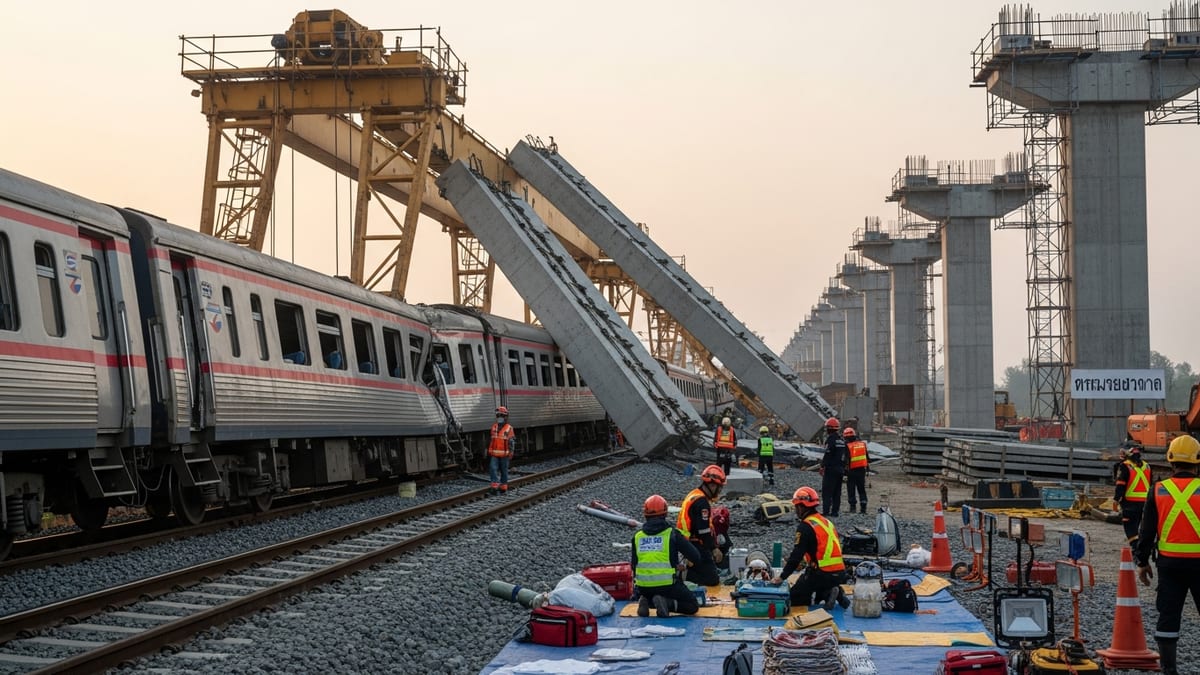
Evacuation zone tightened as assessments continue
Publicly available information indicates that the derailment occurred on Sunday evening, July 5, near the intersection of Whetstone Street and Auto Avenue in Bucyrus, a small city in Crawford County in northern Ohio. Several cars left the tracks at a grade crossing close to homes and local streets, triggering emergency alerts to nearby residents.
Initial guidance described a one-mile evacuation radius around the site as responders worked to identify the contents of the derailed cars and potential risks to air quality. Subsequent updates on Monday report that the evacuation area has been reduced to roughly a quarter to one third of a mile from the crash scene, reflecting ongoing air monitoring and inspection of the train consist.
Reports indicate that a tanker car believed to be carrying hydrochloric acid is the main focus of concern. While publicly available coverage notes there is no evidence of a large-scale release or widespread health impacts at this stage, the possibility of a leak and the associated risk of an explosion have kept a smaller evacuation and exclusion zone in place around the wreckage.
Local emergency management agencies have asked people to stay away from the affected stretch of Whetstone Street and surrounding blocks while rail and hazmat teams continue work. Road closures and detours remain in effect in the immediate vicinity of the crossing as equipment and heavy vehicles move in and out of the area.
Impact on residents and local services
The derailment has had an immediate effect on residents living within walking distance of the rail line. Those inside the evacuation zone were advised to leave their homes overnight and into Monday, with guidance to bring essential items but avoid lingering near the crash site. According to published coverage, there have been no reports of serious injuries linked to the derailment.
A temporary shelter has been opened at Bucyrus High School to accommodate evacuees and travelers who could not easily find alternative lodging. The shelter provides a place to rest, access to basic supplies, and updated information on when it may be safe to return home. Regional media reports note that some residents chose to stay with friends or relatives outside the affected area, reducing demand for cots but underscoring the disruption to everyday routines.
In addition to household evacuations, the incident has affected local businesses and public services along Whetstone Street and nearby corridors. Some businesses in the zone have remained closed while the evacuation order is in effect, and service providers have rerouted vehicles to avoid the crossing. For a community accustomed to the steady movement of freight trains, the sight of derailed cars and blocked roads has been a reminder of the risks that accompany heavy rail traffic.
Publicly available information shows that air quality and environmental monitoring are under way as crews continue to assess the condition of the suspected acid tanker and other damaged cars. Updates circulated through local news outlets advise residents outside the evacuation area that there is currently no indication of a broad threat to the wider community, while encouraging people to heed road closures and avoid unnecessary travel near the site.
Travel disruptions on a key north-central Ohio corridor
The derailment is affecting not only nearby homes but also travel patterns through Bucyrus, which sits along a web of highways and rail lines connecting northern and central Ohio. The blocked crossing on Whetstone Street has forced detours for local drivers, school traffic, and visitors passing through the city, with some routes experiencing delays as vehicles funnel onto alternate streets.
Freight rail traffic on the affected line has been temporarily halted while track damage is assessed and wrecked cars are cleared. For travelers and truck drivers accustomed to gauging their timing by the frequent passage of long freight consists, the standstill along this stretch of track has introduced new uncertainties into Monday’s movements. Rail operators are expected to reroute some trains or hold them outside the area until the corridor is declared safe.
From a wider travel perspective, the Bucyrus derailment adds to a series of rail incidents in North America that have highlighted the vulnerability of communities located close to busy freight corridors. While each event differs in scale and impact, delays and rerouting on key lines can ripple outward, influencing passenger rail timetables on distant routes and the flow of goods moving between Midwestern hubs.
Motorists in Bucyrus and neighboring towns are being encouraged to allow extra time for trips, pay attention to posted detours, and avoid using neighborhood streets as informal bypasses. For those traveling longer distances across northern Ohio, publicly available advisories suggest checking local traffic and news reports before choosing routes that pass near the city.
Safety concerns over hazardous materials by rail
The focus on a possible hydrochloric acid leak in Bucyrus has renewed attention on the movement of hazardous materials by rail through residential communities. Hydrochloric acid, commonly used in a range of industrial processes, can irritate the respiratory system and eyes if released at high concentrations and can also pose a risk of corrosion to nearby structures and vehicles.
Published coverage of the Bucyrus incident notes that, as of Monday, there have been no widespread reports of serious health effects. Even so, the presence of a damaged tanker suspected of carrying corrosive material has prompted precautionary measures, including evacuation for those closest to the crash and a request that others remain indoors if they notice unusual odors or visible vapor.
The Bucyrus derailment arrives amid ongoing national discussions over rail safety, track maintenance, and the routing of trains that carry chemicals and other hazardous cargo. While the circumstances in each derailment differ, events involving tank cars often lead to questions from residents and travelers about how cargo is labeled, how emergency agencies receive information, and what steps are taken to minimize risks when trains pass through dense neighborhoods.
In the coming days, rail inspectors and incident review teams are expected to focus on the condition of the track, train equipment, and operating practices that preceded the Bucyrus crash. Their findings will likely influence both local confidence in rail operations and broader debates over how to balance efficient freight movement with safety for communities along the line.
What travelers should know in the days ahead
For travelers planning to pass through Bucyrus or nearby parts of northern Ohio, the derailment is a reminder to stay alert to local advisories. While current reports indicate that the evacuation area has narrowed and that there is no evidence of a large-scale release, the presence of cleanup crews, heavy machinery, and road closures can create unexpected delays.
Drivers using regional highways and secondary roads near Bucyrus may encounter detour signs, temporary congestion, and reduced speed limits while rail cars are removed and track structures inspected. Publicly available information suggests that these traffic impacts are most pronounced close to Whetstone Street and the affected rail crossing, but travelers should remain prepared for short-notice changes as operations progress.
For those traveling by rail, schedule adjustments may occur if freight movements are rerouted or held while track repairs take place. Even where passenger services do not directly pass through Bucyrus, disruptions on interconnected lines can influence timing in other parts of the state. Checking itinerary updates and local news summaries before departure can help travelers anticipate any cascading effects.
As cleanup and investigation efforts continue, Bucyrus is expected to remain under closer-than-usual scrutiny from transportation planners, safety advocates, and travelers who rely on the region’s road and rail network. How quickly the line reopens, and how clearly information about hazards and monitoring results is shared, will help shape perceptions of safety for residents and visitors confronting the sight of derailed cars on the edge of town.