


More news on this day
Publicly available flight-tracking snapshots from September 19, 2026 point to a sharp, region-wide burst of disruption across Gulf aviation, with a combined 1,585 flight delays and 40 cancellations recorded across major hubs including Riyadh, Jeddah, Dubai, Abu Dhabi, Doha, and Kuwait City.
Get the latest news straight to your inbox!
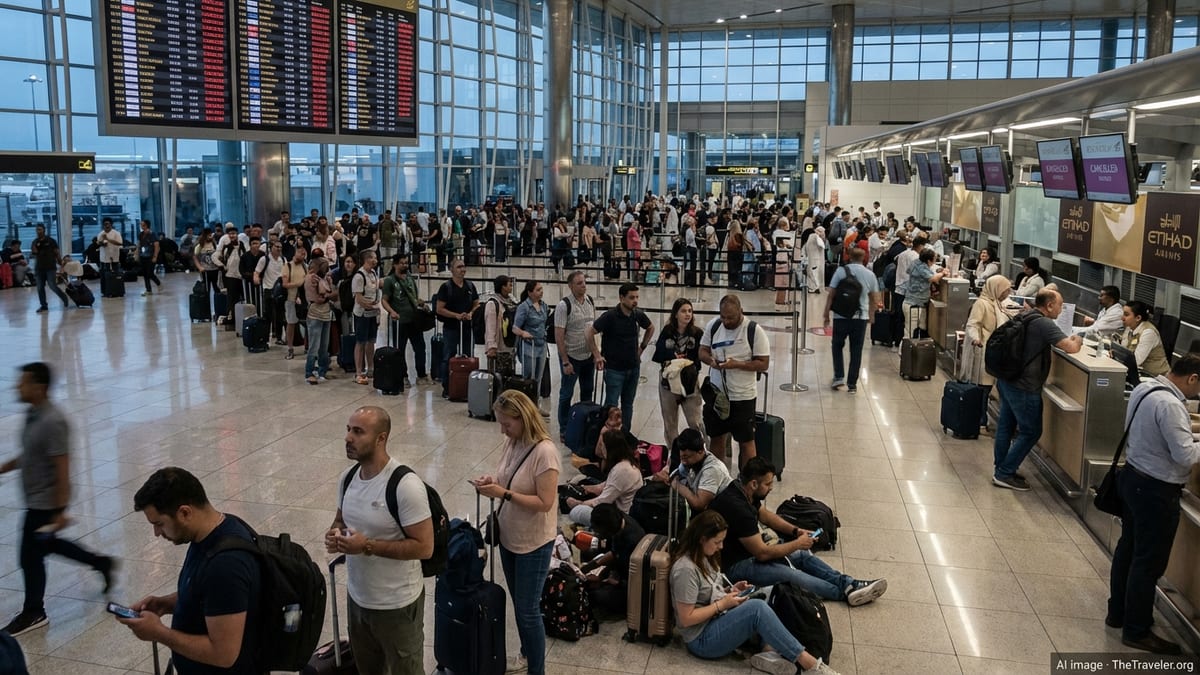
Where the disruption clustered and why it matters
The September 19 spike stands out because it concentrated delays at airports designed for fast connections and high-frequency “bank” scheduling, where aircraft arrive and depart in waves to feed onward flights. When a bank is disrupted, even modest delays can cascade into missed connections, re-assignments of aircraft, and crews reaching duty-time limits.
Published coverage tied the September 19 pattern to a mix of airspace security adjustments and knock-on operational constraints. In practical terms, longer routings and traffic management measures can produce late arrivals, which then translate into late departures as aircraft and crews are out of position.
For travelers, the biggest impact is often not the headline delay itself but the secondary effects: tight connection windows turning into misconnects, limited same-day alternatives on long-haul routes, and rebooking queues that grow quickly when multiple carriers are disrupted at once.
Airport-by-airport: the busiest hubs absorbed most of the delays
Riyadh’s King Khalid International Airport and Jeddah’s King Abdulaziz International Airport showed some of the heaviest disruption in the published September 19 tracking snapshot. The same snapshot also indicated significant delays at Dubai International Airport, with additional spillover across Abu Dhabi, Doha, and other Gulf and nearby airports that frequently interchange aircraft and passengers with the region’s megahubs.
In the same dataset-style reporting, Riyadh was listed with hundreds of delayed flights and several cancellations, while Jeddah also posted hundreds of delays. Dubai’s delayed tally was lower than Riyadh’s and Jeddah’s in that snapshot, but still large enough to disrupt international connections because Dubai’s schedule relies on dense banks of arrivals feeding long-haul departures.
Several secondary airports were also affected, a key detail because these are often the spokes that feed hub departures. When airlines protect long-haul operations, they may reduce or cancel some short-haul segments, which can strand passengers away from the hubs where rebooking options are typically better.
Airlines and connections: why delays propagate beyond the Gulf
Regionally, the disruption pattern was not limited to one carrier type. Published breakdowns indicated both full-service and low-cost airlines registered elevated delay rates on September 19, reflecting how tightly scheduled networks can become vulnerable when airspace constraints or knock-on delays disrupt aircraft rotations.
Because Gulf hubs connect traffic between Asia, Europe, and Africa, disruptions can surface far outside the region. If an aircraft arrives late into a Gulf hub, its next leg may depart late to a different region, and that delay can continue across multiple sectors until the rotation is reset.
The passenger experience also depends on itinerary structure. Single-ticket itineraries typically offer more protection through airline rebooking, while separate tickets can turn a missed connection into a new purchase. Travelers with tight minimum connection times are particularly exposed during disruption spikes, when even a 30 to 60-minute delay can eliminate the practical chance of making an onward flight.
Passenger rights and practical next steps for affected travelers
Across the Gulf, passenger rights frameworks vary by jurisdiction and by the nature of the disruption. In Saudi Arabia, publicly available passenger rights materials describe airline obligations that can include care such as accommodation and transport in certain extended-delay scenarios, alongside structured complaint and escalation channels. Travelers transiting Saudi airports can benefit from saving written confirmations of delays and keeping receipts if meals, hotels, or ground transport are not provided at the time of disruption.
In Dubai, publicly available government communications in 2026 described the launch of an Aviation Consumer Welfare Directive and a related service intended to strengthen passenger rights and provide a structured complaint mechanism. While it does not eliminate disruption, it signals an emphasis on formal processes for complaints and resolution when travelers believe carrier or agent obligations were not met.
Operationally, the fastest path during disruption is often digital. Airlines increasingly prioritize app-based rebooking and notifications, and seat availability can change minute to minute as disrupted passengers are reaccommodated. Travelers with onward connections should also monitor gate and terminal changes closely, as airport operations teams may swap stands, consolidate flights, or adjust departure sequencing as backlogs clear.