


More news on this day
Airlines across the United Kingdom, Europe, North America and Australia are stripping thousands of flights from peak summer schedules as a worsening jet fuel crunch, tied to conflict in the Middle East and disruption in the Strait of Hormuz, ripples through the global aviation system.
Get the latest news straight to your inbox!
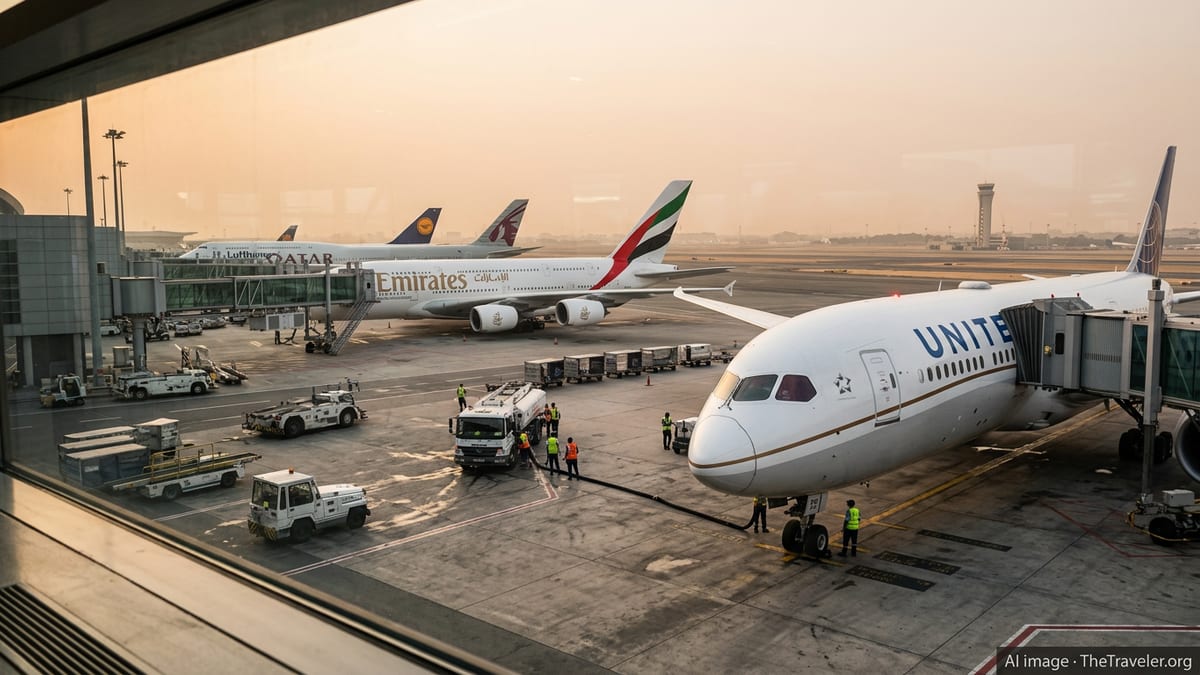
Middle East Turmoil Turns Into Global Jet Fuel Squeeze
The escalation of conflict involving Iran and the effective closure of the Strait of Hormuz since late February 2026 have sharply reduced the flow of crude and refined products that underpin global jet fuel supplies. Publicly available energy data indicates that the strait typically carries around one fifth of the world’s oil trade, and recent analysis suggests that up to 20 percent of global jet fuel exports have been disrupted as tankers are forced to reroute or halt movements altogether.
Industry and energy market reports describe the current shock as the most severe jet fuel supply crunch in modern commercial aviation, with exports from key Gulf producers plunging and refinery output in Europe and Asia struggling to compensate. The International Air Transport Association has highlighted structural vulnerabilities in aviation’s dependence on Middle Eastern crude, noting that the Iran war and associated pipeline and terminal damage have tightened supplies just as summer demand rises.
Benchmark jet fuel prices have more than doubled compared with pre-war levels, according to recent market assessments, with some indices showing year on year increases above 100 percent. This surge is feeding directly into airline cost bases, where fuel often accounts for a third or more of operating expenses, and is now forcing carriers to make rapid schedule cuts and capacity reductions in an attempt to preserve cash and secure sufficient fuel for core routes.
Aviation regulators and travel analytics firms report that from March through June, more than 150,000 international flights have already been removed from global timetables compared with pre-crisis plans. New cancellations and consolidations are being announced almost daily, underlining how quickly the fuel shock has shifted from a pricing issue to a physical availability problem at major hubs.
United Kingdom and Europe Move to Protect Core Networks
The United Kingdom has emerged as one of the focal points of the disruption, with British Airways and other carriers trimming schedules out of London Heathrow, Gatwick and regional airports. Data compiled by independent aviation trackers shows that UK operators have quietly pulled frequencies on short haul routes to continental Europe and selectively cut long haul services to fuel-intensive destinations, including parts of Asia and southern Africa.
Holding group IAG, which owns British Airways, recently warned of a multibillion-pound increase in its annual fuel bill and outlined measures to manage costs and capacity. Public financial disclosures indicate that the group is using extensive fuel hedging but still faces significantly higher outlays, prompting what it describes as a targeted adjustment of capacity across its airlines. For British Airways, this has translated into consolidating some overlapping European flights, reducing off-peak frequencies on transatlantic routes and prioritising slots for destinations with stronger premium demand.
Across the Channel, German flag carrier Lufthansa has announced one of the most aggressive responses so far. Company statements and subsequent coverage indicate that the group will remove around 20,000 short haul flights from its schedule between May and October in order to save tens of thousands of tonnes of jet fuel. Many of these cuts affect feeder services into Frankfurt and Munich, which are critical hubs for connections to Asia, Africa and the Middle East.
French and other European operators are also paring back. Reports in European business media describe how airlines in France, the Netherlands and the Nordic countries have reduced shoulder season flying, trimmed capacity on leisure-heavy Mediterranean routes and delayed the launch of some new services. Analysts note that while Europe’s largest airlines still expect robust summer demand, they now see a clear need to match schedules more tightly to constrained fuel availability.
North American and Australian Carriers Join in Capacity Cuts
In North America, major airlines have generally avoided the scale of reductions seen in Europe but are increasingly joining the wave of cutbacks as the fuel shock deepens. Publicly available information shows United Airlines has already reduced planned capacity by around 5 percent, focusing on trimming off peak flights, scaling back operations at selected hubs and maintaining earlier suspensions of routes to Tel Aviv and Dubai that are directly affected by the regional turmoil.
Reports on the 2026 Iran war’s economic impact indicate that US carriers including Delta and American are facing hundreds of millions of dollars in incremental fuel costs in just a single quarter. While these airlines have so far relied heavily on fuel hedging, fare increases and surcharges, they are now starting to consolidate flights on transatlantic and transpacific routes where possible, echoing strategies seen in Europe. Industry analysts suggest that further reductions are likely if the conflict and shipping disruption persist into late summer.
Canada’s aviation market is also feeling the strain. Coverage of schedule updates indicates that Air Canada has trimmed frequencies on select European and Asia Pacific routes, particularly from Toronto and Vancouver, to balance fuel needs with demand. Regional services using smaller jets have been a particular focus for consolidation, as carriers seek to redeploy fuel and aircraft toward higher yielding long haul corridors.
In Australia, Qantas and other operators are reshaping networks to cope with the combined effect of elevated fuel prices and longer routings that avoid Iranian and adjacent airspace. Australian media reports highlight winter timetable adjustments that include reduced frequencies to parts of Southeast Asia and the Middle East, as well as the consolidation of some domestic services on fuel intensive sectors. Analysts say Australia’s geographic isolation and reliance on long haul flying make its carriers especially sensitive to sustained fuel price spikes.
Low Cost and Regional Airlines Face Acute Pressure
The jet fuel crisis is proving particularly punishing for low cost and regional airlines, which often operate on slender margins and have less sophisticated fuel hedging programmes. Publicly accessible financial and regulatory filings show that rising fuel bills can quickly erase profits for budget carriers that compete primarily on price and depend on high aircraft utilisation.
In North America, discount operator Spirit Airlines has been singled out in several economic analyses of the conflict’s fallout after ceasing operations in early May. Commentators note that surging fuel costs exacerbated existing financial challenges at the airline, limiting its ability to sustain low fares and maintain schedules in the face of sharply higher operating expenses.
Europe’s dense field of low cost carriers is also being reshaped. Some smaller players have reduced or suspended operations at secondary airports where fuel supply has become less reliable or more expensive, while others have retreated from longer, thinner routes that require greater fuel reserves. In the United Kingdom, the closure of niche operator Ascend Airways, which cited the Middle East tensions and jet fuel price shock among the reasons for returning its operating certificate, has underscored the vulnerability of smaller airlines to sudden cost spikes.
Regional airlines in Asia and the Pacific, many of which rely heavily on fuel imported from the Middle East, are meanwhile cutting frequencies and postponing fleet expansion plans. Analysts tracking capacity data across the region describe a pattern of reductions on marginal domestic and short haul international routes, with carriers prioritising trunk services that feed into major hubs where fuel security is relatively stronger.
What Travelers Can Expect in Peak Season 2026
With British Airways, Air Canada, Lufthansa, Qantas and several other major airlines now adjusting schedules, travelers are being advised by consumer groups and travel industry commentators to treat summer 2026 plans as subject to change. Data from schedule providers such as Cirium indicates that tens of thousands of flights have already been removed from global timetables, with further rolling adjustments likely as airlines reassess fuel allocations week by week.
Analysts expect the most noticeable impacts to fall on connecting itineraries through major hubs including London, Frankfurt, Munich, Toronto and Sydney, where short haul feeder flights are being consolidated and off peak services trimmed. Point to point routes with strong leisure demand are also vulnerable, particularly where alternative carriers cannot easily step in due to the same fuel constraints.
Fares are widely projected to remain elevated throughout the summer as airlines attempt to pass on a portion of the higher fuel costs while operating with reduced capacity. Reports from market monitoring firms suggest that some long haul economy tickets are now pricing 20 to 40 percent above comparable 2025 levels on heavily affected corridors, especially between Europe and Asia.
Aviation economists note that the trajectory of the crisis will depend heavily on developments in the Strait of Hormuz and broader Middle East security conditions. If disruption to shipping lanes and energy infrastructure eases, fuel markets could stabilise later in the year. For now, however, publicly available assessments from industry bodies and energy agencies converge on a clear message: the 2026 jet fuel shock is reshaping global air travel, and airlines in the United Kingdom, Canada, Germany, the United States, France, Turkey, Australia and beyond are being forced into urgent cutbacks to keep their fleets flying.