


More news on this day
Escalating conflict in the Gulf region is rippling across Kerala’s busiest international corridors, with widespread cancellations and long delays on Kerala–Gulf routes leaving students, migrant workers and families stranded at airports or racing to rearrange vital journeys.
Get the latest news straight to your inbox!
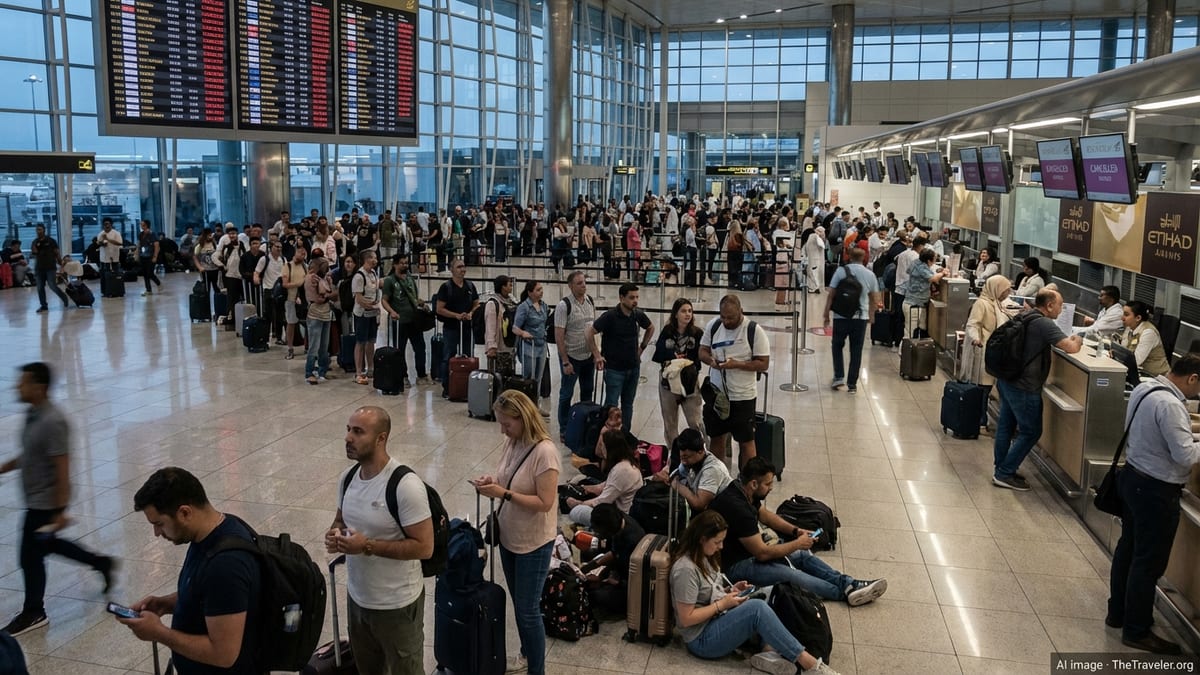
Regional tensions trigger new wave of disruption
Continuing instability in West Asia has prompted airlines to trim or reshuffle schedules across key Gulf hubs, creating a knock-on effect for travellers who depend on these airports for direct and connecting services. Recent coverage from Middle East and Indian outlets describes extended delays and cancellations at airports in the United Arab Emirates and neighbouring states, with thousands of passengers facing missed connections and unplanned stopovers as airlines respond to security concerns and airspace advisories.
According to published coverage, the European Union Aviation Safety Agency has extended its conflict-zone information bulletin for Gulf airspace through late September, citing ongoing risks associated with US–Iran tensions and recent incidents near the Strait of Hormuz. As carriers adjust routings and timings, even flights that remain on the schedule are often departing late, adding uncertainty to already tight connection windows for travellers heading onwards to Europe, Central Asia and other destinations.
Reports indicate that Dubai and Abu Dhabi, two of the main gateways for Kerala’s large expatriate community, are experiencing continued disruption as airlines issue rolling travel alerts and adjust capacity. This volatility has increased pressure on already busy Kerala airports during the post-summer and festive travel period, when demand from Gulf-based residents traditionally spikes.
Kerala passengers hit by cancellations and missed connections
Kerala’s heavy reliance on Gulf links means even modest schedule changes have an outsized impact on local travellers. Regional media in the state report that passengers using Gulf hubs for onward travel to Europe and Central Asia have been among the hardest hit, with missed connections turning routine journeys into multi-day odysseys.
One widely reported incident involved a group of 41 students from districts including Malappuram, Kozhikode, Kannur and Palakkad who were travelling from Karipur airport near Kozhikode to begin classes in Kazakhstan. Local coverage states that a lengthy delay to their initial Air Arabia service meant they missed a critical connection to Almaty, forcing last-minute rebooking and leaving the group stranded at the terminal for hours as they waited for revised travel plans.
Malayalam-language reports further describe how schedule changes on Gulf services are disrupting trips for Onam and other family visits, with Kerala-origin passengers transiting through the UAE and other Gulf countries reporting rescheduled departures, overnight waits and sharply higher fares on remaining alternatives. The cumulative effect has been a sense of uncertainty around journeys that many residents undertake multiple times each year.
SpiceJet’s Kochi–Gulf routes under scrutiny
While the regional conflict and associated airspace advisories form the backdrop, some Kerala–Gulf routes are also experiencing airline-specific problems. Domestic and local media coverage from late August and early September highlights repeated cancellations and long delays on SpiceJet services from Kochi to Fujairah and Dubai, leaving Gulf-bound passengers stranded at Cochin International Airport.
Reports from Kochi describe passengers arriving for scheduled departures to the United Arab Emirates only to learn at the airport that their flights had been delayed by many hours or cancelled outright. Coverage indicates that some travellers remained in the city for several days while they attempted to secure alternative seats or clarifications on rebooked itineraries, with multiple departures reportedly suffering extensive delays, including instances of disruptions lasting close to half a day.
Specialist aviation tracking and travel-industry analyses referenced in recent reporting point to a pattern of irregular operations on Kochi–Fujairah and Kochi–Dubai rotations over the second half of August. These disruptions have raised concerns on one of Kerala’s most important expatriate corridors, used heavily by workers and professionals commuting between the state and Gulf employment hubs.
Airspace warnings and reduced Gulf connectivity
The latest turbulence comes after months of evolving airspace restrictions across parts of the Gulf and West Asia. Publicly available aviation advisories show that conflict-zone warnings covering key corridors near Iran and the Strait of Hormuz have been periodically extended as security conditions fluctuate. These notices encourage carriers to avoid certain altitudes or routes, or to exercise heightened caution when operating in specified areas.
Media reports from Kerala note that earlier phases of the crisis saw temporary suspensions and reductions on some India–Gulf routes serving the state, including adjustments to services linking Kozhikode and other airports with destinations such as Kuwait, Bahrain and Doha. Although many of these links have since resumed or stabilised, the latest flare-up has renewed concerns that airlines may again trim frequencies or retime flights at short notice.
Airport-focused coverage in the region also highlights the impact on seasonal travel. Kerala-origin passengers flying home for festivals such as Onam or returning to the Gulf for work after holidays are finding fewer non-stop options on certain days, as well as longer routings and irregular timings. For many travellers, particularly those on tight annual leave or visa schedules, even a single cancellation can mean lost workdays or missed reporting dates.
What stranded travellers can do now
With disruption expected to remain a risk while Gulf tensions continue, travel and passenger-rights platforms recommend that Kerala–Gulf passengers build in extra time and stay closely informed about changes. Public guidance from airlines and airports emphasises checking flight status before leaving for the airport, ensuring contact details in bookings are up to date and allowing a wider buffer for connections through busy hubs such as Dubai, Abu Dhabi and Sharjah.
Consumer-focused aviation resources also outline steps passengers can take when journeys are severely affected. These include retaining boarding passes, booking confirmations and screenshots of delay or cancellation notifications, which can be useful when seeking refunds, rebooking or compensation under applicable regulations and airline policies. Some reports advise that passengers familiarise themselves with India’s published norms on passenger rights, which detail carrier responsibilities around meals, accommodation and re-routing when flights are cancelled or heavily delayed for reasons within an airline’s control.
For now, Kerala’s large Gulf-linked community faces a period of unpredictable travel conditions as airlines, regulators and airports navigate the security situation in West Asia. With student cohorts, migrant workers and families all relying on the same limited set of corridors, any renewed escalation in the region is likely to be felt quickly at departure boards across Kerala’s international terminals.
Onmanorama: Gulf conflict disrupts air travel, Kerala passengers hit
Manorama Online: West Asia tensions and UAE flight delays
Gulf News: UAE flight updates and extended Gulf airspace warning
The New Indian Express: Kochi–Fujairah and Kochi–Dubai passengers stranded