


More news on this day
Singapore is moving to the forefront of Asia-Pacific aviation training, as new technology-rich pilot programs, expanded simulator capacity and regional partnerships position the city-state as a testbed for the cockpit of the future.
Get the latest news straight to your inbox!
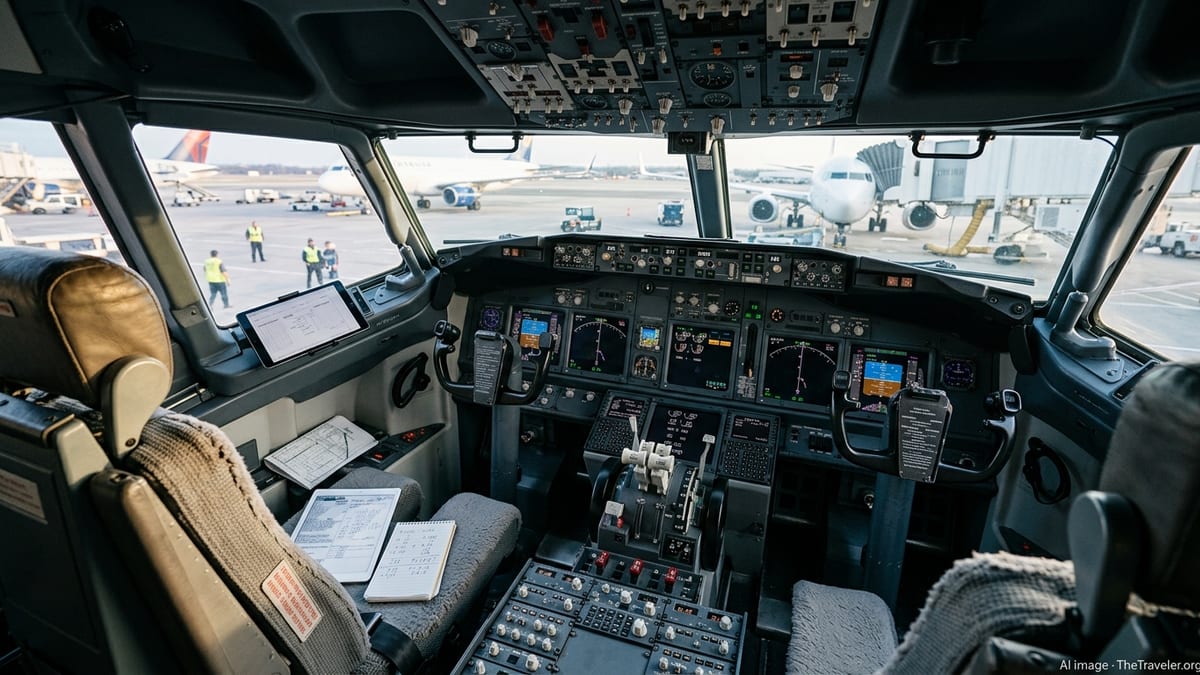
Technology-driven training hubs gain regional traction
Publicly available information shows that Singapore is consolidating its role as a specialist hub for advanced aviation training facilities serving airlines across Asia-Pacific. The Airbus Asia Training Centre in Singapore, a joint venture between Airbus and Singapore Airlines, marked its tenth year of operations in 2024 and has continued to add airline customers from the region while expanding simulator capability, including new procedure trainers for Airbus A330 aircraft variants.
Industry reports indicate that the centre’s mix of full-flight simulators and fixed-base training devices is designed to support both initial pilot qualification and recurrent training, a critical need as airlines ramp up post-pandemic growth plans. The expansion of simulator capacity in Singapore allows carriers from developing markets to access high-specification training infrastructure without building their own facilities, reinforcing the city-state’s role as a shared resource for the broader region.
Beyond airline-owned assets, the Civil Aviation Authority of Singapore has catalogued a growing ecosystem of approved flight simulation training devices, underscoring the shift from traditional cockpit time to ground-based, technology-intensive instruction. These devices range from full-flight simulators certified for licence testing to lower-level trainers for procedures and emergency scenarios, offering airlines greater flexibility and efficiency in pilot development.
Analysts note that such facilities are increasingly important as Asia-Pacific airlines introduce new-generation aircraft and avionics suites. Technology-rich simulators in Singapore can be updated more quickly than real-world fleets, allowing pilots to train on the latest software and procedures before they are deployed in daily operations.
Singapore Aviation Academy anchors regional skills strategy
According to published coverage, the Singapore Aviation Academy, the training arm of the Civil Aviation Authority of Singapore, has positioned itself as a regional platform for building aviation human capital. The academy offers internationally recognised courses spanning air traffic management, airport operations, aviation safety and management, and has been expanding partnerships to reach more professionals from across Asia-Pacific.
In July 2025, Singapore hosted the inaugural International Civil Aviation Organization Asia-Pacific Regional Training Symposium, drawing hundreds of aviation leaders, educators and young professionals to discuss how to future-proof training systems. Reports on the event highlight a strong focus on integrating new technologies, human factors and sustainability topics into training curricula, reinforcing the message that technical competence alone is no longer sufficient in modern aviation.
Singapore has also introduced the Asia Pacific Training Awards scheme, funded by the government to provide around 120 training awards between 2025 and 2028 for courses conducted by the Singapore Aviation Academy. Public documents describe the initiative as a way to help regional regulators, airport operators and airlines access specialised training in areas such as safety management, air navigation services and digital transformation.
These initiatives support broader regional efforts to keep pace with projected traffic and capacity growth. Briefings by global industry bodies have warned that airport and airspace infrastructure in Asia-Pacific risk congestion as demand recovers, adding to the urgency of equipping pilots and other aviation professionals with the skills to safely manage more complex operations.
Simulation, AI and data analytics reshape pilot learning
New training technology showcased at events in Singapore underscores how digital tools are changing the way pilots are prepared for line operations. The Asia Pacific Airline Training Symposium, hosted regularly in Singapore, has become a focal point for discussions on e-learning platforms, mobile-first courseware and competency-based training models. Training providers use the event to highlight how cloud-based systems and tablet-delivered content can support pilots before and after simulator sessions, shortening learning cycles and standardising knowledge across fleets.
Conference agendas in recent years have dedicated entire workshops to the use of artificial intelligence in aviation training, exploring applications from adaptive learning paths to automated performance analysis. According to event summaries, airline representatives and regulators are paying close attention to how AI tools can be integrated into existing safety frameworks, with a particular focus on maintaining transparency and explainability in assessment.
Research originating in Singapore is also beginning to influence how technology is deployed in air traffic and pilot training environments. Academic work on next-generation simulation platforms describes locally adapted voice interfaces and autonomous simulated pilots that can interact with trainees in realistic, high-workload scenarios. Although this research is primarily aimed at air traffic controllers, the same underlying technologies may eventually feed into fully integrated flight-deck training systems.
The proliferation of advanced simulators and analytics tools supports a wider shift toward evidence-based training, in which real operational data informs the design of scenarios and competency checks. By centralising many of these capabilities in Singapore, airlines across Asia-Pacific can tap into new methods without having to develop bespoke systems of their own.
Partnerships extend Singapore’s influence across Asia-Pacific
Regional maintenance, repair and overhaul events held in Singapore have become an important platform for training partnerships. Coverage of recent MRO Asia-Pacific gatherings at Singapore Expo describes a growing number of agreements between Singapore-based training specialists and overseas institutions to deliver courses on composite repair, aircraft maintenance and safety management.
One example cited in industry reports is the collaboration between training providers in Singapore and partners in India and the Philippines to establish new programmes for technicians and flight operations staff. These agreements typically combine classroom instruction, simulator time and on-the-job training, reflecting a preference for blended learning models that can scale beyond Singapore’s borders.
Local institutions are also expanding their role. Temasek Aviation Academy, part of Temasek Polytechnic, operates one of the largest aviation training facilities in Singapore, complete with full-flight simulators, air traffic control labs and an operational aircraft hangar. Public information indicates that the academy works closely with industry to develop competency-based courses for pilots, licensed aircraft engineers and unmanned aircraft specialists, adding another layer to Singapore’s training ecosystem.
Such collaborations help distribute the benefits of Singapore’s training infrastructure across the wider region, supporting airlines and regulators in markets where in-house capabilities are still developing. They also reinforce the city-state’s position as a neutral convening point for joint projects that span borders and regulatory jurisdictions.
Meeting pilot demand as Asia-Pacific skies grow busier
Forecasts from international aviation organisations point to sustained traffic growth in Asia-Pacific through the next decade, with regional passenger volumes expected to outpace many mature markets. Presentations to airline investors and media have highlighted how capacity constraints at key airports may re-emerge as a bottleneck even as new runways and terminals come online.
In this environment, pilot availability and proficiency are critical factors. While global manufacturers project that tens of thousands of new pilots will be required across Asia-Pacific over the long term, training capacity, regulatory oversight and technology adoption vary widely between markets. Singapore’s concentration of simulators, training academies and technology partners gives airlines an option to centralise parts of their training pipelines in a single, high-capability location.
Observers note that this role is not limited to commercial jet operations. Training centres in Singapore also support business aviation, helicopter and emerging unmanned aircraft operations, reflecting a broader push to prepare crews for increasingly diverse airspace users. As digital tools mature, the same platforms may be adapted to support advanced air mobility concepts, further extending Singapore’s influence over how pilots in the region are trained.
For now, the combination of investment in simulators, government-backed training awards, international events and industry partnerships has given Singapore a clear edge as Asia-Pacific carriers search for ways to scale up and modernise pilot training. How quickly neighbouring markets build competing capabilities will help determine whether the city-state’s current lead becomes a lasting structural advantage in the region’s aviation landscape.
Civil Aviation Authority of Singapore – Training and Singapore Aviation Academy
Singapore Airlines information on Airbus Asia Training Centre
Halldale coverage of APATS Singapore and training technology trends