


More news on this day
More than 16,600 passengers flying from Dhaka to Saudi Arabia have been left in limbo after 107 flights to Riyadh and Dammam were cancelled in less than a week, as security restrictions at Saudi airports ripple through one of Bangladesh’s busiest expatriate and pilgrimage corridors.
Get the latest news straight to your inbox!
Wave of cancellations hits Riyadh and Dammam routes
Publicly available data from the Civil Aviation Authority of Bangladesh (CAAB) show that between Saturday, October 10, and Friday, October 16, a total of 107 flights on Dhaka–Saudi routes were cancelled or disrupted. The affected services include both non stop flights from Dhaka to Riyadh and Dammam and one stop connections routed through other hubs in the Gulf and South Asia.
According to figures cited across Dhaka based outlets, 44 of the affected services were direct flights. These included 17 flights operated by Biman Bangladesh Airlines, 10 by US Bangla Airlines, 10 by Saudia and 7 by Riyadh Air. The remaining 63 were transit flights involving carriers such as IndiGo, Emirates, Qatar Airways, SalamAir, flydubai, Air India and EgyptAir, which use Saudi airports as destinations or key waypoints.
CAAB data indicate that 16,620 passengers have been caught up in the disruption so far. Many are reported to be Bangladeshi migrant workers travelling to or from long term jobs in the kingdom, along with business travelers, visiting families and religious travelers relying on Saudi Arabia’s extensive air links for Umrah and other trips.
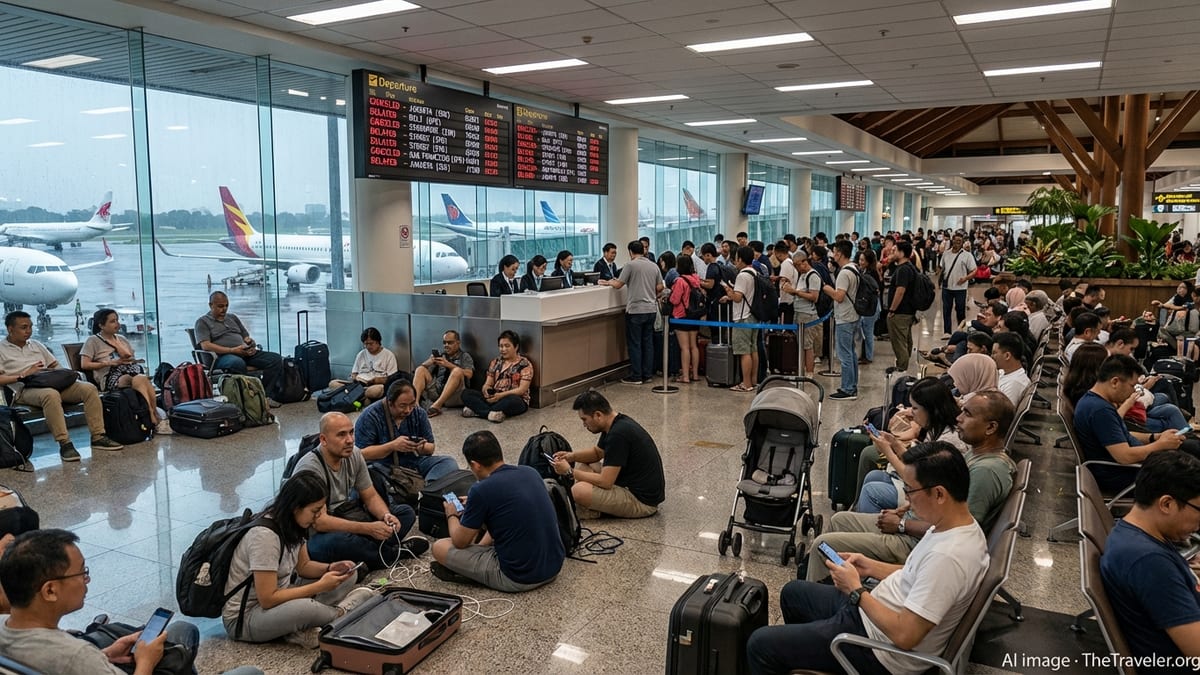
Reports from local media describe growing crowds at Dhaka’s Hazrat Shahjalal International Airport as Saudi bound passengers wait for updates on rescheduled flights, refunds or alternative routings. Airline desks and travel agents have been facing high demand for information as passengers attempt to salvage work start dates, visa deadlines and onward connections.
Security restrictions at Saudi airports after Houthi attacks
The wave of cancellations from Dhaka follows a series of missile and drone attacks in early October on airports in Saudi Arabia that prompted heightened security measures and temporary closures. Publicly available international coverage links the restrictions to strikes attributed to Houthi forces based in Yemen, which targeted facilities including Riyadh’s King Khalid International Airport.
In the days after the attacks, Saudi authorities restricted movements at several airports and issued what Dhaka based reporting describes as a no fly signal for certain routes. Operational limits and temporary closures in Riyadh and Dammam led airlines serving Bangladesh to suspend or curtail their Saudi schedules, triggering a cascade of knock on effects for connecting flights across the region.
Aviation reporting indicates that the restrictions have not affected all Saudi gateways equally. While Riyadh and Dammam have seen extended disruption, flights to other Saudi airports, including Jeddah and Madinah, have in some cases continued to operate, with airlines adjusting capacity and routing as security assessments evolve.
Security alerts from foreign missions in Saudi Arabia, referenced in regional media, have warned travelers of possible airspace closures, last minute flight cancellations and significant delays. Passengers heading to or transiting through Saudi airports have been advised to check their flight status directly with airlines before travelling to airports.
Which airlines and passengers are most affected
On the Dhaka–Saudi corridor, four airlines operate the bulk of direct services. CAAB figures reported in Bangladeshi media attribute 17 cancelled direct flights to Biman Bangladesh Airlines, 10 to US Bangla Airlines, 10 to Saudia and 7 to Riyadh Air. The cancellations span multiple days of scheduled Dhaka–Riyadh and Dhaka–Dammam rotations.
Among transit services, IndiGo has reported 22 affected flights, with Emirates accounting for 14, Qatar Airways 9, SalamAir 7, flydubai 6, Air India 4 and EgyptAir 1, based on tallies published by local outlets drawing on CAAB’s ASM Flight Management data. These flights typically connect Dhaka passengers to Saudi cities via hubs such as Dubai, Doha, Muscat and Indian metros, and their disruption has created additional layers of complexity for itineraries involving multiple tickets.
For many of the 16,620 affected travelers, the disruption is more than an inconvenience. Bangladesh based reporting notes that a significant share of passengers are migrant workers who had secured visas and employment contracts tied to specific joining dates. Delayed arrivals can put jobs and residency permissions at risk, while those returning home may find themselves stranded with expiring visas or work permits.
Travel industry coverage also highlights concerns for time sensitive religious and business trips, as well as the financial strain of additional accommodation, rebooking fees and lost earnings. While some airlines are offering re accommodation on later flights when operationally feasible, publicly available information shows that capacity constraints and ongoing uncertainty are limiting how quickly backlogs can be cleared.
How airlines are responding and what travelers can do now
Bangladeshi aviation outlets report that Biman Bangladesh Airlines has extended the suspension of its Dhaka–Riyadh and Dhaka–Dammam flights until at least Sunday, October 18, citing safety and operational considerations linked to the situation at Saudi airports. To partially offset the lost capacity, Biman has added extra services on the Dhaka–Jeddah route and, in some cases, deployed larger aircraft such as Boeing 777s instead of Boeing 787s on select Saudi bound flights in order to increase available seats.
Other carriers serving the Saudi market from Bangladesh and neighboring countries have announced rolling suspensions or schedule reductions on routes to Riyadh, Dammam and, in some cases, Jeddah, while maintaining limited operations where local conditions and regulatory approvals permit. Public timetables and media updates suggest that decisions on restoring services are being reviewed day by day as security assessments change.
For travelers currently stranded in Dhaka or holding near term bookings, published travel advice emphasizes the importance of remaining in contact with airlines and, where applicable, travel agencies. Passengers are being urged to confirm whether their tickets qualify for free date changes, rerouting via alternative Saudi airports such as Jeddah or Madinah, or refunds when flights are formally cancelled rather than simply delayed.
Given the fluid nature of the situation, aviation analysts quoted in regional coverage note that even flights listed as operating in reservation systems may be subject to last minute changes. Passengers are therefore being advised to check flight status repeatedly in the 24 hours before departure and to avoid travelling to the airport until a firm go ahead is visible on airline or airport information channels.
Broader implications for Bangladesh’s migrant and religious travel
The Dhaka–Saudi air bridge is one of Bangladesh’s most important outbound corridors, underpinning large scale labor migration and religious travel. Prior to the latest disruption, Biman Bangladesh Airlines, US Bangla Airlines and Saudia all marketed regular services linking Dhaka with major Saudi cities, complemented by extensive one stop options via Gulf carriers and regional low cost airlines.
Analysts and sector specialists writing in Bangladeshi aviation publications have long noted that any sustained interruption on this corridor can have outsized economic and social impacts. Remittances from Bangladeshi workers in Saudi Arabia represent a significant source of foreign currency earnings, while delays in worker deployment can create bottlenecks in recruitment pipelines and strain relationships with employers in the kingdom.
Religious travel is also being affected. Although much of the formal Hajj season has passed, Umrah trips continue year round, and many Bangladeshis schedule pilgrimages and family visits in the cooler months. Travel agents interviewed in local coverage describe clients postponing or reshaping plans around Jeddah and Madinah flights, or opting to wait for clearer signals on the stability of Saudi airspace before committing to new bookings.
For now, publicly available information from CAAB and airline schedules indicates that the priority is managing the backlog of the 16,620 passengers already affected by the cancellation of 107 Dhaka–Saudi flights. How quickly those travelers can be accommodated on replacement services will depend on the pace at which Saudi airports relax current restrictions and on airlines’ ability to restore or reroute capacity without compromising safety and regulatory requirements.