


More news on this day
Volcanic ash from Mount Sinabung in North Sumatra has prompted the cancellation of 15 flights on the busy Soekarno-Hatta–Kualanamu route and delays to several others, causing widespread disruption for travelers between Jakarta and Medan.
Get the latest news straight to your inbox!
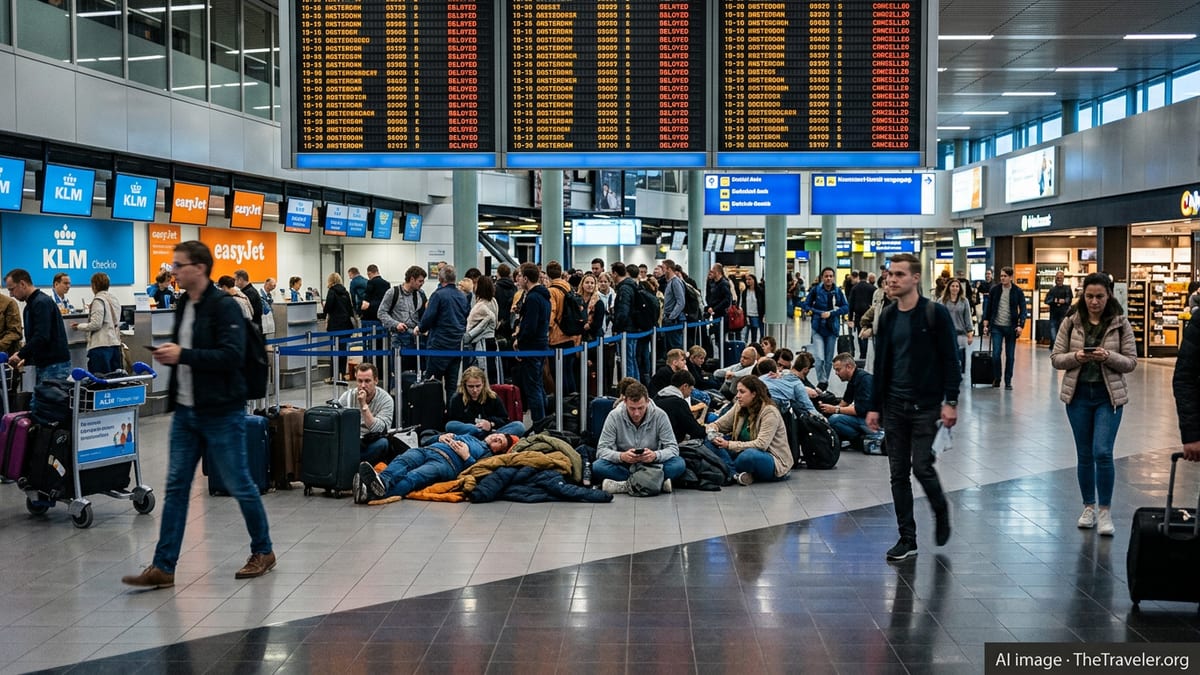
Flight Disruptions Between Jakarta and North Sumatra
Publicly available information from airport operators and local media shows that 15 flights operating between Jakarta’s Soekarno-Hatta International Airport and Kualanamu International Airport in Deli Serdang were canceled on Tuesday, 1 September 2026. The cancellations affected services in both directions on one of Indonesia’s key domestic corridors linking the capital region with North Sumatra’s largest metropolitan area.
Reports indicate that a total of 41 scheduled flight movements were planned on the Soekarno-Hatta–Kualanamu route that day, including 20 arrivals and 21 departures. Of these, 15 were canceled outright, while at least 14 additional flights experienced delays as airlines and air-traffic managers adjusted to evolving ash conditions in airspace around Kualanamu.
Coverage from Indonesian outlets further notes that airport stakeholders classified the cancellations as force majeure events tied directly to volcanic activity. The disruption is estimated to have affected more than 5,000 passengers, many of whom faced same-day itinerary changes, rebookings, or extended waiting times at terminals in both Jakarta and North Sumatra.
Kualanamu Operations Temporarily Restricted
Information released through aviation and local news channels indicates that Kualanamu International Airport temporarily restricted or suspended operations after Mount Sinabung sent a significant ash plume across parts of North Sumatra’s airspace. Ash contamination risk in approach and departure paths prompted a halt to certain movements, triggering a ripple effect across the route network that connects Kualanamu to Jakarta.
In these circumstances, airlines generally rely on real-time meteorological briefings, satellite imagery, and volcanic ash advisories to decide whether to proceed with scheduled services. Reports from Indonesian media describe the situation as a precautionary response, emphasizing that safety protocols require aircraft to avoid visible or forecast ash clouds due to the potential for engine damage and reduced visibility.
The temporary disruption at Kualanamu meant that aircraft already on the ground could face extended turnaround times, while inbound flights from Jakarta were held, delayed, or canceled. Industry notices referenced in coverage of the event suggest that some carriers considered rerouting or rescheduling services, but the immediate priority remained limiting flights in and out of the affected airport until ash conditions improved.
Impact on Passengers and Airline Operations
Based on data shared in local coverage, an estimated 5,350 passengers were scheduled to travel on the Soekarno-Hatta–Kualanamu route on 1 September 2026. With 15 cancellations and multiple delays, a substantial portion of these travelers experienced direct disruption to their plans, including missed onward connections and the need to secure alternative arrangements for accommodation and ground transport.
Public-facing information from airport management highlights efforts to manage crowding in terminal areas and coordinate with airlines to handle rebooking and service recovery. Travelers on affected flights were encouraged through media reports to monitor airline channels for updated departure information and to allow extra time at the airport while operations gradually normalized.
The cancellations also had operational implications for airlines, which needed to reposition aircraft and crew, adjust rotation schedules, and manage the knock-on effects on other domestic sectors. While the disruption was concentrated on the Jakarta–Medan corridor, the Soekarno-Hatta hub structure meant that changes to this trunk route had the potential to influence connectivity to secondary cities served via Kualanamu.
Mount Sinabung’s Renewed Activity and Aviation Risk
Mount Sinabung, located in North Sumatra’s Karo Regency, has a long record of intermittent eruptions and is among Indonesia’s most closely monitored volcanoes. Recent activity reported in the days leading up to 1 September included ash columns rising several kilometers above the summit, with prevailing winds dispersing ash toward populated and agricultural areas as well as regional air routes.
Historical assessments from Indonesian meteorological and geophysical agencies describe volcanic ash as a significant hazard to aviation, with particles capable of eroding turbine blades, contaminating sensors, and reducing cockpit visibility. For this reason, even relatively short-lived eruptions can trigger adjustments to flight paths or temporary suspensions of airport operations, particularly when ash drifts near standard approach corridors.
In the current event, coverage from domestic and international outlets points to ash plumes and changing wind patterns as key factors driving the decision to halt operations at Kualanamu and to cancel or delay flights to and from Jakarta. The situation illustrates how a single volcano can temporarily reshape air connectivity across a wide region, even when the main hub airport at Soekarno-Hatta remains fully operational.
What Travelers Should Expect in the Coming Days
As monitoring of Mount Sinabung continues, aviation updates shared through news and airline channels suggest that schedules on the Soekarno-Hatta–Kualanamu route may remain subject to short-notice changes. While the number of outright cancellations could decrease as ash levels subside and visibility improves, operational buffers are likely to remain in place while authorities and airport operators track the volcano’s behavior.
Travel industry guidance reported in recent coverage recommends that passengers with upcoming itineraries to North Sumatra stay alert to email and app notifications from their airlines, check flight status before leaving for the airport, and be prepared for possible retimings. Flexible ticket policies and voluntary rebooking options may be available on some carriers when disruptions are linked to natural events.
The recent cancellations underscore Indonesia’s broader exposure to volcanic risks within its domestic aviation network. With major hubs such as Soekarno-Hatta handling tens of millions of passengers each year, even localized eruptions like Sinabung’s can temporarily alter travel flows across the archipelago, reinforcing the importance of contingency planning for both airlines and passengers.
ANTARA News: Operasional penerbangan di Soetta-Kualanamu terganggu erupsi Sinabung
Liputan6: Erupsi Gunung Sinabung, penerbangan Soetta-Kualanamu terdampak
Xinhua: Mount Sinabung eruption cancels flights to and from Jakarta
TangerangNews: Puluhan penerbangan Soetta-Kualanamu terdampak erupsi Sinabung